Ever have one of those days where a single, tiny problem spirals into a massive headache? You know, the kind where you can trace a whole day of chaos back to one missed email or a forgotten note.
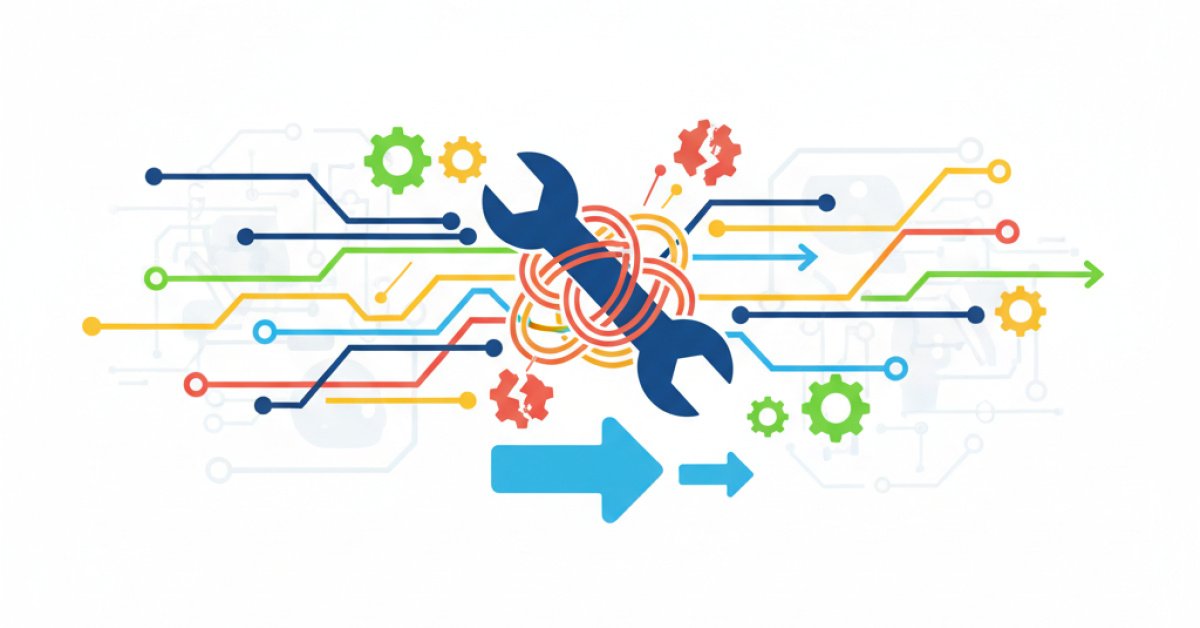
In the world of insurance claims, we see this all the time. I like to call it the "documentation domino effect." It’s that frustrating, slow-motion chain reaction that starts with something small—a blurry photo, a missing measurement, an unclear note—and ends with a delayed claim, a frustrated customer, and a mountain of extra work for everyone involved.
It’s a cycle that costs time, money, and goodwill. But here’s the good news: we’re finally getting the tools to stop those dominoes from ever falling in the first place.
What's Really Causing the Hold-Up? The Sneaky Domino Effect
Let's walk through a scenario that probably sounds all too familiar.
An adjuster is out in the field, documenting water damage in a basement. They’re snapping photos, taking measurements with a tape measure, and jotting down notes. But maybe the lighting is bad, and a key photo of the source of the leak comes out blurry. Or maybe they miss measuring one small, awkward corner of the room.
Back at the desk, the examiner looks at the file. They can't quite make out the detail in that blurry photo. Is that mold or just a shadow? And that missing measurement means they can't accurately calculate the cost of new flooring.
So, the first domino falls.
The examiner has to pause their work and email the adjuster for clarification. The adjuster is now on another job and doesn't see the email for a few hours. When they do, they can't remember the exact detail off the top of their head. They have to either schedule a trip back to the property (domino #2) or try to get the homeowner on the phone to ask them (domino #3).
Now the homeowner is involved, confused, and starting to get anxious about the delay. The whole process grinds to a halt, all because of that one initial piece of incomplete information. This back-and-forth can add days, sometimes weeks, to the cycle time. It’s inefficient, it’s costly, and frankly, it makes for a terrible customer experience.
Why Our Old Ways of Documenting Just Aren't Cutting It
For decades, the toolkit for property claims documentation hasn't changed much: a camera, a tape measure, and a notepad. And look, these tools have served us well. But they have a fundamental weakness: they rely entirely on perfect, consistent human execution.
And let's be honest, we're all human.
Adjusters are under immense pressure. They're often working in difficult conditions, juggling multiple claims, and trying to be both thorough and fast. It’s incredibly easy to:
- Miss a crucial photo angle.
- Forget to document pre-existing damage.
- Make a small error when transcribing measurements.
- Write notes that make sense in the moment but are confusing to someone else later.
These aren't signs of a bad adjuster; they're just the natural byproducts of a manual process. The problem is, the entire claims process is built on the foundation of that initial data capture. When the foundation is shaky, the whole structure becomes unstable.
So, How Do We Break the Cycle? A Look at Property Capture Tech
This is where things get interesting. We're now seeing a new wave of technology designed to solve this exact problem. It’s often called "property capture technology," but don't let the jargon scare you.
Think of it like this: Imagine giving your adjusters (or even the policyholder) a smartphone app that acts as a foolproof guide.
Instead of just opening a camera and hoping for the best, the app walks them through the process step-by-step. It uses on-screen guides and AI to ensure they capture everything needed, like:
- 3D Tours: Creating a complete, immersive 3D model of the space. It’s like Google Street View for the inside of a house. You can virtually walk through the damaged area from your desk, zoom in on details, and even take measurements right from the model.
- Guided Photo Capture: The app can prompt the user to take specific shots—four corners of the room, ceiling, floor, close-ups of the damage, photos of appliance model numbers, you name it. It ensures nothing gets missed.
- Automatic Measurements: Using the phone's camera and sensors, these tools can generate highly accurate floor plans and measurements automatically. No more fumbling with a tape measure in a cramped space.
The result? A perfect, complete, and totally objective record of the property's condition, captured correctly the very first time. The foundation is solid.
No More Guesswork, Just Faster, Fairer Claims
When you start with a complete and accurate digital record, the entire downstream process changes. That frustrating domino effect simply vanishes.
Getting It Right from the Start
The desk examiner no longer has to decipher handwritten notes or guess what a blurry photo is trying to show. They can virtually tour the property, pull any measurement they need, and see the damage from every angle. Questions that used to trigger a week of phone tag can now be answered in seconds.
This completely slashes the need for re-inspections, which are a massive drain on time and resources. You save on travel costs, and your field adjusters can focus on new claims instead of backtracking on old ones.
Building Trust and Transparency
One of the toughest parts of claims can be the "he said, she said" disputes. A homeowner might insist damage was worse than it appears, or a contractor's estimate might seem inflated.
A comprehensive digital record acts as the ultimate source of truth. It's an unbiased, time-stamped account of the property's condition. This transparency is huge for building trust with your policyholders. They can see exactly what you see, which helps them feel like they're part of a fair and open process.
It’s no longer about opinions; it’s about the data. And when everyone is working from the same set of facts, disputes become much easier to resolve.
A Better Experience for Everyone
At the end of the day, this is what it's all about. When you stop the domino effect of delays, you dramatically shorten the claim lifecycle.
For the policyholder, this is a game-changer. They're going through a stressful event, and the last thing they want is a long, confusing claims process. Getting them an accurate settlement and starting repairs faster is the single best thing you can do to create a positive experience.
And for your team? It’s a huge morale booster. You’re removing the most frustrating, repetitive parts of their job and giving them the tools to be more effective. They can close claims faster and spend more time helping people, which is why most of us got into this business in the first place. This isn't about replacing people with technology; it's about empowering them with better tools to do their best work.