Let’s be honest for a second. Have you ever sat at your desk, staring at three different screens, trying to copy-paste information from one system to another, and just thought, "There has to be a better way"?
We’ve all been there. In the insurance world, we talk a big game about digital transformation, AI, and all this incredible new technology. We see flashy demos and get promised a future where everything is seamless. And yet, the day-to-day reality for so many of us—and for our clients—is still surprisingly clunky. It’s a world of friction, where simple tasks take way too many steps.
That’s what makes the approach IMA is taking so interesting. They’re hitting the pause button on the "shiny new toy" syndrome and instead, they’re going back to basics. They’re rethinking the entire client and associate experience from the ground up, and their focus isn’t on the tech itself, but on something far more fundamental: the workflow.
So, What's the Real Problem We're All Trying to Solve?
Think of it like this. You can have the most expensive, state-of-the-art oven and a fancy stand mixer in your kitchen. But if the fridge is in the garage and the sink is in a different room, you’re still going to have a miserable time trying to bake a cake. It’s not about the quality of your tools; it’s about the layout of the kitchen.
That’s the exact problem IMA is tackling. They realized that you can bolt on all the cutting-edge software you want, but if the underlying processes are broken and inefficient, you’re just putting a high-tech bandage on a fundamental problem. You’re not actually making anyone’s life easier.
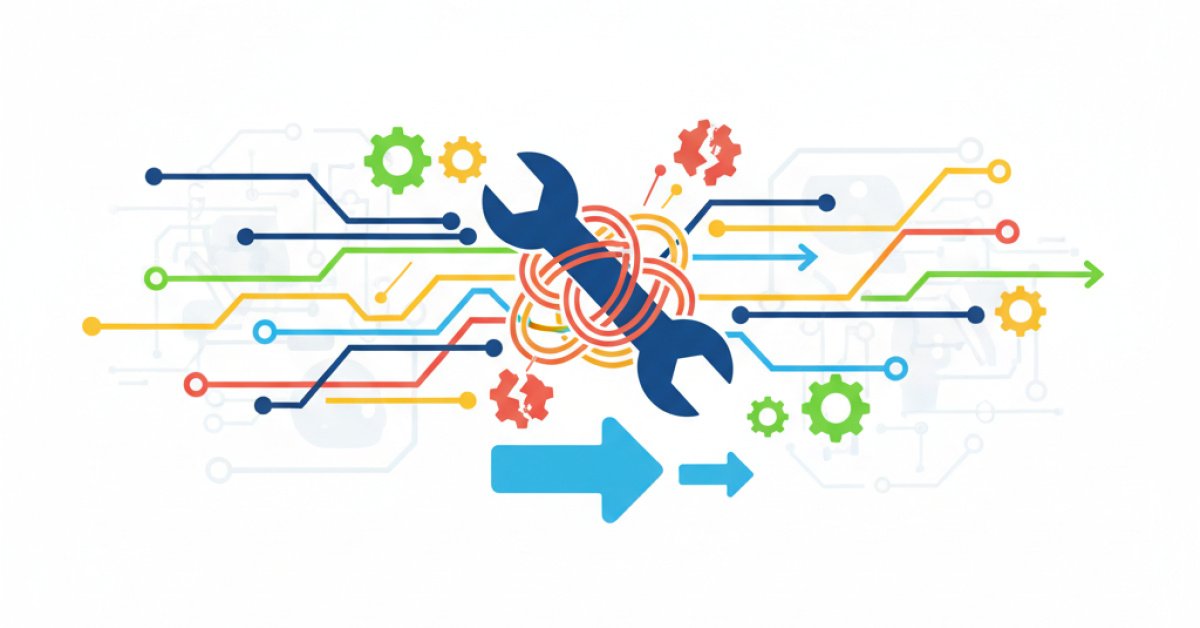
The real enemy here is friction. It's the unnecessary steps, the repetitive data entry, the awkward handoffs between departments, and the time wasted navigating clunky systems. This friction is what frustrates our associates and, in turn, creates a less-than-stellar experience for our clients. When a client has to wait days for a simple certificate of insurance because the process involves five different people and four different systems, that’s a friction problem.
This Isn't About Tearing Everything Down
Now, when you hear "rethinking from the ground up," it’s easy to imagine a massive, chaotic overhaul where everything gets thrown out. But that’s not what’s happening here, and that’s the really smart part.
Instead of a "rip and replace" strategy, IMA is taking a more thoughtful approach. They’re looking at their existing workflows, piece by piece, and asking a simple question: "Where does this get annoying?"
It’s about identifying those specific pain points—the moments that make an associate sigh and think, "Ugh, this part again." By focusing on smoothing out these rough spots, they’re not just improving efficiency; they’re improving the quality of the workday.
The goal is to make the easy stuff truly easy. If we can automate the repetitive, mundane tasks, it frees up our people to do what they do best: think critically, build relationships, and provide the expert advice that clients actually value. No one got into insurance to be a professional copy-paster, right? We got into it to help people manage risk.
What This Actually Feels Like for People
Okay, this all sounds great in theory, but what does it mean in the real world for an IMA client or an associate?
For an associate, it means spending less time fighting with the system and more time talking to clients. Imagine a world where a client's information only needs to be entered once, and it automatically populates everywhere it needs to go. Imagine a dashboard that clearly shows you exactly what needs to be done for each client, without having to dig through four different applications. That's the target. It’s about giving them back their time and mental energy.
For the client, the experience becomes faster, smoother, and more transparent. When the internal workflows are seamless, the external results are impressive.
- Quicker responses: No more waiting for information to pass through a convoluted internal chain.
- Fewer errors: When data is automated, the chance for human error drops dramatically.
- Proactive service: When associates aren't bogged down in administrative muck, they have the bandwidth to anticipate a client's needs.
It’s a powerful ripple effect. A better associate experience directly leads to a better client experience. It’s not magic; it’s just good, smart process design.
The 'Aha!' Moment: Tech Should Serve the Process
Here’s the core philosophy that I think is so important for all of us in the industry to grasp: Technology is a tool, not the destination.
For years, the conversation has been driven by tech vendors. They show us a cool new platform, and we try to figure out how to cram our existing processes into it. IMA is flipping that script entirely.
They’re starting by designing the ideal, most logical workflow first. They’re mapping out how information should flow and how a task should be completed in a perfect world. Only after they’ve defined that ideal process do they go looking for the technology that can support it.
This ensures that the technology serves the needs of the people and the process, not the other way around. It’s a subtle shift in thinking, but it makes all the difference. It means they’re not just buying software; they’re building a cohesive system where every piece is chosen to reduce friction and make work more human.
Ultimately, this whole initiative is a reminder of a simple truth. In our rush to innovate, it’s easy to get distracted by the bells and whistles. But true, lasting transformation doesn’t come from the fanciest new app. It comes from a deep, honest look at how we work and a genuine commitment to making it better for the people who do the work and the clients we serve. And that’s a lesson we can all take to heart.