Have you ever been scrolling through home listings and seen those little scores for flood, fire, or hurricane risk? You might have glanced at them, you might have ignored them, but they were there. Well, if you’ve been on Zillow recently, you might have noticed they’ve vanished.
And that’s not an accident.
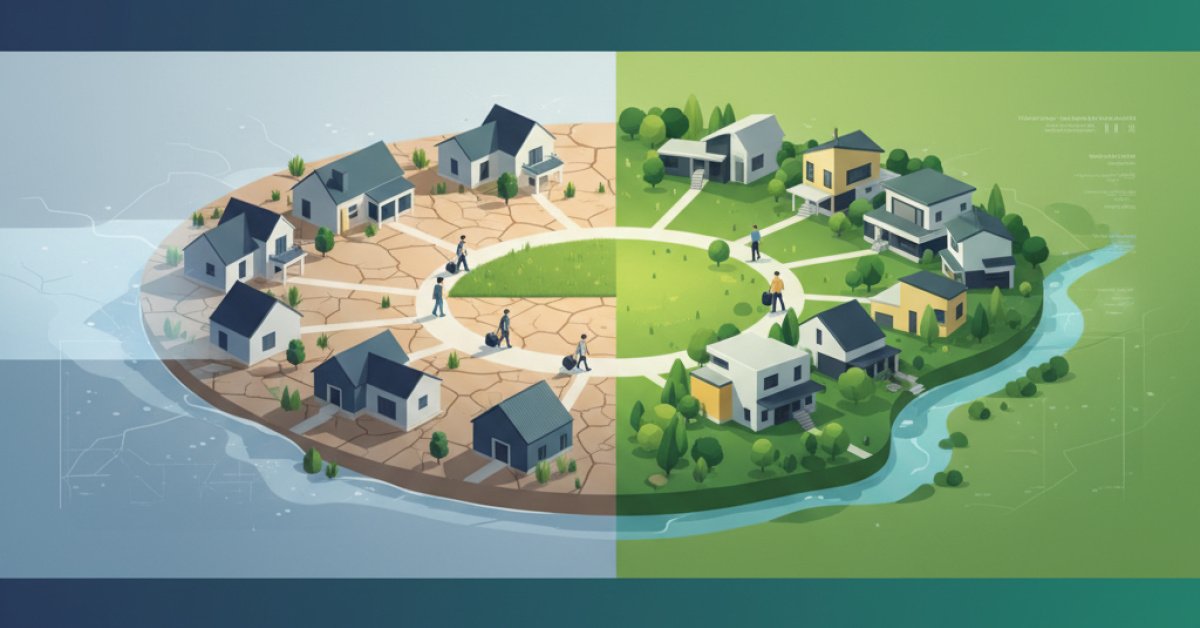
Zillow decided to pull its climate risk data from listings after getting some pushback from the real estate industry. On the surface, you can kind of see the logic from a realtor's perspective—a scary-looking "9/10 Flood Risk" score probably doesn't help sell a house. But here’s the thing, and it’s something we in the insurance world know all too well: just because you hide the data doesn't mean you get rid of the risk.
It’s like taking the batteries out of a smoke detector because you don’t like the annoying chirping. The fire can still happen; you just won't get a warning. And for homebuyers, this quiet removal of information could lead to a huge, expensive, and heartbreaking surprise down the road.
So, What Exactly Happened?
Let's break it down. For a while, Zillow and other real estate sites partnered with companies that model climate risk. They would analyze a property's location and assign it a score based on its long-term potential for things like flooding, wildfires, extreme heat, and high winds.
It was a simple, at-a-glance tool. A quick way for you, the potential buyer, to get a sense of what you might be getting into.
But then, they disappeared from Zillow. The official reason points to complaints and a desire to provide data consistency, but many of us believe the pressure came from agents who felt these scores were killing deals. And while I can sympathize with an agent trying to sell a home, I’m much more concerned about the family who buys that home without understanding the full picture.
Because the floods and fires don’t check Zillow before they show up.
Hiding the Score Doesn't Hide the Risk
This is the most important part to understand. The risk is a physical reality. It's based on topography, historical weather patterns, proximity to water, and the surrounding vegetation. An algorithm on a website doesn't create the risk; it just attempts to measure it.
Think of it like a car's title report. A listing might not mention that the car was in a major accident, but the damage is still there. The frame might be bent, the engine might be faulty. A savvy buyer pulls a CarFax report to uncover that hidden history.
By removing these climate scores, we're essentially making it harder for the average homebuyer to get that initial "CarFax" for a property's environmental history and future. The risk still exists, but now it's buried a little deeper, waiting to be discovered.
And guess who is an expert at discovering that risk? Your friendly neighborhood insurance company.
The Inevitable Insurance Nightmare
This is where the real trouble starts. You find your dream home. It's in a great school district, has a beautiful backyard, and the price is right. You make an offer, it gets accepted, and you're ecstatic.
Then, you call an insurance agent to get a homeowner's policy, and the conversation takes a sharp turn.
The agent says something like, "Okay, I've run the address... and I'm seeing some issues. This property is in a high-risk flood zone," or, "This home has an extreme wildfire exposure score."
Suddenly, you're faced with a few terrible scenarios:
- Sky-High Premiums: The insurance quote is three or four times what you budgeted for, making the home unaffordable.
- Massive Deductibles: You might be able to get a policy, but it could come with a $25,000 or $50,000 deductible for wildfire or hurricane damage.
- Outright Denial: In some high-risk areas of California, Florida, and Louisiana, you might not be able to find a private insurer willing to cover the home at all, forcing you into a last-resort (and often less comprehensive) state-run plan.
This isn't a hypothetical. It happens every single day. Insurance companies have their own sophisticated (and very expensive) mapping and risk-modeling tools. They aren't relying on the free score you used to see on a real estate site. They have a much clearer, and often harsher, picture of the danger.
So while the listing might look clean and risk-free, the insurer sees the reality. And you, the buyer, are the one caught in the middle, often just weeks before you’re supposed to close on the biggest purchase of your life.
But Weren't Those Scores Flawed Anyway?
Now, it's fair to point out that the data wasn't perfect. That’s a common argument you’ll hear. And it’s true, to an extent.
Climate modeling is incredibly complex. A score might give an entire zip code a high wildfire rating, even if one specific house is built with fire-resistant materials and has excellent defensible space. Or a flood score might not account for a brand-new levee built a few miles upriver.
The data was a broad-stroke tool, not a property-specific guarantee. It was meant to be a starting point, a red flag that prompted you to ask more questions.
But I'll ask you this: is having some information, even if it's imperfect, better than having no information at all? I think the answer is a resounding yes. An imperfect sign that says "Beware of Dog" is a lot better than no sign at all when a Rottweiler is waiting behind the fence.
What You Need to Do Now
With this information now less visible, the responsibility falls more heavily on your shoulders as a buyer. You can no longer passively rely on a listing to tell you the whole story. You have to be proactive.
Here’s what I tell all my friends and family when they’re house-hunting:
- Bring in an Insurance Agent Early: Don't wait until you're under contract. As soon as you're serious about a house, send the address to an independent insurance agent. They can run a preliminary check and give you a ballpark idea of insurability and cost. This is the single most important piece of due diligence you can do.
- Check the FEMA Flood Maps: For flood risk, the FEMA Flood Map Service Center is the official source. You can type in an address and see if it's in a designated high-risk zone. This is non-negotiable.
- Ask Questions: Ask the seller and the seller's agent directly. Have they ever had a flood? Have they had trouble getting insurance? What do they currently pay? Have they done any mitigation work, like installing storm shutters or clearing brush?
- Think Long-Term: Remember, these risks are not static. Climate change means that areas not at risk today could be at risk in 10 or 20 years, well within the life of your 30-year mortgage.
Ultimately, Zillow's decision is a sign of a bigger, more uncomfortable conversation that the real estate world is trying to avoid. But for those of us in insurance, and for every American who owns or wants to own a home, it's a conversation we can't afford to ignore.
The price of a home is more than just the mortgage. It’s the taxes, the maintenance, and critically, the insurance. Don't let a hidden risk turn your dream home into a financial trap. Do your homework, ask for help, and go into the process with your eyes wide open.