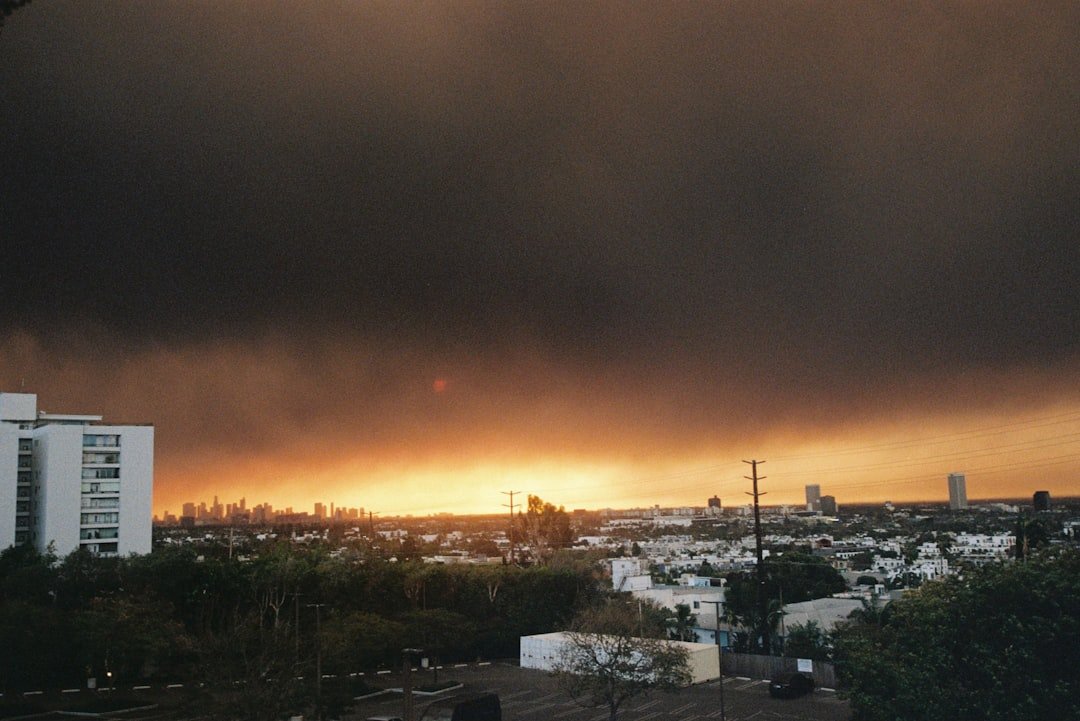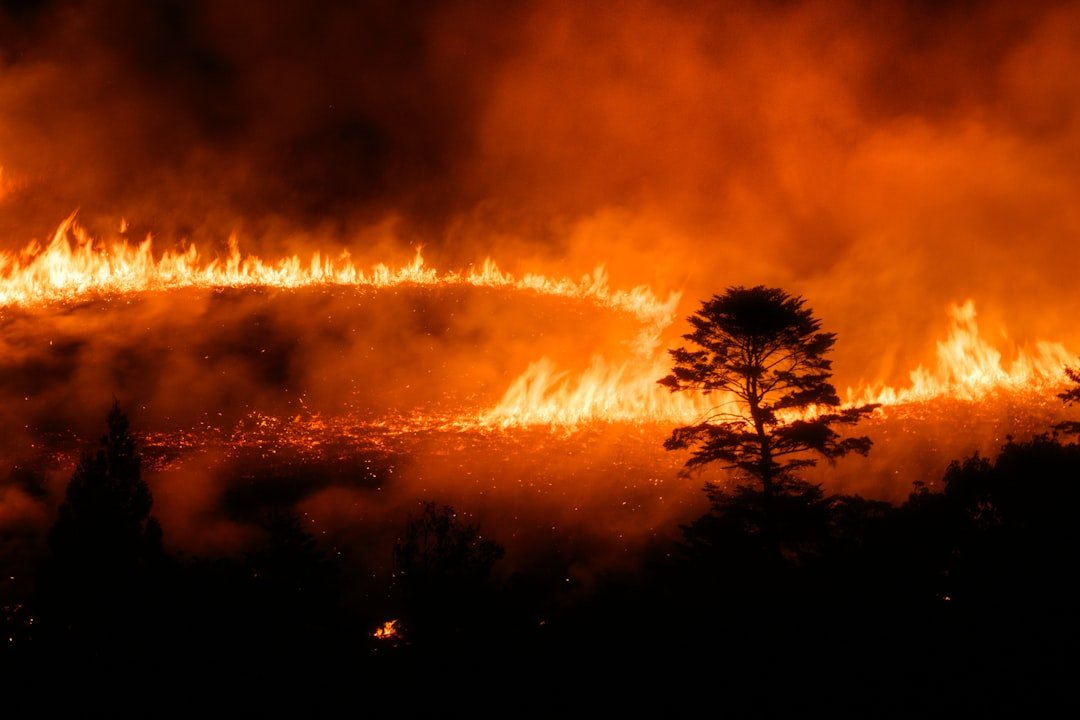
It’s hard to believe it’s already been a year. I remember watching the news, seeing the endless stream of reports about the January 2025 Los Angeles wildfires, and just feeling this pit in my stomach. It was one of those moments that you know is going to change things for our industry, forever.
And it did. We’re still processing the numbers, and they’re staggering. More than 16,000 properties just… gone. Over $22 billion in claims filed so far, and that number is still climbing. It was a catastrophe on a scale that’s difficult to wrap your head around.
In the aftermath, you heard the term "unprecedented" a lot. "Once-in-a-generation." "A 250-year event." We use these terms to try and make sense of the chaos, to reassure ourselves that lightning won’t strike twice. But as the one-year anniversary analyses start rolling in, a really uncomfortable question is bubbling to the surface: what if we’re wrong? What if the next one is right around the corner?
Let’s Talk About "Return Periods" for a Second
You’ve heard the terms a million times. A "1-in-100-year flood" or a "1-in-250-year fire." It sounds like a countdown, right? Like if a big one happens this year, we’re good for another 249 years.
But that’s not how it works at all, and it's one of the most misunderstood concepts in insurance.
Think of it like rolling a giant, 250-sided die every single year. The chance of rolling a "1" (the catastrophic event) is 1-in-250. You could roll a "1" this year, and you have the exact same 1-in-250 chance of rolling a "1" again next year. It’s a probability, not a schedule. It just means that, over a very long timeline, you’d expect to see an event of that magnitude happen, on average, once every 250 years.
The problem is, we’re starting to realize the die might be loaded.
The Big Problem: We're Using Outdated Maps
For decades, the models we’ve used to calculate these probabilities have been based on historical data. We looked at what happened in the past to predict what might happen in the future. And for a long time, that worked pretty well.
But it’s not working anymore.
Relying on old historical data to predict today's wildfire risk is like trying to navigate downtown Los Angeles with a map from 1985. The freeways have changed, entire neighborhoods have popped up where there used to be fields, and the traffic patterns are completely different. You’d be lost in minutes.
Our risk landscape has changed just as dramatically. Here’s what the old models aren't fully accounting for:
- Climate Change: It’s not just a buzzword. It means longer, hotter, and drier fire seasons. It means vegetation is turning into tinderbox-dry fuel faster than ever before.
- The Wildland-Urban Interface (WUI): We keep building beautiful homes in and around areas that are naturally prone to fire. More homes in high-risk zones mean any fire that starts has a much higher chance of becoming an urban conflagration.
- Years of Fire Suppression: Ironically, our success in putting out smaller fires for the last century has led to a massive buildup of underbrush and fuel, making the fires that do get out of control far more intense.
When you put all this together, you realize our "map" is dangerously out of date. The game has fundamentally changed, but we’ve been trying to play by the old rules.
So, What's the Real Return Period for an LA-Scale Fire?
This is the billion-dollar question—or in this case, the $22 billion question. The new analyses coming out are, frankly, terrifying.
Some of the brightest minds using the most sophisticated, forward-looking climate models are suggesting that the January 2025 event wasn't a 1-in-250-year event at all. Not in today's world.
The emerging consensus is that the actual return period for a fire of that magnitude might be closer to 1-in-50 years. Some models even suggest it could be as frequent as 1-in-30.
Let that sink in for a minute.
What we thought was a freak event that our great-grandchildren might have to deal with is actually something we could very well see again in our own careers. Maybe even more than once. This isn't a distant, abstract risk anymore. It's a clear and present danger.
This Changes Everything for Us
This isn't just an interesting academic exercise. This shift from a 250-year to a 50-year event has massive, real-world consequences for every single one of us in the insurance world.
If you’re an underwriter, how can you confidently price a policy in California when the underlying risk is five times greater than you thought? The premium that seemed adequate yesterday is suddenly nowhere near enough to cover the potential loss.
If you’re a broker, how do you have that conversation with your client? How do you explain that their rates are skyrocketing not because of something they did, but because the very definition of a "catastrophe" has changed? It's a tough, frustrating conversation to have.
And if you're on a claims team, the thought of handling another 16,000-property event is just exhausting. The logistical and emotional toll of the LA fires was immense. Preparing for that to happen again, and again, requires a whole new level of planning and resources.
The LA wildfire wasn't just a tragedy; it was a wake-up call. It was a brutal, fiery lesson that the past is no longer a reliable guide to the future. We can’t just tweak our old models anymore. We have to fundamentally rethink how we assess, price, and mitigate wildfire risk. The real question now is, are we ready to do the hard work that comes next?