Let’s talk about the weather.
No, really. When you think about the biggest, scariest risks for insurance companies, what comes to mind? Probably massive, headline-grabbing events, right? A Category 5 hurricane barreling toward the coast. The "Big One" earthquake in California. Devastating wildfires.
And you wouldn't be wrong. Those are absolutely massive concerns. But if you ask the people who actually run the insurance companies what’s really keeping them up at night, the answer might surprise you.
It’s the humble thunderstorm.
Well, maybe not so humble. A recent survey of US insurers just confirmed what many of us in the industry have been seeing for a while now: the number one concern is something called "severe convective storms." That’s the official-sounding name for thunderstorms, tornadoes, hail, and damaging straight-line winds. And they've become a billion-dollar headache that just won't go away.
So, What's the Big Deal with a Little Thunder?
First off, let's get on the same page. When we say "severe convective storms" (or SCS, as you'll hear it called), we're not talking about a light spring shower. We're talking about the kind of weather that makes you pull your car into the garage and hope for the best.
Think about it:
- Tornadoes that can level entire neighborhoods.
- Hailstones the size of golf balls (or even baseballs) that pummel roofs and shatter car windows.
- Straight-line winds so powerful they can tear siding off houses and topple massive trees.
These aren't once-in-a-generation events. They're happening all the time, all across the country. And that’s the real crux of the problem. A major hurricane is a catastrophe, no doubt. But it’s one massive event that the industry prepares for all year. SCS is different. It’s like death by a thousand cuts.
Instead of one $50 billion disaster, the industry is getting hit with hundreds of smaller, $1 billion to $3 billion events, week after week. A hailstorm in Texas, a tornado outbreak in the Midwest, a wind event in the Southeast... it all adds up. And lately, it's been adding up to record-breaking losses.
It's a Problem of Frequency, Not Just Severity
For a long time, the industry's focus was on managing peak perils—those huge, but relatively rare, catastrophes. But the game has changed. These "smaller" storms are now so frequent and widespread that they're no longer just background noise. They are the main event.
What’s really concerning is that these storms are causing significant damage in places that weren't traditionally considered high-risk. We're seeing major hail losses in states you wouldn't expect, pushing the boundaries of what insurers have to plan for.
This constant barrage of claims puts a massive strain on resources. It's one thing to mobilize for a single, predictable hurricane. It's another thing entirely to constantly be responding to dozens of pop-up events across 15 different states. It tests everything from claims adjuster availability to the supply chain for roofing materials.
The Go-To Solution: Insurance for the Insurers
So, if you're an insurance company facing this relentless storm, what do you do? You can't just stop writing policies. You need a way to manage the risk so that one terrible season doesn't put you out of business.
This is where reinsurance comes in.
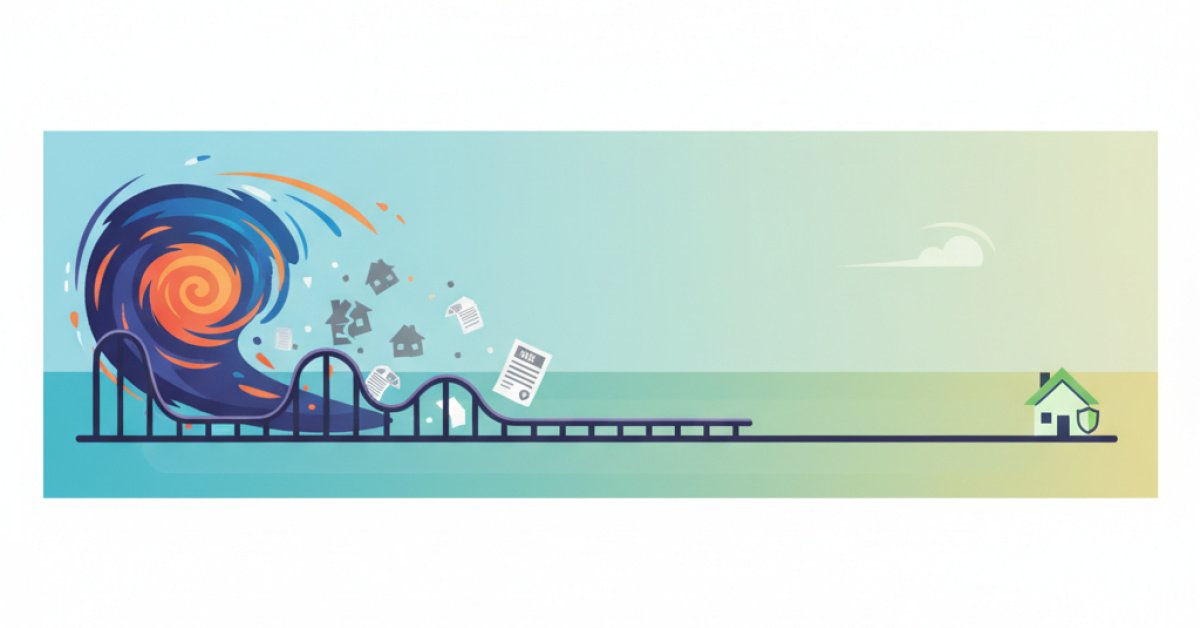
Think of it like this: Reinsurance is basically insurance for insurance companies. An insurer pays a premium to a reinsurance company. In return, the reinsurer agrees to cover a portion of the insurer's losses if they exceed a certain amount. It’s a way to spread the risk around so no single company gets wiped out.
Now, there are all sorts of fancy ways to transfer risk these days—things like catastrophe bonds and other insurance-linked securities (ILS). But the survey showed something really interesting. When it comes to dealing with the relentless pounding from severe convective storms, insurers are overwhelmingly sticking with the old-school, tried-and-true method: traditional reinsurance.
Why Traditional Reinsurance Still Wins for These Storms
You might think with all the financial innovation out there, companies would be turning to more modern tools. But for this specific problem, the traditional approach just works better. Here’s why.
Reinsurance is often structured in layers. The primary insurer handles the first layer of routine, everyday claims. Reinsurance kicks in for the bigger, more unusual losses—the "working layers" of risk, as we call them.
Severe convective storms fit perfectly into that model. They are frequent enough to create consistent, large losses, but they aren't typically the single, mega-catastrophe that would wipe out the entire system. Traditional reinsurance is incredibly flexible and well-suited to covering this exact type of high-frequency, medium-severity risk.
Catastrophe bonds, on the other hand, are usually designed for the really big, really rare events. They’re a great tool for a massive Florida hurricane or a California earthquake, but they’re a bit like using a sledgehammer to hang a picture frame when it comes to the constant churn of thunderstorm losses.
The fact that insurers are leaning so heavily on their reinsurance partners for this shows just how critical that relationship is. It's a vote of confidence in a system that has proven it can provide reliable cover, year after year, for this growing and unpredictable threat.
So, the next time you hear a tornado siren or see dark clouds gathering on the horizon, remember what it represents for the insurance world. It’s not just a passing storm. It's a piece of the multi-billion-dollar puzzle that has become the single biggest challenge for insurers today. It’s a reminder that sometimes, the most significant risks aren't the ones that make the global headlines, but the ones that happen in our own backyards, over and over again.