When you hear the word "catastrophe" in the insurance world, what’s the first thing that pops into your head? For most of us, it’s probably a massive, spinning hurricane on the news, a Category 5 monster with a name, bearing down on the coast.
For decades, those were the big, bad wolves of the property insurance world. They were the events that kept underwriters up at night and shaped how the entire industry thought about risk.
But here’s the thing. The ground is shifting beneath our feet, and the nature of risk is changing with it. What if I told you that the biggest, most expensive, and most predictable headaches for insurers right now aren't those headline-grabbing mega-disasters?
It's true. The real story, the one that’s quietly rewriting the rules for property insurance, is the rise of so-called "secondary perils." And trust me, there’s nothing "secondary" about the damage they're causing.
So, What Exactly Are We Talking About?
Okay, "secondary perils" is a bit of industry jargon, so let's break it down. It’s actually pretty simple.
Think of it this way:
- Primary Perils: These are the A-listers. The major events that get all the attention. We're talking about major hurricanes (think Katrina or Ian) and massive earthquakes. They are incredibly severe but, thankfully, happen less frequently.
- Secondary Perils: This is everything else. It’s a broad category that includes severe convective storms (which is a fancy term for a nasty brew of thunderstorms, hail, tornadoes, and straight-line winds), wildfires, floods, and winter storms.
Individually, one of these events might not cause the same level of devastation as a single major hurricane. But here's the kicker: they are happening all the time.
It’s like the difference between one giant, unexpected medical bill and a dozen smaller, nagging expenses that hit your bank account month after month. That one big bill is a shock, for sure. But the constant drip, drip, drip of those smaller costs can drain you just as quickly, if not faster. That's what insurers are facing right now. The sheer frequency of these "smaller" events is adding up to astronomical losses.
The Big Shift: Why Are These Events Taking Center Stage?
For years, the insurance industry poured billions into getting better at predicting and pricing for those big, primary events. The hurricane models got incredibly sophisticated. But while everyone was watching the coast, the threat in the middle of the country, in the forests, and in the suburbs was growing.
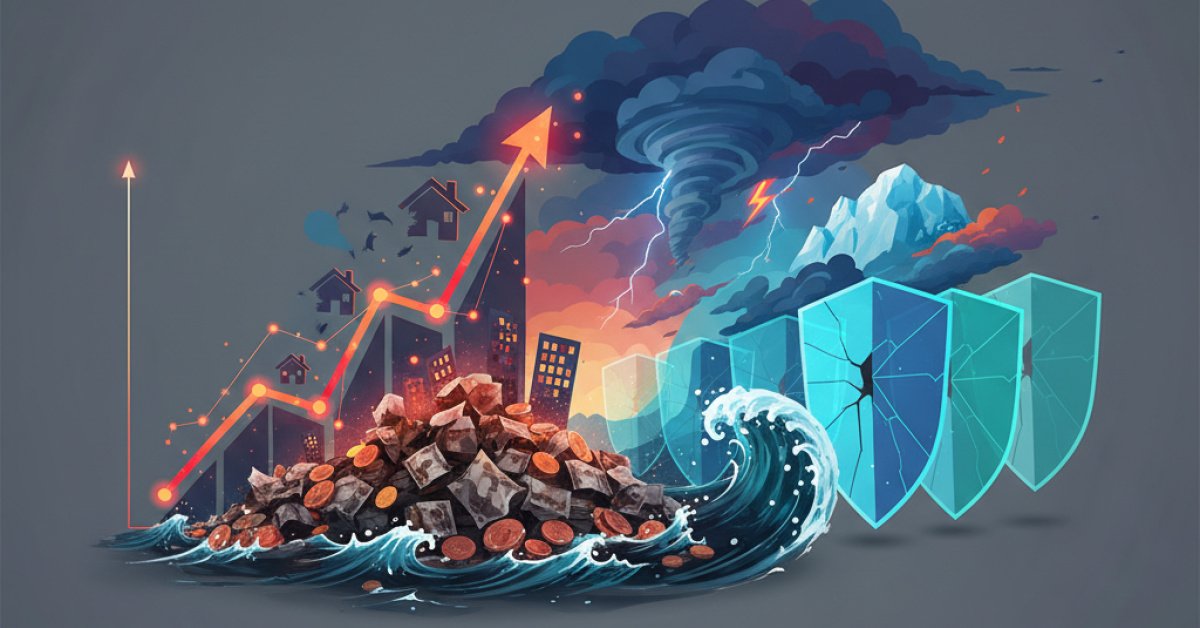
The data is now undeniable. The cumulative cost of these frequent, high-volume secondary perils is consistently outpacing the losses from the big, one-off events.
So, what's going on? It’s really a combination of a few powerful forces coming together.
The Weather is Just Getting Weirder
You don’t have to be a climate scientist to notice that things are changing. A warmer, wetter atmosphere acts like fuel for storms, making them more intense. We're seeing hailstones the size of softballs and winds that act like tornadoes.
At the same time, hotter, drier seasons are extending the wildfire season from a few months to, in some places, nearly year-round. It’s not about one single storm; it’s about the underlying conditions being ripe for these kinds of events to happen more and more often.
We’re Building in Harm’s Way
This is a huge piece of the puzzle that often gets overlooked. As our population grows, we’re expanding into areas that are naturally more vulnerable. Think about all the beautiful new communities being built in what’s known as the Wildland-Urban Interface (WUI)—the border between undeveloped wilderness and suburbia. It's lovely, but it puts billions of dollars of property directly in the path of potential wildfires.
The same goes for storms. We’re building bigger houses, with more complex roofs and expensive materials, in places that are smacked by severe weather year after year.
Everything Just Costs More
Let's be honest, the cost of everything has gone up, and that has a massive impact on insurance claims. A hailstorm that might have caused $1 billion in insured losses a decade ago can easily become a $3 or $4 billion event today.
Why? Because the cost of roofing materials, lumber, windows, and the skilled labor needed to make repairs has skyrocketed. When thousands of homes in a single area are damaged at once, the demand for materials and labor surges, pushing prices even higher.
A Closer Look at the Main Culprits: Storms and Fires
While the category of secondary perils is broad, two culprits are really driving the bus right now: severe convective storms (SCS) and wildfires.
Severe Convective Storms (SCS): The Silent Giant
This is, without a doubt, the biggest driver of losses for U.S. insurers today. It’s not just one thing; it’s a whole system of destructive weather. The real killer here is hail.
Imagine a single storm dropping golf ball- or baseball-sized hail over a densely populated suburb. In the span of 15 minutes, you can have tens of thousands of damaged roofs, shattered windows, and dented cars. Now, imagine that happening not once a year, but dozens of times across states like Texas, Oklahoma, Colorado, and Minnesota. The losses pile up at a staggering rate. We’re now regularly seeing over a dozen individual SCS events that each top $1 billion in losses in a single year.
Wildfires: A Year-Round Threat
The idea of a "wildfire season" is quickly becoming outdated. Fueled by drought and high winds, these fires are no longer just a problem for remote, rural areas. They are increasingly tearing through entire suburban neighborhoods, like we've seen in California and even Colorado.
When a wildfire destroys a home, it’s a total loss. The cost to clear the debris and rebuild from the ground up is enormous. When a fire destroys hundreds or thousands of homes at once, you’re looking at a multi-billion-dollar catastrophe in a matter of days.
What This Means for 2025 and Beyond
So, why does this shift from primary to secondary perils matter to you? Because it fundamentally changes the game for insurers, and those changes inevitably trickle down to us, the policyholders.
Insurers are now in a frantic race to catch up. Their old models just aren't cutting it. They are being forced to completely re-evaluate risk, and that leads directly to some of the tough market conditions you might be experiencing:
- Skyrocketing Premiums: When an insurer's losses consistently exceed what they've collected in premiums, they have no choice but to raise rates. This is the number one reason property insurance is getting so expensive.
- Pulling Out of Risky Areas: In some extreme cases, insurers are deciding that the risk in certain states or regions is just too high to be profitable. We've seen major carriers stop writing new policies in places like California and Florida because the risk of wildfire or storm damage is simply unmanageable.
- Stricter Rules: Getting or keeping a policy is getting tougher. Insurers might now require you to have a newer, more impact-resistant roof. They might mandate that you clear a certain amount of brush from around your home if you live near a wooded area. They are looking for ways to reduce their risk before they agree to cover you.
This isn't about insurers being greedy; it's about them trying to stay solvent in a world where the definition of "catastrophe" has changed. The constant barrage of these secondary perils is the new reality.
The challenge for the entire industry, and for all of us as homeowners, is to adapt. It means building stronger, more resilient homes. It means getting smarter about where and how we build. And it means recognizing that the biggest threat might not be the one named storm on the horizon, but the hundreds of smaller, unnamed ones that are already here.