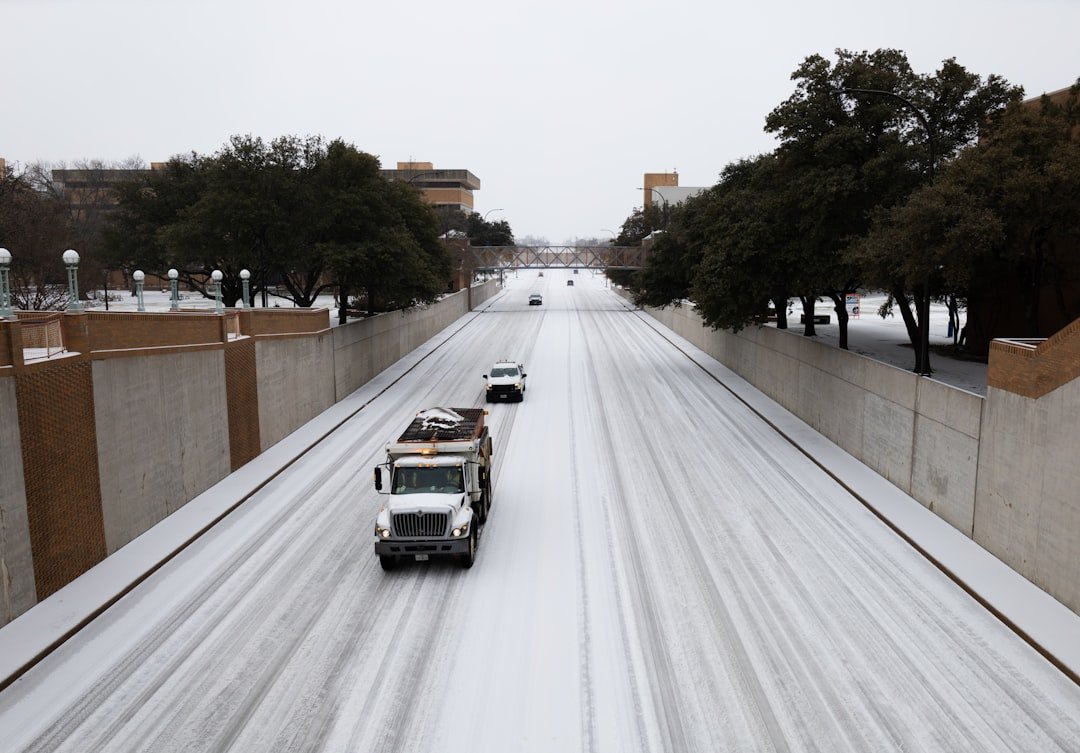
Every time the temperature drops and a major winter storm gets a name on the news, I get a little knot in my stomach. I’m sure you do, too. For most people, it means stocking up on bread and milk. But for those of us in the insurance world, it means something else entirely. It means the phones are about to start ringing off the hook.
And this time, with Winter Storm Fern, that knot is a bit tighter than usual. The chatter isn't just about snow days and icy roads. The word on the street, from underwriters to claims adjusters, is that we could be looking at another massive, industry-shaking event.
The name that keeps coming up in every conversation? Uri.
Yeah, that Uri. The 2021 winter storm that sent a deep freeze through Texas and other states, causing catastrophic failures and becoming one of the costliest natural disasters in U.S. history. It’s a name that still sends a shiver down the spine of any insurance professional. So when reports start saying that Winter Storm Fern could be driving billion-dollar losses, it’s not just hype. It’s a serious warning.
Let's Talk Numbers: Why is This Storm So Expensive?
You might be wondering, "How can a bunch of snow and ice cost billions of dollars?" It's a fair question. It’s not like a hurricane that flattens buildings in an instant. A winter storm is more like a slow-motion catastrophe, and the damage comes from a thousand different cuts.
Think of it this way. The freezing temperatures are the real villain here. When the power goes out and the heat dies, pipes start to freeze. And when they freeze, they burst. Water damage is no joke—it ruins drywall, flooring, furniture, and can lead to massive mold problems down the road.
We’re not just talking about a few homes, either. We’re talking about thousands upon thousands of them, all at once. Plus, you have commercial properties: office buildings, warehouses, and retail stores with complex sprinkler and plumbing systems. A single burst pipe in a large commercial building can easily cause millions in damages.
But it doesn't stop there. The weight of heavy snow and ice can cause roofs to collapse, especially on large, flat-roofed commercial buildings. And then there’s the business interruption claims that follow when a company can’t operate because its facility is damaged or inaccessible. It all adds up, and it adds up fast.
Are We Really Looking at Another Uri?
This is the billion-dollar question, isn't it? Comparing any storm to Uri is a big deal. Uri was a perfect storm of awfulness: it was widespread, it lasted for days, and it hit areas that were completely unprepared for that level of sustained cold. The resulting power grid failure was the devastating knockout punch.
So, is Fern a carbon copy? Probably not. No two storms are ever exactly alike. But the style of the event is what has insurers so concerned.
Here’s what feels eerily similar:
- The Widespread Nature: Fern isn't just hitting one or two states. It's a massive system affecting a huge swath of the country. For insurers, this means they can't isolate their losses to one region. They're getting hit from all sides.
- The Deep Freeze: This isn't just a chilly day. We're seeing prolonged, deep-freeze temperatures that push infrastructure past its breaking point. That's the key ingredient for the burst pipes and grid failures that made Uri so costly.
- The Infrastructure Strain: When a storm hits areas where buildings aren't winterized to the same degree as, say, Minnesota or Maine, the potential for damage skyrockets. That was the story with Uri in Texas, and it’s a major concern with Fern as it dips into southern states.
Insurers have spent the last few years trying to learn the lessons of Uri. They’ve re-evaluated their risk models, looked at their policy language, and tried to better understand their exposure in certain regions. Fern is the first major test of those new defenses. Everyone is watching to see if the preparations will be enough.
What Insurers Are Doing Right Now
Behind the scenes, the industry is in full-on response mode. It’s an all-hands-on-deck situation.
First, claims teams are being mobilized. That means bringing in extra adjusters, setting up temporary call centers, and getting catastrophe response vehicles ready to roll into the hardest-hit areas as soon as it's safe. The goal is to get to policyholders as quickly as possible.
Second, communication is key. Insurers are pushing out alerts to their customers with advice on how to prevent damage, like dripping faucets and opening cabinets to keep pipes warm. It’s a proactive measure that can save everyone a lot of headache and money.
And third, the finance folks are running the numbers. They're looking at their exposure, modeling potential losses, and communicating with their reinsurance partners. A storm of this magnitude triggers complex financial mechanisms designed to spread the risk, and those conversations are happening right now.
Honestly, it's a stressful time. But it's also what the insurance industry is built for. This is the moment where the promise on a piece of paper—the policy—becomes a real, tangible lifeline for people whose lives have been turned upside down.
As we watch the reports come in over the next few days and weeks, we'll get a clearer picture of Fern's true cost. It’s a sobering reminder that Mother Nature is always in charge. And for the insurance world, it’s another powerful lesson in the importance of being prepared for the worst. Let's hope we've learned enough.