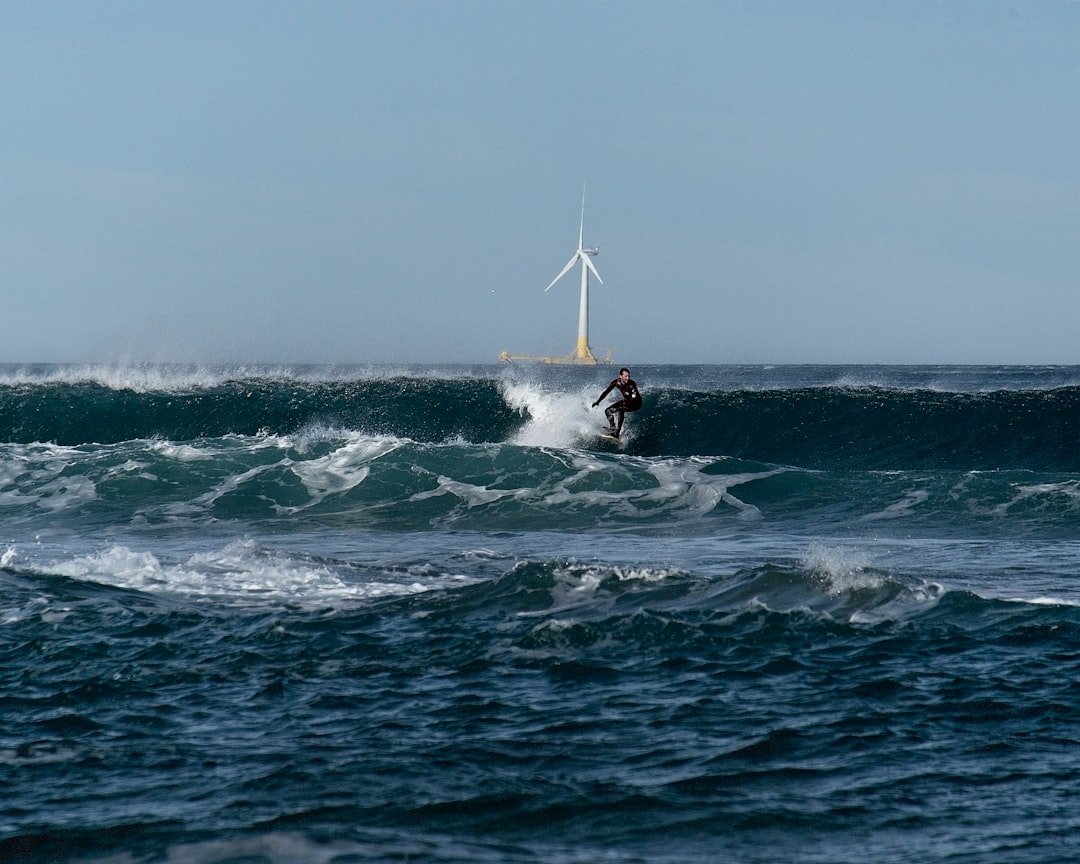
Have you ever been in the middle of a huge, complicated project when someone pulls the plug right at a critical moment? The frustration is one thing, but the financial chaos that follows can be a nightmare. Now, imagine that project is a multi-billion-dollar offshore wind farm, and the person pulling the plug is the federal government.
That’s pretty much what happened with Equinor, the Norwegian energy giant, and their massive Empire Wind project off the coast of New York. One minute, things are moving along, and the next, the project is halted, caught in a web of regulatory red tape. It’s the kind of high-stakes drama that gives developers and investors sleepless nights.
Just last week, a federal judge gave Equinor the go-ahead to fire things back up. And while the headlines focused on the legal and environmental angles, I immediately thought about the insurance side of things. Because behind every big headline like this, there’s a fascinating—and often messy—story about risk. Let’s unpack what a situation like this really means for the insurers who have to underwrite these gigantic renewable energy ventures.
So, What Exactly Happened Here?
First, a quick recap so we're all on the same page. Equinor was moving forward with its Empire Wind project, a cornerstone of New York's renewable energy goals. But then, the Trump administration put a sudden stop to it, along with four other major offshore wind projects.
You can imagine the chaos. Everything just... stops. The specialized ships, the pre-ordered turbines, the construction crews—it all grinds to a halt. Fast forward to now, and a federal judge has essentially said, "Okay, you can get back to work."
This is obviously great news for Equinor and the future of green energy in the U.S. But for those of us in the insurance world, this stop-start scenario is a perfect, real-world case study in the kinds of risks that keep underwriters up at night.
The Billion-Dollar Question: What Happens When a Project Just Stops?
When you’re building something as complex as an offshore wind farm, time is literally money. A lot of money. A delay of a few months isn't just an inconvenience; it can blow a hole in the budget big enough to sink the entire project.
This is where a specific type of coverage, known as Delay in Start-Up (DSU) insurance, becomes absolutely critical.
Think of it like this: DSU is basically business interruption insurance for a construction project. It’s designed to cover the financial losses—like lost revenue or mounting debt service costs—that pile up when a project isn't completed and operational on time due to a covered event.
When a project like Empire Wind gets halted, the DSU underwriters are the first ones to get a nervous twitch. They start asking questions like:
- Is a government-ordered work stoppage a covered peril under the policy?
- How long will the delay last?
- What are the daily financial losses? We’re talking millions of dollars a day in some cases.
The fact that the project is restarting is a huge sigh of relief for the insurers on the hook. But the incident itself sends a powerful message: the risks to these projects aren't just about storms at sea or construction accidents.
The Risk You Can't See: Political and Regulatory Hurdles
Here’s the thing that this Equinor situation really shines a spotlight on: political risk.
We often think of political risk insurance (PRI) as something for companies building factories in unstable foreign countries. But this situation is a stark reminder that significant political and regulatory risk exists right here at home. A change in administration or a shift in policy can throw a wrench into the works of a project that has been planned for years.
For an insurer, this kind of risk is incredibly difficult to price. How do you put a number on the chances of a sudden policy shift? It’s not like calculating the probability of a hurricane hitting the coast. It’s unpredictable.
This uncertainty can lead to a few things:
- Higher Premiums: Insurers will charge more to cover projects in a politically volatile environment.
- Stricter Exclusions: Policies might start to include specific exclusions for "acts of government" or regulatory delays, leaving developers to shoulder more of the risk themselves.
- Capacity Crunch: Some insurers might just decide the risk is too unpredictable and pull back from the market altogether, making it harder to get these massive projects insured.
This ruling in Equinor’s favor is a positive sign, suggesting the courts can provide a backstop. But the initial halt was a wake-up call that the political climate is a tangible, insurable (or sometimes uninsurable) risk factor.
The Domino Effect on the Supply Chain
Let's not forget that a project of this scale is a massive ecosystem of contractors, suppliers, and specialists. When the main project stops, it creates a domino effect.
The company contracted to provide the high-tech installation vessels now has a very expensive ship sitting idle. The manufacturer that built the 800-foot-tall turbine components has to figure out where to store them. The specialized crews are sent home.
All of these actions can trigger a cascade of contractual disputes and liability claims. Companies start looking at their contracts to see who is responsible for the costs of the delay. Was there a force majeure clause? Who bears the financial burden?
This is where a whole host of other insurance policies come into play, from professional liability to marine cargo and general liability. It becomes a complex puzzle of figuring out who pays for what, and it all stems from that one initial decision to halt the project.
What This Means for the Future of Insuring Green Energy
Ultimately, the Equinor saga is more than just a story about one wind farm. It’s a lesson for the entire renewable energy sector and the insurance industry that supports it.
For the U.S. to hit its ambitious offshore wind targets, billions of dollars in private investment are needed. But that investment money won't flow if the projects are seen as too risky. And a huge part of de-risking a project is having solid, reliable insurance.
What insurers crave more than anything is predictability. They need a stable regulatory and legal framework to feel confident in underwriting these long-term, high-value projects. Events like this—a sudden halt followed by a court reversal—create exactly the kind of volatility that makes the insurance market nervous.
So while we can all celebrate the fact that the Empire Wind project is moving forward, let's also keep an eye on the bigger picture. The long-term health of the green energy transition depends not just on engineering and innovation, but on creating a predictable environment where risk can be confidently managed and insured. That’s the real foundation these massive structures are built on.