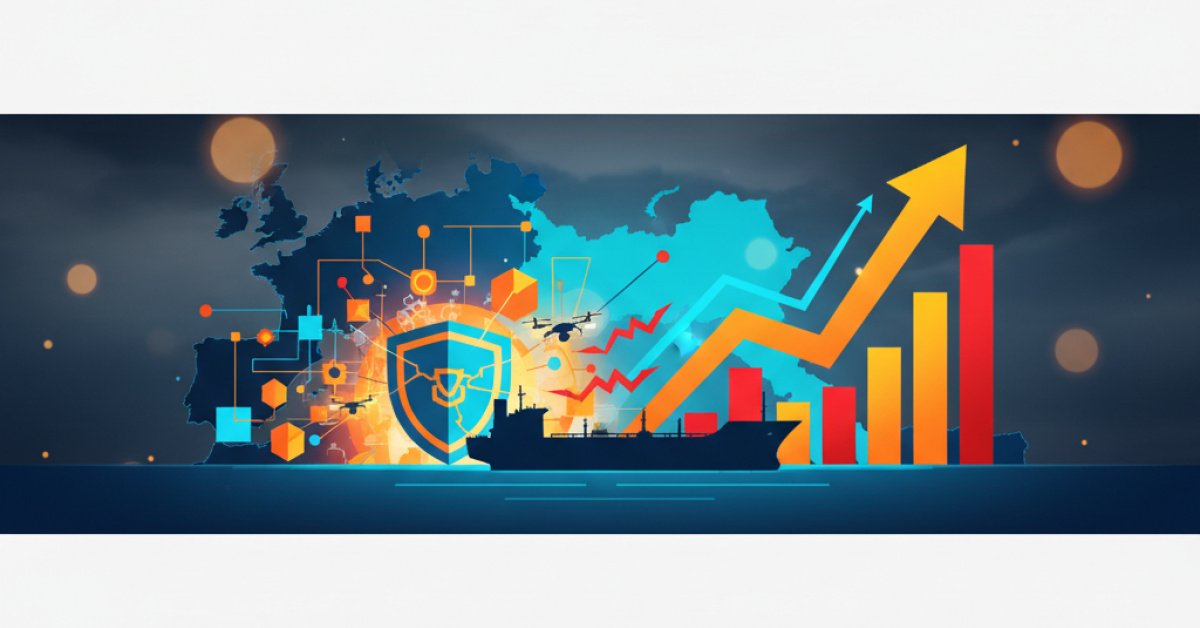
Just when you think things in the global shipping lanes can’t get any more complicated, a story like this pops up on the wire. It’s the kind of alert that makes every marine underwriter I know sit up a little straighter and reach for their coffee.
A container vessel, just going about its business, gets hit while passing through the Strait of Hormuz. The situation gets so bad, so quickly, that the crew has to abandon ship. They’re safe, which is the most important thing, but their vessel is now adrift.
For most people, this is a fleeting news headline. For us in the insurance world? This is the start of a massive, complicated, and very expensive puzzle. It’s a real-world stress test of policies, premiums, and the entire concept of risk in one of the world's most critical maritime choke points.
So, What Exactly Happened Out There?
Let’s get the basic facts on the table. A UK naval group sent out the initial report: a vessel had been struck and the crew forced to abandon it. That alone is enough to get the market buzzing.
We quickly learned the ship in question is the Safeen Prestige. Now, this isn't one of those supermassive container ships, but that almost doesn't matter. An abandoned ship is an abandoned ship, and it represents a huge potential loss.
Imagine getting that call. Your crew is being rescued, but the multimillion-dollar asset you insure, along with all its cargo, is now floating unmanned in a high-traffic, high-conflict area. It’s a nightmare scenario, and it immediately triggers a cascade of questions that all lead back to insurance.
The Insurance Domino Effect Begins
When a ship is abandoned, it’s not just one insurance claim. It’s a whole series of them, like dominoes tipping over one after another. Let's walk through the big ones.
First Domino: Hull & Machinery (H&M)
This is the most obvious one. The H&M policy covers physical damage to the ship itself—the hull, the engine, all the working parts. The first question for the H&M underwriter is simple: how bad is the damage?
If it's repairable, we're talking about a massive claim for parts, labor, and salvage operations. But if the damage is severe enough, we get into a situation called a "Constructive Total Loss," or CTL. This is an insurance term that basically means the cost to salvage and repair the ship would be more than the ship's actual insured value. In that case, the insurer just pays out the full value and takes ownership of what's left of the vessel (the wreck).
Second Domino: The Cargo
Think about it: that ship isn't empty. It's filled with containers, and each container is filled with someone's products. Every single one of those boxes likely has its own cargo insurance policy.
Now, cargo insurers are scrambling. Where is the ship? Can it be salvaged? Is the cargo damaged by the initial impact? Is it damaged by water? Will it be lost to piracy? The uncertainty is a killer. This single event creates potential claims for dozens, if not hundreds, of different cargo owners and their respective insurers all over the world.
The Big One: War Risk Insurance
Here’s where it gets really interesting. Your standard marine insurance policy usually has exclusions for things like war, strikes, riots, and terrorism. The Strait of Hormuz, unfortunately, is a known hotspot for this kind of activity.
To operate there, shipowners have to buy a special, separate policy called War Risk Insurance. This is exactly what it sounds like—it covers the perils that standard policies won't touch. And let me tell you, the premiums for this coverage have been going through the roof lately.
An attack like the one on the Safeen Prestige is precisely the kind of event this policy is designed for. But it also means that war risk underwriters are going to get hit hard. And you know what that means for everyone else: premiums are only going to go up.
Why the Strait of Hormuz Is Such a Headache
To really get why this is such a big deal, you have to understand the Strait of Hormuz. Think of it as a critical highway for global trade, especially for oil. A massive percentage of the world's seaborne oil passes through this narrow strip of water every single day.
Because it's so vital and located in such a tense geopolitical region, the insurance industry has it flagged as a major risk zone. The Joint War Committee (JWC) in London maintains a list of "Listed Areas"—waters they consider high-risk. The Strait of Hormuz is, unsurprisingly, on that list.
If a ship wants to sail through a Listed Area, the owner has to notify their insurer and pay an "Additional Premium" for the voyage. This premium can change weekly, or even daily, depending on the perceived threat level. An incident like this one will cause those premiums to spike, making it more expensive for every ship that needs to pass through.
What This Means for the Rest of Us
You might be thinking, "Okay, a tough break for a few marine insurers, but what does it have to do with me?" Well, a lot, actually. These events have ripple effects that touch the entire global economy.
- Higher Shipping Costs: When insurance premiums go up for shipowners, they don't just absorb that cost. They pass it on in the form of higher freight rates. That means the cost to transport goods around the world rises.
- Supply Chain Snags: An abandoned ship is a physical obstruction and a logistical nightmare. It can cause delays for other ships, and those delays can disrupt supply chains for everything from electronics to consumer goods.
- Rerouting Decisions: At some point, if the risk and the insurance costs get too high, shipping companies might decide to avoid the area altogether. But the alternative routes are often much longer, which means more fuel, more time, and—you guessed it—higher costs.
Ultimately, those costs find their way to the end consumer. So, an attack on a single ship in a faraway strait can eventually mean you pay a little more for things at your local store.
The story of the Safeen Prestige is still unfolding. We'll be watching closely to see how the salvage operations go and how the complex web of insurance claims gets untangled. But it serves as a powerful, real-world reminder that in our business, global events aren't just headlines. They are risk, they are liability, and they are the reality we have to price and prepare for every single day.