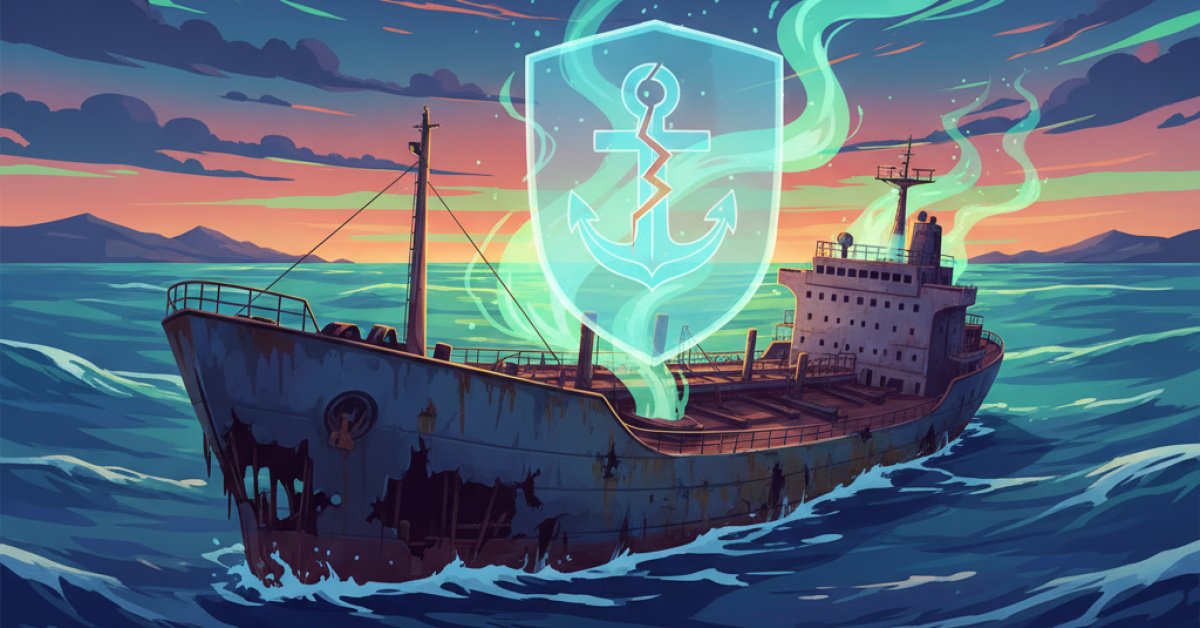
Have you ever seen one of those action movies where a single, unexpected event completely changes the game? One minute, everything’s moving along smoothly, and the next, alarms are blaring and everyone’s scrambling. Well, something very similar just happened in the world of marine insurance, and it all centers on the Black Sea.
It’s a corner of the world that’s been on everyone’s radar for a while, but a couple of recent drone strikes on tankers have really shaken things up. Suddenly, the cost to insure a vessel sailing through those waters is going through the roof.
You might be thinking, "Okay, but why does this matter to me?" It's a fair question. The thing is, the price of shipping is baked into the price of almost everything we buy. When insurance costs for a massive oil tanker jump overnight, that cost doesn't just disappear. It ripples through the entire supply chain. So, let's talk about what happened and why it's causing such a stir for insurers.
So, What Exactly Happened Out There?
Over a very short period, we saw at least two separate drone attacks targeting Russian-linked tankers in the Black Sea. These weren't minor incidents; they were direct hits that grabbed the attention of the entire shipping and insurance industry.
Think of it like this: for months, the Black Sea has been a "high-risk" neighborhood. Insurers knew this and were already charging extra for ships to operate there. But these attacks were different. They were a clear, targeted escalation, signaling that the risk level had just been dialed up to eleven.
Before these strikes, the main concern was floating mines or the potential for collateral damage. Now, we're talking about a scenario where tankers themselves are being treated as military targets. For an underwriter—the person whose job is to calculate risk—that’s a whole new ballgame.
The Million-Dollar Question: How Much More Are We Talking?
When an underwriter sees a new, elevated risk, they do the only thing they can: they raise the price. And that’s exactly what we’re seeing.
The extra premium paid to cover a ship for war risks in the area, known as the "war-risk premium," has shot up dramatically. Before the attacks, this premium was hovering around 1% of the value of the ship's hull. Now? We're hearing quotes closer to 1.20% or even 1.25%.
That might not sound like a huge jump, but let's put it in perspective. A modern tanker can be worth anywhere from $50 million to over $100 million.
Let’s do some quick back-of-the-napkin math:
- Before: A 1% premium on a $50 million tanker is $500,000.
- After: A 1.25% premium on that same tanker is $625,000.
That's an extra $125,000 for a single seven-day voyage. For a ship owner, that is a massive, immediate increase in operating costs. And you can bet they’ll be looking to pass that cost along.
Behind the Scenes: How Insurers Are Reacting
The immediate reaction from the insurance market has been a mix of caution and rapid repricing. No one wants to be the one holding the bag when a multi-million dollar vessel gets hit.
A Scramble to Reassess
Right now, underwriters are scrambling to reassess their "exposure" in the region. Exposure is just an industry term for how much money they stand to lose if things go wrong. After these strikes, their potential for a massive loss in the Black Sea just got a lot more real.
The market is effectively hitting the pause button. Many insurers are holding off on quoting new business for Russian port calls until they can get a clearer picture of the new risk landscape. They're asking more questions, demanding more information about a ship's destination and cargo, and generally being far more selective about who they're willing to cover.
The Problem of "Dark Fleet" Tankers
Complicating things further is the presence of the so-called "dark fleet." These are typically older tankers, often with murky ownership and insurance arrangements, that are being used to transport Russian oil outside of Western sanctions.
These vessels are a huge headache for mainstream insurers. They represent an unknown and unpredictable level of risk. The recent attacks have only highlighted how volatile the situation is, and it’s making reputable insurers even more hesitant to get involved with any vessel that has a connection to Russian oil exports.
What Does This Mean for the Future?
It’s a bit like a weather forecast after a major storm has just passed through: the immediate outlook is turbulent, with more uncertainty on the horizon.
The key takeaway is that the Black Sea is now viewed as a much more dangerous, and therefore more expensive, place to do business. These higher war-risk premiums are likely here to stay for the foreseeable future, at least until the perceived threat level decreases.
This will have a direct impact on the cost of transporting goods, particularly oil, out of the region. For ship owners, it creates a tough choice: either pay the sky-high insurance premiums or avoid the area altogether. Either way, it introduces friction and cost into global trade.
Ultimately, this is a powerful reminder of how interconnected our world is. A couple of drone strikes in a distant sea can have a very real, very tangible financial impact that travels all the way from the underwriter's desk in London to the price you and I pay for things every day. It’s a situation we’ll all be watching very closely.