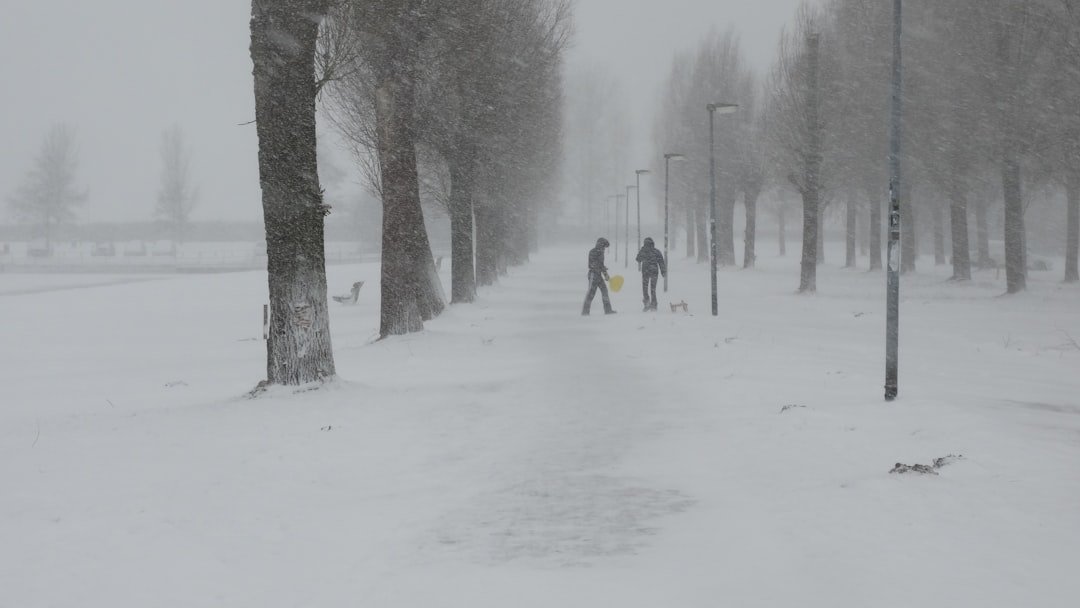
Remember the start of the year? It felt like every other week, another major winter storm was barreling across the country, hitting both the U.S. and Canada with a one-two punch of ice, snow, and brutal, pipe-bursting cold.
While most of us were just trying to stay warm and dig our cars out, these storms were kicking off a massive chain reaction in the insurance world. And honestly, we're still feeling the aftershocks.
It’s easy to think of your insurance policy as something that just sits there until you need it. But what happens when tens of thousands of people need it all at once? That’s exactly what we saw. And it’s created a serious stress test for the entire industry, touching everything from the price you pay to how quickly claims get handled. Let's talk about what's really going on behind the scenes.
So, Just How Big Was the Damage?
We’re not talking about a few fender benders and a handful of leaky roofs here. We’re talking about a flood—a literal flood—of claims. Tens of thousands of them.
Think about it. For every family that came home to a burst pipe and a flooded basement, that was a claim. For every homeowner who had a tree branch crash through their roof under the weight of heavy ice, that was a claim. For every driver who skidded on black ice, that was a claim.
When you add all of those individual disasters up, you get a staggering number. It’s one thing to handle a steady, predictable flow of claims. It’s another thing entirely when a storm system creates a sudden, massive spike in emergencies across multiple states and provinces simultaneously. It’s like a restaurant getting its entire dinner rush for the week in a single hour. Things are bound to get strained.
The Ripple Effect: It’s More Than Just Paying Claims
This is where it gets really interesting. A huge wave of claims doesn't just drain the pot of money set aside for payouts. It puts immense pressure on three critical parts of the insurance machine: pricing, reinsurance, and the actual people who handle the claims.
Why Your Premiums Might Be Feeling the Pressure
Let’s get personal for a second. We all know that insurance rates can feel like a bit of a mystery. They go up, and we’re left wondering why. Well, events like these major storms are a huge part of the answer.
Think of personal lines insurance—your home and auto policies—like a giant community fund. We all pay into it, and when someone has a covered loss, the money is there to help them recover. But when a massive event causes a huge, unexpected withdrawal from that fund, the whole system has to adjust.
Insurers have to make sure there's enough money in the fund for the next storm, and the one after that. When losses are higher than predicted, they have to recalibrate. This often leads to rate adjustments across the board. It’s not that your insurance company is trying to pull a fast one; it’s that the fundamental math of risk has changed. The "pool" needs to be refilled to stay healthy, and unfortunately, that can translate to higher premiums for everyone.
The Insurer's Insurance: What's Reinsurance Got to Do With It?
Now, here’s a piece of the puzzle you might not hear about often: reinsurance.
What is it? In the simplest terms, it’s insurance for insurance companies. It’s their safety net. No single company, no matter how large, can afford to cover a truly catastrophic event on its own—think a Hurricane Katrina-level disaster. So, they buy reinsurance policies to protect themselves from huge losses.
When a series of big storms hits and generates billions in claims, insurance companies turn to their reinsurers for help. But just like with your own insurance, when reinsurers have to pay out massive amounts, they respond by raising their own prices and tightening their terms.
That cost gets passed down the line. Your local insurer now has to pay more for their own safety net, and that expense inevitably gets factored into the premiums they charge you. It’s a trickle-down effect that starts with a global reinsurance company in London or Bermuda and ends with the bill in your mailbox.
Boots on the Ground: The Human Side of the Claims Crunch
Finally, let's talk about the people. When disaster strikes, you want help, and you want it fast. But the system that provides that help has its limits.
The "claims capacity" is just a fancy term for the number of adjusters, call center staff, and support personnel available to handle the workload. After a major storm, these teams are completely inundated.
Imagine being a claims adjuster in an area hit by an ice storm. Your phone is ringing off the hook. You have hundreds of families to help, all of them stressed and desperate. You need to assess damage, coordinate with contractors (who are also swamped), and process paperwork. It’s a logistical and emotional challenge of immense proportions.
This overwhelming demand is why you sometimes hear about delays in getting a claim processed after a big event. It’s not because people aren't working hard; it's because the sheer volume can temporarily break the system. There are only so many skilled people to go around, and they can’t be everywhere at once.
So, what does this all mean? It’s a stark reminder that the weather we experience has a direct and powerful impact on the financial systems designed to protect us. These early-year storms weren't just a news story; they were a real-world test of the insurance industry's resilience. And for insurers, it’s a tough balancing act: keeping prices fair while making sure the company stays strong enough to be there for the next big storm. Because as we all know, it's not a question of if it will happen, but when.