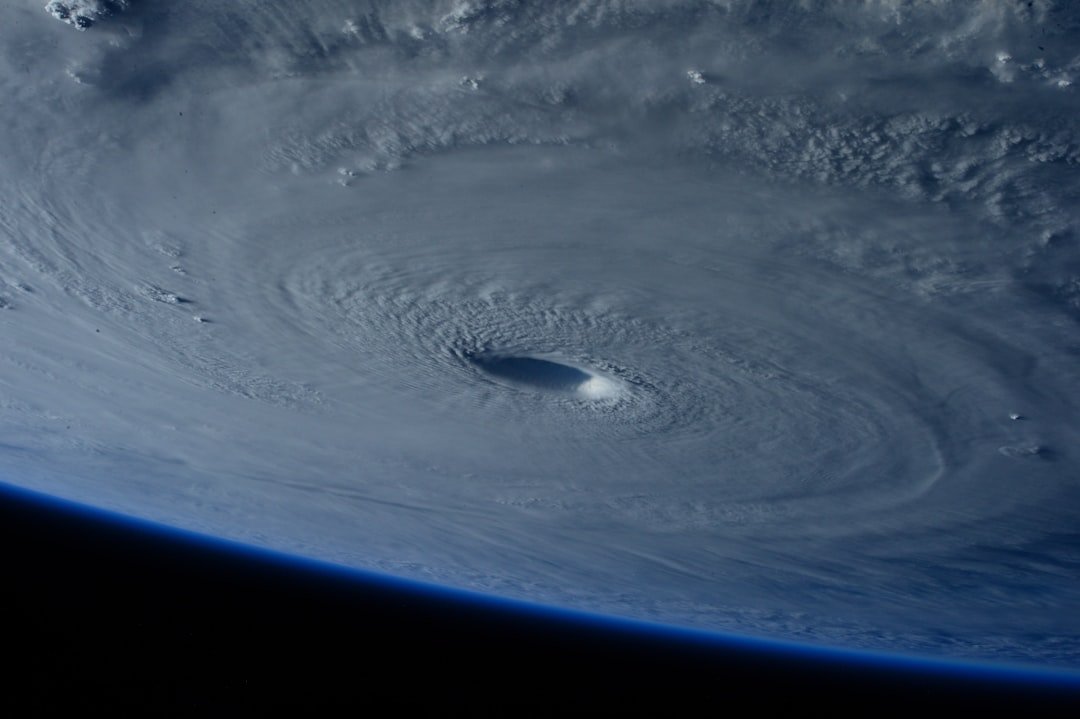
Whenever a big storm starts churning in the Atlantic, we all hold our breath a little, right? Especially those of us in the insurance world. We watch the spaghetti models, we track the wind speeds, and we think about what’s at stake.
I remember watching Superstorm Sandy crawl up the coast back in 2012. The images of a flooded Lower Manhattan were surreal. For many, it felt like a worst-case scenario. But here’s a sobering thought I’ve been wrestling with lately: what if Sandy was just a warm-up act?
A new analysis from the folks at Karen Clark & Co. (KCC) just put some hard numbers on that very question, and honestly, they’re staggering. KCC are the experts in this field—they’re catastrophe modelers. Their entire job is to game out these massive "what-if" scenarios to help us understand the real financial risk. And their latest report on New York City? It’s a real eye-opener.
The Nine-Figure Question: What's the Real Price Tag?
Let's get right to it. According to KCC's modeling, a direct hit on New York City by a 1-in-100-year hurricane could result in more than $100 billion in insured losses.
Let that number sink in for a second. One hundred. Billion. Dollars.
To put that in perspective, Hurricane Katrina, one of the costliest natural disasters in U.S. history, caused around $65 billion in insured losses at the time (that's about $90 billion in today's money). We’re talking about a single event that could dwarf that. This isn't just a bad year for insurers; it's a market-altering event that would send shockwaves through the entire global industry.
So, What Exactly Is a "100-Year Storm"?
This is a term that gets thrown around a lot, and it’s easy to misunderstand. It doesn't mean a storm like this only happens once every century.
Think of it this way: a "100-year event" has a 1% chance of happening in any given year. It’s a statistical probability. You could have two of them in a decade, or you could go 200 years without one. It's just a way for us to measure the severity and rarity of an event.
The problem is, when you’re talking about a place like New York City, even a 1% chance of a $100 billion disaster is a risk that keeps underwriters up at night.
And It Gets Worse… The 250-Year Scenario
Just when you’ve wrapped your head around the $100 billion figure, KCC drops another bombshell. What about an even rarer, more powerful storm?
Their models show that a 1-in-250-year hurricane (that's a 0.4% chance in any given year) could double the cost. We’d be looking at a price tag well over $200 billion. It's almost impossible to comprehend the level of devastation—and the sheer volume of claims—that a storm like that would unleash.
Why Is New York City So Uniquely Vulnerable?
You might be wondering, why are the numbers for NYC so astronomically high? It comes down to a perfect storm of risk factors.
- Incredible Asset Concentration: Think about it. We're talking about Manhattan, one of the most densely packed, high-value square miles on the entire planet. The value of the insured property—skyscrapers, luxury condos, global financial headquarters, world-class museums—is just off the charts.
- The Storm Surge Threat: A hurricane's wind is dangerous, but the real killer for a coastal city like New York is the storm surge. The geography of New York Harbor and Long Island Sound can act like a funnel, channeling ocean water directly into low-lying areas like Lower Manhattan, Brooklyn, and Queens.
- Critical Infrastructure Below Ground: So much of what makes New York run is underground. The subway system, electrical conduits, communication hubs, and building basements are all incredibly vulnerable to flooding. The damage isn't just to the buildings you can see; it's to the city's very nervous system. Superstorm Sandy gave us a painful lesson in this, flooding subway tunnels with corrosive saltwater that caused problems for years.
When you combine that immense property value with the catastrophic potential of storm surge, you get the recipe for a $100 billion-plus disaster.
What This Means for Us in the Industry
These aren't just scary numbers meant to grab headlines. They have real-world implications for everyone in the insurance chain, from the primary carriers to the global reinsurers who back them up.
A loss of this magnitude would test the limits of the industry's capital. It would certainly trigger major shifts in how we price coastal property risk, not just in New York, but everywhere. Reinsurance rates would spike, underwriting guidelines would tighten dramatically, and some areas might even become difficult to insure at any price.
Ultimately, it’s a stark reminder of the immense responsibility we carry. Our job is to help people and businesses rebuild after the unthinkable happens. But reports like this from KCC force us to confront the reality that the "unthinkable" might be more probable—and more expensive—than any of us are truly prepared for. It's a conversation we need to keep having, because that 1% chance is there, every single year.