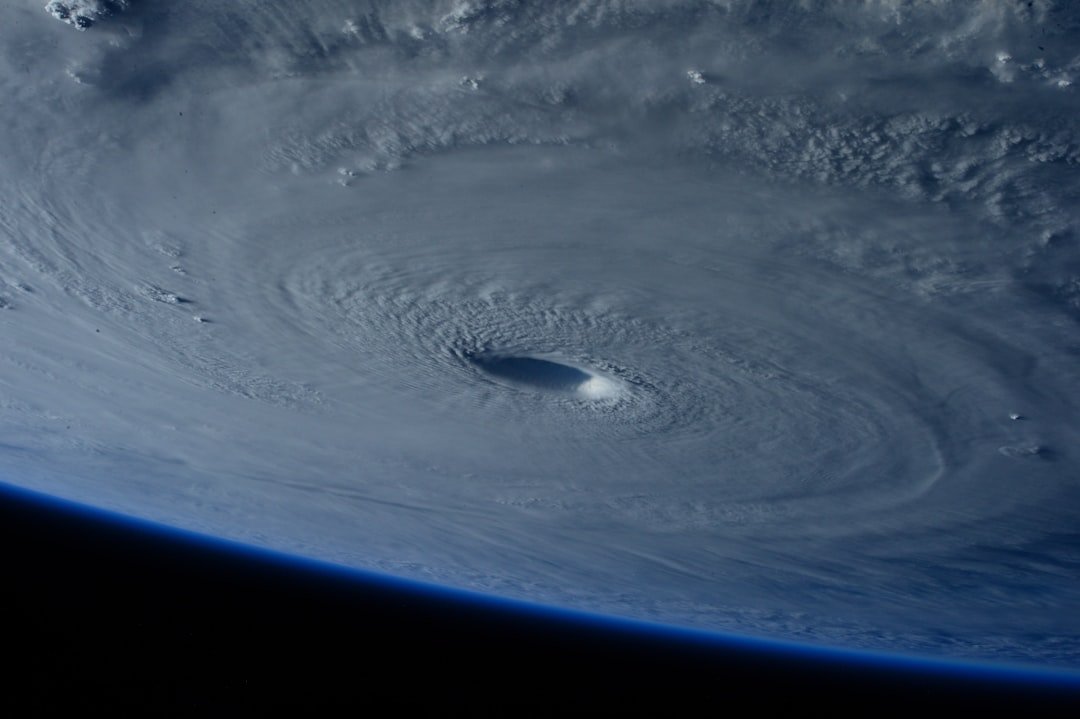
You see a headline about a massive $150 million insurance payout and your first thought might be, "Ouch. Someone's having a bad day." And when that payout is for a single event, like a hurricane hitting Jamaica, it’s natural to wonder if the system is under strain.
It’s the kind of news that can make investors in the insurance world get a little jittery. After all, a big payout means a big loss for the people who backed the policy.
But here’s the fascinating thing about the recent payout triggered by Hurricane Melissa: the market that backs these kinds of deals, the Insurance-Linked Securities (ILS) market, is taking it all in stride. In fact, what looks like a major loss on the surface is actually being seen as proof that the system is working exactly as it should.
Let’s unpack what happened here, because it’s a really interesting look at where our industry is heading.
First, What is This "Parametric" Thing Anyway?
Okay, before we get into the market reaction, we need to talk about the type of insurance that just paid out. This wasn't your typical homeowner's policy. This was a parametric policy.
If you're not familiar with them, don't worry. The concept is actually pretty simple.
Think of it like this: traditional insurance is all about assessing the damage after it happens. A claims adjuster comes out, you fill out a mountain of paperwork, and weeks or months later, you get a check for the proven damages.
Parametric insurance throws all that out the window. It’s based on a simple, pre-agreed trigger. It’s an "if-then" statement.
- IF an earthquake of a certain magnitude hits a specific area... THEN the policy pays out X amount.
- IF a hurricane's wind speeds reach a certain level in a defined zone... THEN the policy pays out Y amount.
In Jamaica’s case, the trigger was Hurricane Melissa. The storm met the specific criteria laid out in the policy, and boom—the $150 million payment was triggered. No arguments, no adjusters, just a fast, direct injection of cash when it's needed most. For a government trying to manage disaster recovery, that speed is everything.
So Why Would a Payout Cause Any Concern?
On the one hand, this sounds great, right? A promise was made, and it was kept. The country gets the money it needs to recover.
But on the other hand, a $150 million payout is still a $150 million loss for the investors who backed the policy. These investors are part of what we call the ILS market. They aren't traditional insurance companies; they're often pension funds, hedge funds, and other major financial players who invest in insurance risk for the attractive returns.
Whenever a major event like this happens, it naturally raises a few questions in the market:
- Were the models that priced this risk accurate?
- Is the risk of these events higher than we thought?
- Will this loss scare other investors away from the market?
It’s a totally normal reaction. A big payout is a stress test, and everyone watches to see if any cracks appear in the foundation. Some folks were definitely wondering if this Jamaican "redemption" (that's the industry term for when investors have to pay out) would send a chill through the market.
The Market's Reaction: A Surprising "Carry On"
Here’s where the story gets really interesting. The reaction wasn’t panic. It was… well, pretty calm.
According to the head of ILS at Swiss Re, one of the giants in this space, investors have basically shrugged it off. They’ve taken the Hurricane Melissa payout in stride. Why?
Because this is precisely what they signed up for.
The investors in these securities are sophisticated. They know they are taking on catastrophe risk. They understood the trigger for the Jamaican policy, they knew the potential payout, and they priced their investment accordingly.
When the hurricane hit the pre-defined parameters, the payout wasn't a shocking surprise; it was the system functioning perfectly. In a strange way, an event like this can actually build confidence. It proves that the contracts are solid, the triggers work, and the money flows as promised. It validates the entire model.
Think of it like buying a fire extinguisher for your kitchen. You hope you never have to use it. But if a fire breaks out and it works perfectly, you don't complain about the cost of the extinguisher. You're just glad it did its job. For ILS investors, this payout was the fire extinguisher doing exactly what it was designed to do.
What This Means for the Future
This isn't just a one-off story about a single policy. It tells us a lot about the maturity of both parametric insurance and the ILS market.
For one, it shows that parametric solutions are becoming a crucial tool, especially for governments and large organizations needing quick liquidity after a disaster. The speed and certainty are unmatched by traditional insurance.
More importantly, it shows that the ILS market has grown up. It can absorb a significant, nine-figure loss without a meltdown. The investors who are in it for the long haul understand the risks and aren't scared off by a single event. This kind of resilience is what will attract even more capital to the market in the long run.
So, while the headline might have been about a massive $150 million loss, the real story is one of quiet confidence and a system that held firm under pressure. It’s a reminder that in the complex world of insurance finance, sometimes a payout isn't a sign of weakness, but a powerful demonstration of strength. And that’s a good thing for all of us.