It’s so easy to see a headline flash across your screen—"Vietnam Flood Deaths Reach 90"—and feel a momentary pang of sadness before you scroll to the next thing. We’re all guilty of it. The news cycle moves so fast, and these tragedies can feel a world away.
But I want to ask you to pause with me for a moment. As someone who spends their days in the world of insurance, I’ve learned that behind every statistic is a story. Behind every number is a family, a home, a life that’s been turned completely upside down. The situation in Central Vietnam is a heartbreaking reminder of the real, human cost of natural disasters and why the work we do is so incredibly important.
Let's look beyond the headline together and talk about what this really means—for the people on the ground, and for the safety nets that are supposed to catch them when they fall.
Just How Bad Is It? The Numbers Are Staggering.
When you start to unpack the reports coming from the Vietnamese government, the scale of this is just immense. We're not talking about a small, localized event. This has been a severe, prolonged disaster sweeping across the entire central region.
The official numbers from the Ministry of Agriculture are grim, to say the least:
- 90 people have tragically lost their lives.
- Another 12 are still missing, leaving families in an agonizing state of uncertainty.
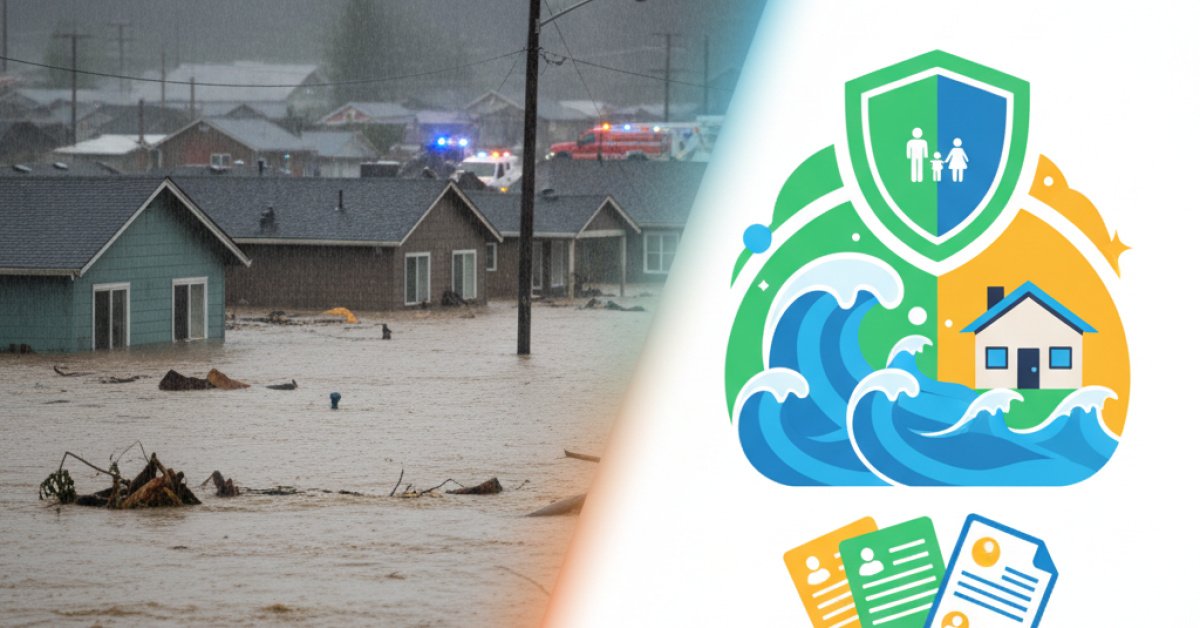
- At the peak, a jaw-dropping 186,000 houses were inundated.
Let that last number sink in. 186,000 homes. That’s not just a flooded basement; that’s water rushing through living rooms, kitchens, and bedrooms. On top of that, more than 1,150 homes are listed as "damaged," which can mean anything from a compromised roof to a structure that's been knocked entirely off its foundation.
It’s hard to even picture that level of devastation. It's the equivalent of an entire mid-sized city being underwater.
What "Inundated" Really Means for a Family
This is where we need to connect the dots from the news report to the kitchen table. When your house is inundated, you don't just lose the building. You lose everything inside it.
Think about it. All the things that make a house a home—family photos, children's schoolwork, furniture passed down through generations, clothes, beds, appliances. It's all gone, or it's been ruined by mud and contaminated water. The emotional toll is immeasurable.
But the financial toll? That’s something we can, and must, talk about. For the vast majority of these families, rebuilding isn't just a matter of cleaning up. It’s starting from absolute zero. They have to replace every single thing they own, all while trying to repair the very structure they live in.
This is the moment when people desperately turn to their insurance policy, hoping and praying that it will be the lifeline they need.
The Tough Question: Who Is Actually Covered?
And here’s the part of the story that keeps me up at night. In many parts of the world, especially in developing regions and rural areas, there's something we in the industry call a "protection gap."
It’s a simple concept with devastating consequences: it’s the massive gap between the total economic losses from a disaster and the amount of those losses that are actually insured.
For so many of the 186,000 families whose homes are underwater in Vietnam, there likely is no insurance policy to call. Flood insurance can be expensive, or simply unavailable. Sometimes, people living in high-risk areas can't get coverage at all. In other cases, they may have a basic home policy that specifically excludes damage from flooding—a detail often buried in the fine print.
So, when the worst happens, there's no check coming. There's no claims adjuster showing up to assess the damage. There is only the government, aid organizations, and the kindness of neighbors to rely on. And while that support is absolutely vital, it can't possibly cover the full cost of rebuilding a life.
The Ripple Effect Goes Beyond the Home
This disaster doesn't just stop at the front door. The impact ripples outward, affecting the entire region's economy.
Think about the source of these reports—the Ministry of Agriculture. That tells you a huge part of the story right there. Central Vietnam is a major agricultural hub. The same floods that inundated homes also wiped out countless farms. We're talking about lost crops, drowned livestock, and damaged equipment.
For a family farmer, that’s not just their home that’s been destroyed; it’s their entire livelihood.
This is also a major event for the insurance industry in the region. For the commercial properties, farms, and homes that are insured, this will trigger a massive number of claims all at once. Catastrophic events like this are the ultimate test of an insurer's financial strength and their ability to respond quickly and compassionately. It also forces underwriters to re-evaluate the risk in the region, which could, unfortunately, make coverage even harder to get or more expensive in the future.
These events are a powerful, if painful, reminder that risk is not an abstract concept. It's real, it's personal, and it's something we all have to plan for. The stories coming out of Vietnam are a tragedy, but they also serve as a crucial lesson about the importance of closing that protection gap and finding new ways to help communities build financial resilience before the next storm hits. Because, as we all know, it's not a matter of if, but when.