It’s been tough watching the news lately. The situation unfolding in Minneapolis is heartbreaking on so many levels, and you can feel the tension and pain right through the screen. When you hear about schools closing and the normal rhythm of a city grinding to a halt, your first thoughts are, of course, with the people directly affected.
As someone who spends their days neck-deep in the world of insurance, I find my brain also goes to another place. I start thinking about the ripple effects. What about the small business owners? The coffee shop that had to close, the boutique that couldn’t open, the restaurant that lost a full day of revenue.
When your entire world is turned upside down by events completely out of your control, you hope you have a safety net. For many business owners, that safety net is supposed to be their insurance policy. But does it actually work the way you think it does in a situation like this? Let’s talk about it, because the answer is a lot more complicated than you might think.
First, Let’s Clear Up a Big Misconception
Most people think business insurance is for when something tangible breaks. A fire, a flood, a break-in—you file a claim, you get a check, you fix the damage. Simple enough.
But what happens when there’s no physical damage to your property? What if, like the schools in Minneapolis, you’re forced to close because of a city-wide order or because it’s simply not safe to operate?
This is where things get tricky. You might assume your "Business Interruption" coverage would kick in. After all, your business was interrupted, right? Unfortunately, it’s rarely that simple.
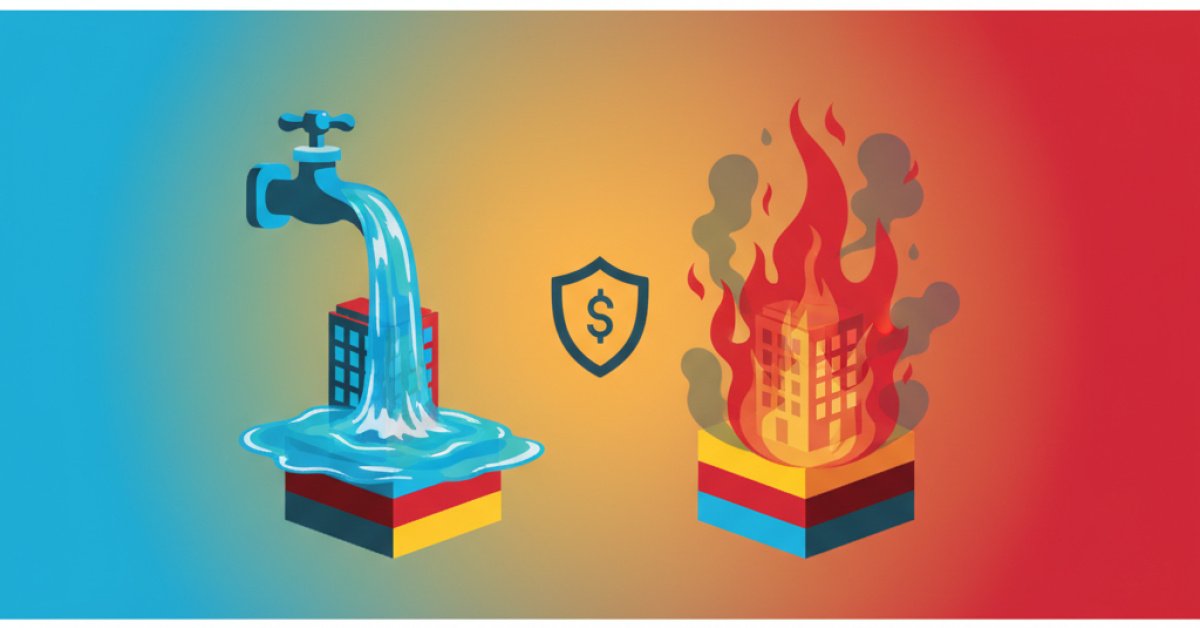
Think of it this way: Your standard business interruption policy is like a sidekick to your main property policy. It’s designed to cover your lost income while you’re repairing physical damage from a covered event. No physical damage, no sidekick.
So if a protest is happening a few blocks away and police advise businesses in the area to close for the day, your standard policy probably won't cover your lost sales. It’s a frustrating reality for many business owners who discover this in the middle of a crisis.
So, When Does Insurance Help During Civil Unrest?
Okay, so if standard business interruption is off the table, what can you count on? This is where we need to look at two specific scenarios: when the government steps in, and when the damage comes directly to your doorstep.
The "Civil Authority" Clause
This is a specific provision in many policies that can be a real game-changer. It’s designed for situations where a government entity—like the police or fire department—denies you access to your property.
Sounds perfect for a protest scenario, right? Well, hold on. There’s almost always a catch.
For this coverage to kick in, the government order usually has to be a response to physical damage at another property nearby.
Let me give you an example. Let's say a fire breaks out in the building next to yours during a protest. The fire department cordons off the entire block for 48 hours while they secure the area. In that case, your "Civil Authority" coverage would likely help recoup your lost income for those two days, even though your own shop wasn't damaged.
But if the police just close the street as a precaution with no underlying property damage? You’re probably out of luck. It’s a fine distinction, but it makes all the difference.
When the Damage is Real and Personal
Now let’s talk about the more straightforward scenario: your business is directly damaged during a protest. A window is broken, your storefront is vandalized, or worse.
This is where your standard Commercial Property Insurance comes to the rescue.
The good news is that damage from events defined as "riot," "civil commotion," and "vandalism" are typically covered perils in almost every standard business property policy. If your property is physically damaged, your policy should cover the costs to repair or replace it.
And because you have that direct physical damage, your Business Interruption sidekick can now jump into action, covering the income you lose while your shop is being repaired.
The Fine Print That Can Really Trip You Up
You know how we all joke about not reading the terms and conditions? With insurance, that can be a truly costly mistake. Every policy is different, and the specific wording matters immensely.
Here are a few things to watch out for:
- Definitions: Your policy will have very specific definitions for "riot" and "civil commotion." It’s worth knowing what they are.
- Exclusions: While rare for this type of event, some policies, particularly in high-risk areas, might have specific exclusions for civil unrest. You need to know if you have one.
- Waiting Periods: Many business interruption policies have a "waiting period" before they start paying out, often 24 to 72 hours.
The absolute best thing you can do is pull out your policy documents—yes, the whole boring stack of them—and look for these key terms. Better yet, call your agent.
How to Be Prepared (Because Hope Isn’t a Strategy)
Look, nobody wants to think about their business getting caught in the middle of civil unrest. It’s a stressful, scary thought. But being prepared can give you a sense of control in a situation that feels anything but.
- Read Your Policy. Right Now. Don't wait for a crisis to find out what you’re covered for. Look for "Business Income" (another name for interruption), "Civil Authority," and the list of covered perils. If you don't understand it, get your agent on the phone.
- Ask "What If" Questions. Talk through specific scenarios with your agent. "What if the city imposes a curfew and I have to close early for a week? Am I covered?" "What if the road to my business is blocked, but my building is fine?" Getting clear answers now is invaluable.
- Document Everything. If you ever have to file a claim, documentation is your best friend. Keep meticulous financial records so you can prove your lost income. If your property is damaged, take hundreds of photos and videos from every possible angle before you touch anything.
These are difficult conversations, I know. But insurance, at its core, is about planning for life’s most challenging moments. It's about creating a bit of financial stability in an unpredictable world. And while we all hope we never need it, understanding what your safety net can and can’t do is one of the most responsible things you can do as a business owner.