Have you ever had one of those days where you fix a problem, breathe a sigh of relief, and then—bam—the exact same problem happens again? It’s frustrating when it’s a leaky faucet. Now, imagine that feeling, but on a multi-billion dollar scale.
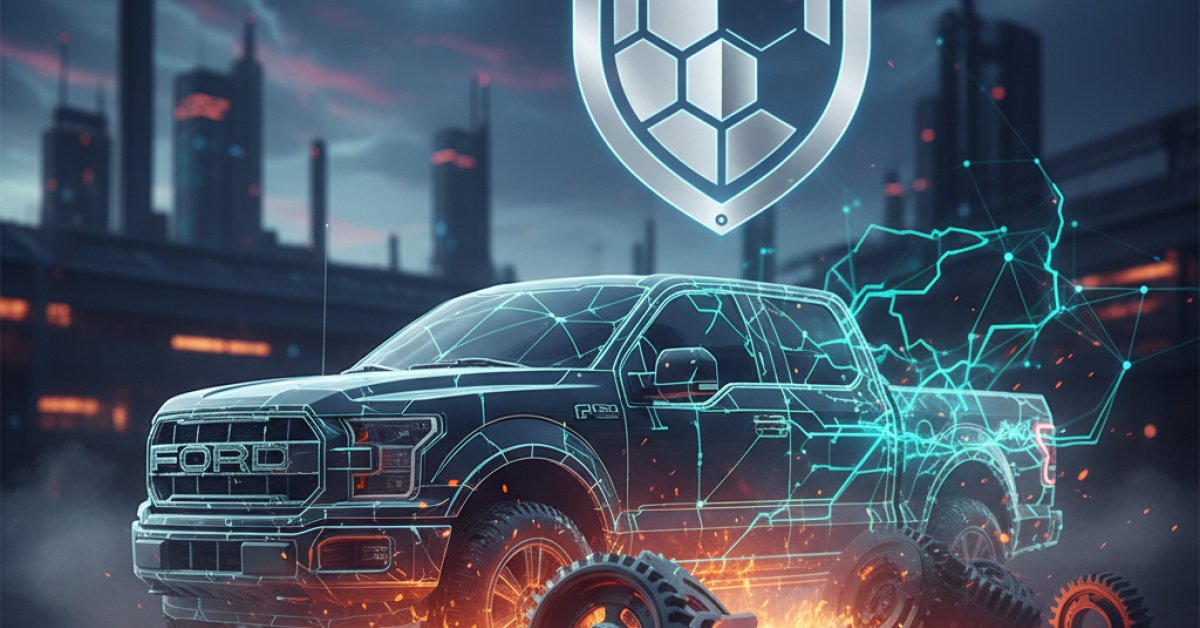
That’s pretty much what’s happening up in Oswego, New York. A key aluminum plant that supplies parts for the Ford F-150—you know, only the best-selling truck in America for decades—just had another fire. This comes just two months after a previous blaze shut down a huge chunk of their production.
For those of us in the insurance world, headlines like this are more than just news. They’re real-world, high-stakes case studies. They're a flashing neon sign pointing to one of the biggest, and often most overlooked, risks in modern business: the supply chain.
So, What's the Big Deal About a Fire Miles Away?
Let’s break it down. The plant is owned by a company called Novelis. They’re a massive player in the aluminum game, and they churn out the stuff Ford needs to build the bodies of their super-lucrative F-150 trucks.
When the first fire hit a couple of months back, it was a big problem. Ford even had to cut its profit forecast back in October, specifically calling out the disruption at this plant. And now, it’s happened again.
This is the classic domino effect in action. A fire starts in one factory, and the shockwaves are felt hundreds of miles away on another company’s assembly line and, eventually, on their balance sheet. It’s a perfect, if unfortunate, example of just how interconnected everything is. Your business isn't an island, even if you want it to be.
This Is Why We Talk About "Contingent Business Interruption"
Okay, let's get into the insurance side of things, because this is where the rubber really meets the road.
Most business owners are familiar with Business Interruption (BI) insurance. If your own factory has a fire, BI coverage helps you cover lost income and operating expenses while you rebuild. It’s a lifesaver.
But what happens when your factory is perfectly fine? What happens when the fire is at your main supplier’s plant, and suddenly you can’t get the one critical part you need to make your product? Your assembly line grinds to a halt. You can't make sales. You’re losing money every single day, but since the fire wasn't on your property, your standard BI policy won't do a thing.
This is where a crucial, and often missed, piece of the puzzle comes in: Contingent Business Interruption (CBI) insurance.
Think of it as BI coverage for problems that aren’t yours. It’s designed to protect your earnings when a key supplier (like Novelis) or even a key customer has a physical loss that directly impacts your ability to do business.
In a situation like this, Ford’s CBI coverage would be the policy that kicks in to help them weather the financial storm caused by the shutdown at the Novelis plant.
It's More Than Just a Production Halt
The really tricky thing about supply chain disruptions is that the costs go way beyond just the lost sales from a temporary shutdown. The financial ripples can be massive.
Let's think about what a company like Ford is facing:
- Scrambling for Alternatives: They can't just wait. They have to find another supplier who can provide the same specific grade of aluminum, and fast. This almost always costs more, especially when you’re in a pinch.
- Expedited Freight: Once they find a new source, they’ll likely have to pay a fortune in expedited shipping costs to get those materials to their plants and try to make up for lost time.
- Production Inefficiencies: Ramping down and then ramping up an assembly line isn't like flipping a light switch. It's a complex, expensive process that creates all sorts of operational headaches.
- Reputational Harm: If you can't deliver your flagship product to dealers, customers get antsy. It can damage the trust you've built over years.
These are exactly the kinds of cascading costs that a solid CBI policy is meant to address. It’s not just about the one part you can’t get; it’s about the entire financial mess that follows.
What Can You Learn From This?
It’s easy to read a story about Ford and think, "Well, I'm not a multi-billion dollar car company." But the lesson here is universal for any business that relies on outside suppliers for anything.
So, what should you be doing right now?
First, map your supply chain. Seriously. Do you know who your most critical suppliers are? Do you have backups? What’s more, do you know who their critical suppliers are? The risk might not be with the company you write checks to, but two or three steps down the line. A fire, flood, or political issue at a Tier-3 supplier you've never even heard of can still shut you down.
Second, dust off your insurance policy. I mean it. Go find it and read it. Do you have Contingent Business Interruption coverage? If so, how much? What are the waiting periods before it kicks in? Are your key suppliers specifically named, or is it a blanket coverage? Don't wait for a crisis to find out you have a gap. Talk to your broker and walk through a scenario like this one.
And finally, remember that insurance is your safety net, not your only strategy. Good risk management means actively working to prevent the fall in the first place. This means diversifying your suppliers, not relying on a single source in a single geographic location if you can help it. It means having real conversations with your suppliers about their own disaster recovery and continuity plans.
These headlines are a gift, in a way. They give us a chance to look at our own operations and ask the tough questions before we're the ones in the news. The modern supply chain is a marvel of efficiency, but it can also be incredibly fragile. A small fire in one corner can make the whole web shake. The real question is, are you ready for it?