When you think about the biggest threats to your small business, what comes to mind? For a lot of owners, it’s the big, dramatic stuff. Maybe you picture a sophisticated cyberattack, a major lawsuit, or a brazen overnight burglary. And yeah, those are definitely serious risks.
But what if I told you the most common culprits are a lot less cinematic? Think less Ocean's Eleven and more… a leaky pipe in the ceiling or a faulty wire in the breakroom fridge.
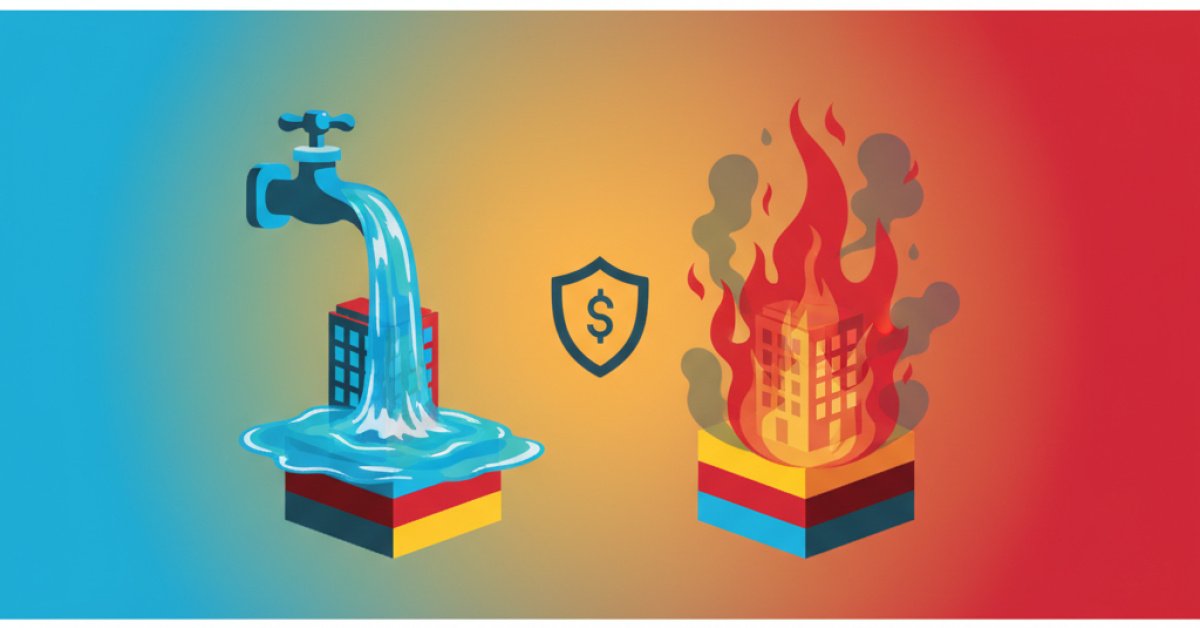
That’s right. A recent deep dive into small business insurance claims shows that the two most frequent and costly issues are water damage and fire. It’s a bit surprising, I know. But when you stop and think about it, it makes perfect sense. These are the everyday risks that can sneak up on anyone, at any time.
So, What's Really Going On with These Claims?
Let’s get straight to it. The data is pretty clear: water and fire are the undisputed heavyweight champions of small business claims. They account for a huge chunk of the incidents that force owners to close their doors for repairs and lean on their insurance policies.
Think about your own business for a second. How many potential water sources are there? You’ve got bathrooms, maybe a kitchen or breakroom, sprinkler systems, HVAC units, and the roof over your head. Each one is a potential point of failure.
And fire? It’s even scarier. Electrical systems, heating equipment, cooking appliances, flammable materials… the list goes on. A small spark can turn into a devastating blaze in minutes. It's not just about losing inventory; it's about losing your entire place of business.
What's really fascinating, though, isn't just that these two are at the top of the list. It's how things have changed to get them there.
A Surprising Shift in the Last 10 Years
Here’s where the story gets interesting. If we had this conversation a decade ago, the list of top claims would have looked a bit different. While fire has always been a major concern, other issues used to feature more prominently.
So, what’s changed?
Well, a few things. For one, our buildings are getting more complex. We have more intricate plumbing and electrical systems than ever before. More appliances, more gadgets, more things plugged in. Each one adds a tiny bit of risk, and over time, that risk adds up.
Think of it like this: 10 years ago, your office might have had a simple coffee pot and a microwave. Today, you might have a high-tech espresso machine, a smart fridge, multiple charging stations, and a server rack humming away in a closet. It’s just a different world.
This shift tells us something really important: the risks we need to worry about aren't static. They evolve. And if our understanding of risk doesn't evolve with them, we're leaving ourselves dangerously exposed.
Why Water Damage is Such a Sneaky Problem
Let's talk about water. When people hear "water damage," they usually picture a massive flood. But honestly, that's the rare, headline-grabbing event. The far more common scenario is the slow, silent leak.
It’s the water heater in the back room that starts dripping. The toilet that overflows on a holiday weekend when no one is around. Or the ice dam on the roof that melts and sends water seeping into your walls.
I’ve seen it happen time and time again. A small, undetected leak can cause thousands of dollars in damage. It ruins drywall, warps flooring, and can lead to a nasty mold problem that’s incredibly expensive to fix. And the worst part? Your business could be shut down for weeks while the mess is cleaned up and repaired. That’s lost income on top of the repair bill.
Fire: The Threat That Never Sleeps
Fire is a different kind of beast. It’s fast, destructive, and utterly terrifying. While water damage can be insidious, a fire is an immediate crisis.
Again, it’s often not the dramatic stuff you see in movies. The most common causes are things like:
- Faulty electrical wiring: Old buildings are especially at risk here.
- Kitchen mishaps: A grease fire in a restaurant is a classic, and devastating, example.
- Heating equipment: A furnace that hasn't been serviced properly can be a ticking time bomb.
- Human error: An overloaded power strip or a carelessly discarded cigarette.
The cost of a fire isn't just the flames. It's the smoke damage that ruins everything it touches. It's the water damage from the sprinklers and fire hoses. And, just like with a major water incident, it's the cost of being closed for business for months, or even permanently.
What This All Means for You and Your Business
Okay, so we know water and fire are the big ones. That’s good information, but what do you do with it? It's not about being scared; it's about being smart.
This is where you shift from being a reactive business owner to a proactive one. Here’s what I’d suggest:
-
Walk Your Space: Seriously. Get up and walk around your property with "fire and water" in mind. Where are your water shut-off valves? Is your electrical panel easily accessible? Do you see any frayed cords or overloaded outlets? Are things stored too close to your furnace? You'd be amazed at what you spot when you're actively looking.
-
Talk to Your Team: Make sure your employees know the basic safety stuff. Who to call in an emergency, where the fire extinguishers are, and how to use them. A little bit of training can make a world of difference.
-
Review Your Insurance Policy (Like, Really Review It): This is the most important step. Don't just assume you're covered. Pull out your policy and look at it. Or better yet, call your agent and have a real conversation. Ask them directly: "Am I covered for damage from a burst pipe? What about a small electrical fire? What is my coverage for business interruption?"
You need to understand not just if you’re covered, but how much you’re covered for. Is it enough to rebuild, replace your equipment, and cover your lost income while you’re shut down? These are the tough questions you need to ask before you ever have to file a claim.
The truth is, your insurance policy is one of the most important assets your business has. But it only works if it’s the right policy for the risks you actually face. Knowing that water and fire are at the top of the list gives you a huge advantage. It allows you to focus your prevention efforts and your insurance dollars where they’ll make the biggest impact.
So take another look around your business today. That little drip you've been ignoring or that crowded outlet in the corner might just be a bigger deal than you think. A little bit of prevention now could save you from a massive headache later.