You know that mini-panic you feel when your Wi-Fi cuts out for five minutes? Now, imagine that on a colossal scale. Imagine you’re a massive e-commerce company, a bank, or an AI developer, and the digital warehouse that stores and runs your entire operation goes dark. Not for five minutes, but for ten hours.
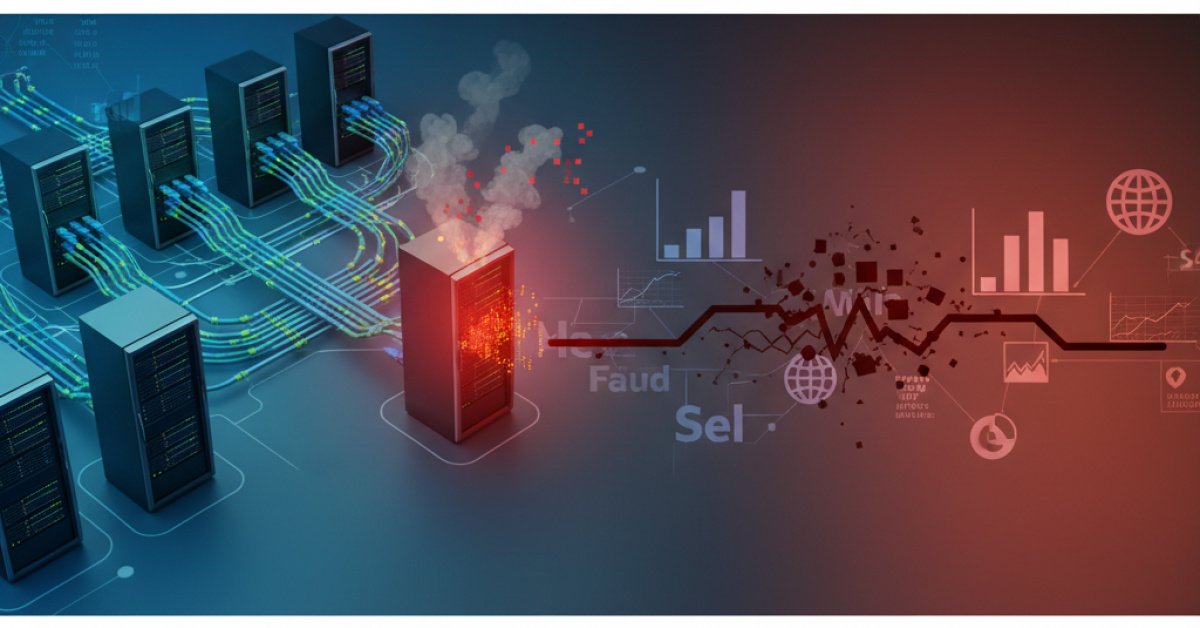
That’s not a hypothetical. It’s exactly what happened last month at a CyrusOne data center, and it sent a shockwave through a world that most people never even think about.
We all live in the cloud, but the cloud lives in very real, very physical buildings packed with servers. And the people who own these buildings, like private equity giants KKR and Global Infrastructure Partners (GIP), have made an almost impossible promise: that the lights will always stay on. This recent outage is a brutal reminder that sometimes, they don't. And when that happens, the financial and insurance fallout is just massive.
The Mythical "Five Nines"
In the data center world, there's a gold standard everyone obsesses over. It's called the "five nines."
It means being operational 99.999% of the time.
That sounds impressive, but what does it actually mean in the real world? It means your total downtime for an entire year can’t be more than about five minutes. Five. Minutes. For 365 days. It's a promise of near-perfection, and it’s the bedrock of our digital economy. Every time you stream a movie, process a payment, or ask an AI a question, you're relying on this promise.
So, when a facility like CyrusOne’s goes down for 10 hours—that’s 600 minutes—it’s not just a hiccup. It’s a catastrophic failure to meet the industry’s most sacred vow. It’s the kind of event that keeps CEOs, investors, and especially their insurance underwriters, up at night.
So, What Exactly Happened?
The news rippled out pretty quickly. A major CyrusOne facility had a significant outage. Ten hours of darkness. For the clients relying on that center, it was a sudden, terrifying halt to business as usual.
Now, this isn't just a PR problem for CyrusOne. It's a massive financial headache for its owners, KKR and GIP, who took the company private in a $15 billion deal. They, and firms like them, are pouring unbelievable amounts of money into the data center space, betting big on the explosive growth of AI and our never-ending demand for data.
Think about it. They're buying these facilities based on the premise of their reliability. They sell that reliability to clients for a premium. An outage like this directly attacks the very core of their business model and the value of their multi-billion dollar asset.
Why This is an Insurer's Nightmare
Okay, let's get into the part that really fascinates me: the insurance. How in the world do you insure a promise of 99.999% uptime? It’s one of the most complex and high-stakes challenges in our industry today.
This isn't like underwriting a property policy for an office building. The potential for loss is staggering and comes from all directions.
Here’s what an underwriter is looking at:
- Business Interruption (BI): This is the big one. It’s not just about CyrusOne’s lost revenue. It’s about the lost revenue of all their clients during those 10 hours. If a major online retailer hosted there couldn't process sales, the BI claim could run into the millions, or tens of millions, from that one client alone. Now multiply that by all the other affected businesses.
- Contingent Business Interruption (CBI): This is the coverage those clients have. Their own operations were interrupted because their critical supplier (the data center) went down. Their insurers pay the claim, and then likely turn to CyrusOne’s insurer to get that money back, a process we call subrogation. It becomes a very expensive, very complicated domino effect.
- Property Damage: What caused the outage? Was it a faulty cooling system? A generator failure? A fire? The cost to repair or replace incredibly sophisticated and expensive equipment is huge.
- Errors & Omissions (E&O) / Professional Liability: CyrusOne provides a professional service. They failed to deliver on that service level agreement (SLA) that promised uptime. You can bet that clients will be looking for compensation for the failure, and that falls squarely under an E&O policy.
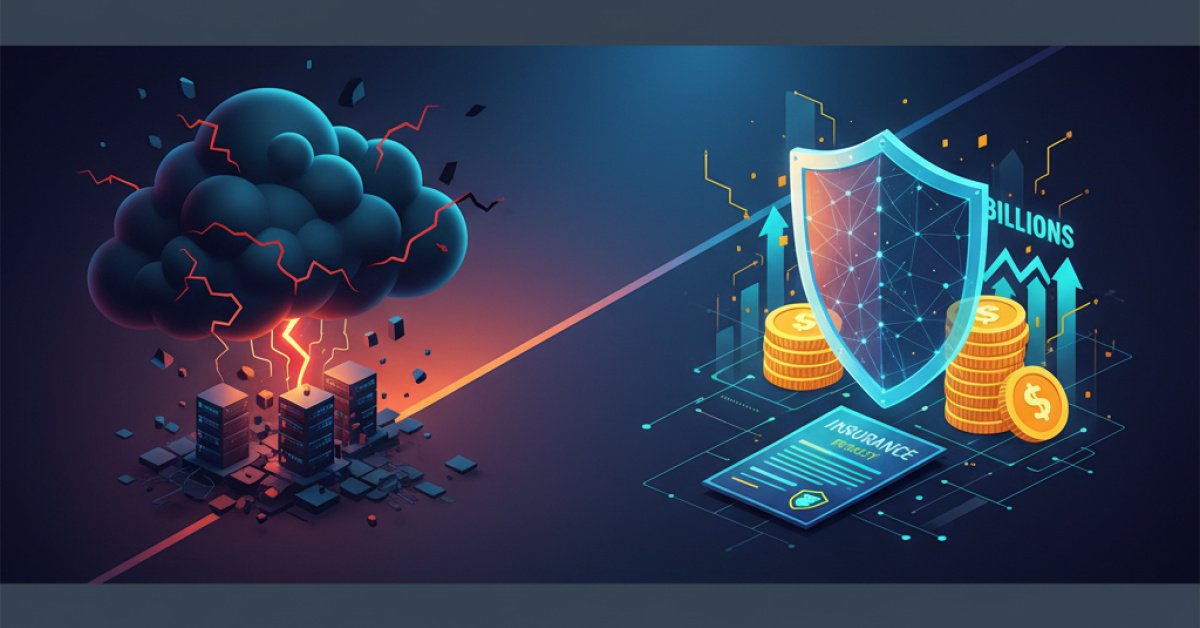
An event like this is what we in the insurance world call a "multi-tower loss." It triggers multiple policies at once, creating a cascading claim that is incredibly difficult and expensive to unravel.
The Ripple Effect on the Data Center Insurance Market
You can be sure that every underwriter who specializes in tech and data centers is re-reading their policies right now. An outage of this magnitude doesn't just stay with one company; it sends ripples across the entire insurance market.
First, expect rates to go up. When risk becomes reality, the price of covering that risk increases. It’s that simple. Data center operators will likely face higher premiums at their next renewal.
Second, underwriters will get tougher. They'll be asking more pointed questions about redundancy. What are your backup power systems? And what are the backups for the backups? They’ll want to see proof of rigorous testing and maintenance schedules. The application process is about to get a lot more intense.
And finally, we might see changes in the coverage itself. Insurers might start adding more specific exclusions or sub-limits for certain types of failures. They are in the business of managing risk, and a 10-hour outage is a signal that the risk might be even greater than they previously calculated.
It’s a tough balancing act. The investors like KKR and GIP need robust insurance to protect their massive bet. But insurers are getting nervous about the sheer concentration of value—and risk—inside these single buildings.
As we become more dependent on AI and the cloud, the stakes just keep getting higher. These data centers are no longer just IT infrastructure; they are the power grid of the 21st-century economy. And as this incident shows, a flicker in the lights can have consequences that go far beyond a single building, testing the ambitions of investors and the resilience of the insurers who stand behind them.