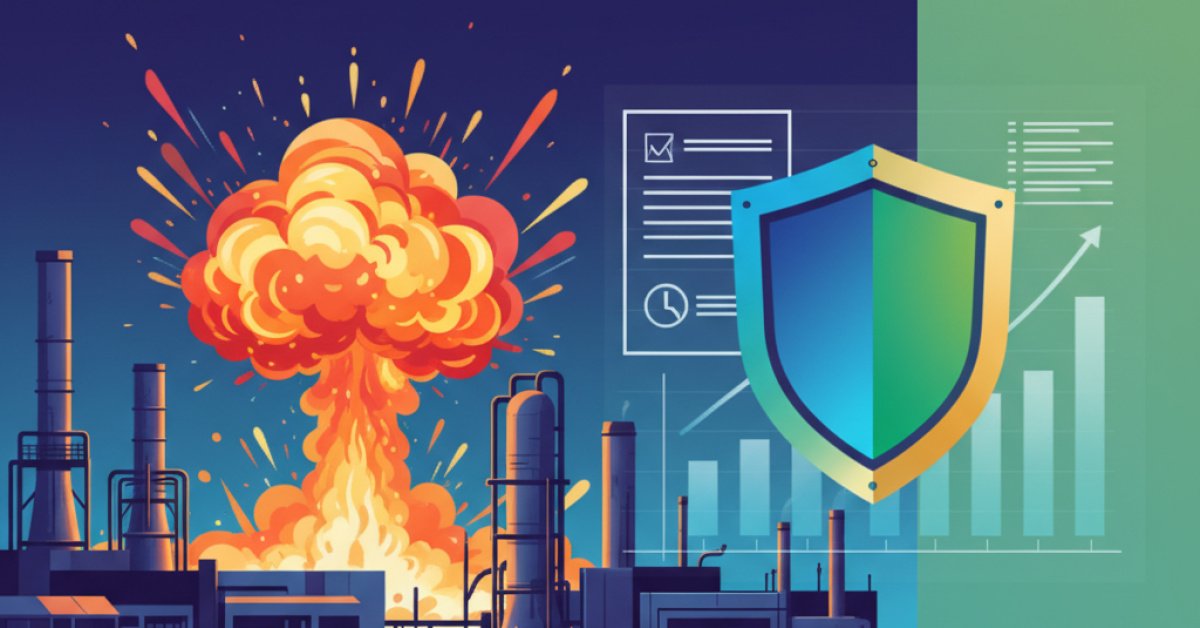
Have you seen the news about that chemical plant explosion down in Mississippi? It’s pretty intense stuff. An explosion, an ammonia leak, evacuations… it sounds like something straight out of a movie.
But here’s the thing that always gets me when I see a story like this. For us in the insurance world, it’s not just a dramatic headline. It's a real-life, high-stakes case study. It’s a stark reminder that these "worst-case scenarios" actually happen. And when they do, a business's entire future can hinge on the pieces of paper tucked away in their insurance portfolio.
So, let's put ourselves in the shoes of that company's leadership for a minute. The smoke has barely cleared, the emergency crews are on site, and the phone is ringing off the hook. What happens next? This is where insurance stops being an abstract expense and becomes the most important asset you own.
First Things First: Picking Up the Pieces of the Plant
Okay, imagine the scene. The explosion has likely caused catastrophic damage to the building itself, not to mention the incredibly expensive and specialized equipment inside. We're talking about twisted metal, shattered concrete, and millions of dollars in machinery reduced to scrap.
This is the most obvious part of the puzzle, and it's where Commercial Property Insurance steps in.
Think of it like your homeowner's insurance, but for your business and on a much, much bigger scale. This policy is designed to cover the physical assets of the business. We’re talking about:
- The building itself: The cost to repair or completely rebuild the structure.
- The equipment: All the machinery, computers, and tools needed to actually run the business. For a chemical manufacturer, this equipment is the lifeblood of the company.
- Inventory: All the raw materials they had on hand (like hydrogen and nitrogen) and any finished products waiting to be shipped.
Without solid property coverage, a disaster like this is an immediate, full-stop catastrophe. You’re not just out of business for a while; you might be out of business forever. This is the foundational coverage that gives you a chance to even think about rebuilding.
The Doors Are Closed, But the Bills Don't Stop
Now, here's the part that I find many business owners overlook. The explosion is over, but the financial damage is just getting started. The plant is shut down. Nothing is being produced. Nothing is being sold.
But guess what doesn't stop? The bills. You've still got payroll for key employees, loan payments, taxes, and other fixed expenses. This is the silent killer that can bleed a company dry long after the fire is out.
This is exactly why Business Interruption (BI) Insurance is so incredibly critical.
I like to think of BI as the financial life-support for your business. While your property insurance is working to rebuild the physical plant, your BI coverage is working to replace the income you're losing because you can't operate. It helps you cover those ongoing expenses and can even replace the profits you would have earned. It’s the coverage that bridges the gap from "disaster" to "doors open again."
For a company like the one in Mississippi, that downtime could be months, or even over a year. Can you imagine your business having zero income for a year? For most, it's an impossible thought. That’s the gap BI is meant to fill.
When the Problem Spills Beyond Your Fence
This story has another layer that makes it even more complex: the ammonia leak and the evacuations. The problem didn't stay contained within the plant's property lines. It spilled out into the community.
When your business operations harm a third party—in this case, the nearby residents who had to evacuate—you have a massive liability on your hands. People could have health issues from inhaling fumes. Their property values could be affected. They could sue for damages related to the evacuation itself.
This is where liability insurance comes in, but it's not as simple as you might think.
A standard Commercial General Liability (CGL) policy is essential, but here's the kicker: most CGL policies have what's called a "pollution exclusion." They are specifically designed not to cover claims arising from the release of pollutants, which ammonia would almost certainly be classified as.
So, what’s the solution? A separate Pollution Liability policy. This is specialized coverage designed for exactly this kind of scenario. It helps cover the costs of cleanup, fines, and—most importantly—the legal claims from people who were harmed. For any business that handles chemicals, manufacturing, or even construction, operating without this coverage is a huge, and potentially company-ending, gamble.
Is Your Business Ready for a "Headline" Moment?
Look, nobody wants to see their company name in a headline like the one out of Mississippi. It’s a gut-wrenching scenario for the owners, the employees, and the entire community.
But we can't just read these stories, shake our heads, and move on. We have to use them as a lesson. It’s a chance to pull out our own policies and ask the tough questions.
Are we just "covered," or are we truly prepared? Do we have the right types of coverage? Are our limits high enough to handle a true catastrophe? Have we talked through what would happen if our business was shut down for six months?
These events are a powerful reminder that insurance isn't just about ticking a box. It's about building a financial fortress around the business you've worked so hard to create. It's about ensuring that when the worst happens, you have the tools, the resources, and the team to rebuild and come back stronger.