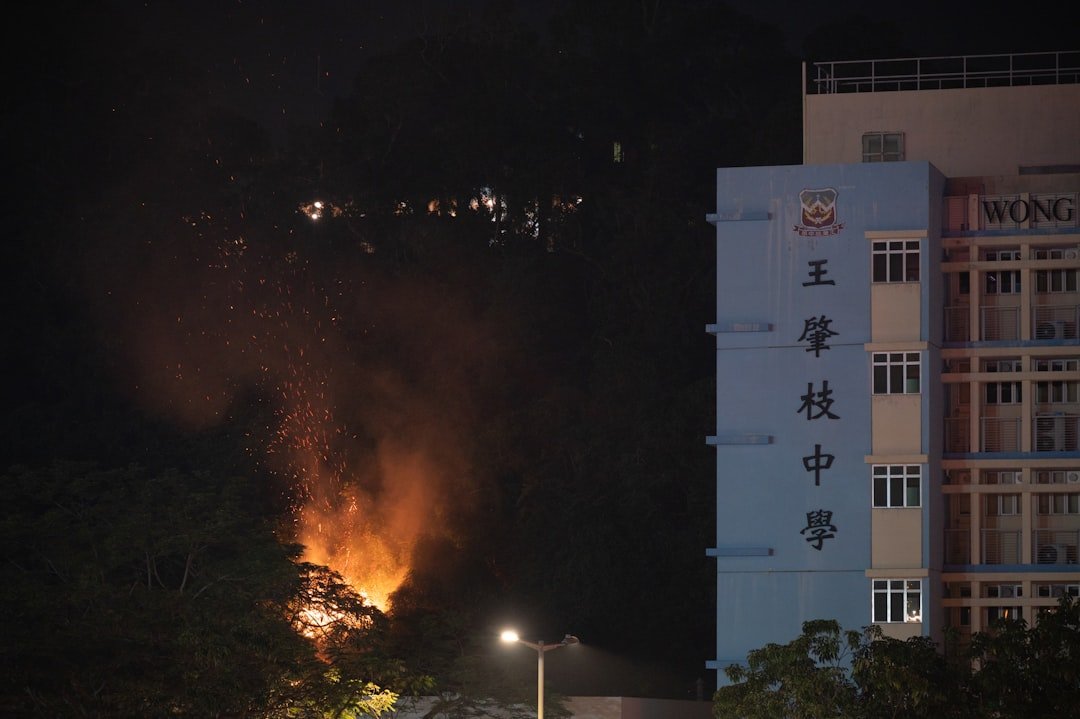
You probably saw the headlines. A fire breaks out at a hospital in northeastern Pennsylvania, smoke is pouring into the sky, and dozens of patients are being evacuated. It’s a chaotic, scary scene. Thankfully, the initial reports said no one was injured, which is the most important thing.
But as an insurance person, my mind immediately goes to the "what now?" phase.
Once the firefighters leave and the news crews pack up, a whole different kind of emergency response kicks in. It’s the one handled by risk managers, adjusters, and brokers. This isn't just a news story; it's a real-world, high-stakes case study in why commercial insurance is so much more than just a policy document filed away in a cabinet. It’s a living, breathing thing that springs into action when everything goes wrong.
Let’s pull back the curtain and talk about what’s really happening behind the scenes from an insurance perspective when a disaster like this strikes a complex facility like a hospital.
The First Call Isn't Just to 911
When a fire alarm goes off in a hospital, it triggers a massive, coordinated effort. But for the hospital’s leadership, the call to their insurance broker is almost as critical as the one to the fire department.
Why? Because from the second that fire starts, the clock is ticking on massive financial losses. We're not just talking about the cost of a scorched wall or a damaged roof. We're talking about a cascade of problems that each have a dollar amount attached.
Think about it:
- Patient Care: Where do those evacuated patients go? They need to be transported safely to other facilities. That costs money. Their care needs to be seamlessly continued. Any interruption could be a huge liability issue.
- Expensive Equipment: A hospital isn't just a building. It's filled with multi-million dollar MRI machines, CT scanners, and delicate surgical equipment. Smoke and water damage can be just as destructive as flames to these sensitive electronics.
- Business Operations: A hospital is a 24/7 business. When you have to shut down a wing—or the entire building—you’re not just stopping elective surgeries. You’re stopping the entire revenue stream.
This is where the insurance portfolio really shows its worth. It’s not one policy, but a web of different coverages designed to work together.
Untangling the Web of Coverage
When a major event like this happens, you’re not just filing one claim. The hospital’s risk management team is likely activating several policies at once.
Commercial Property Insurance: The Obvious One
This is the coverage everyone thinks of first. It’s designed to repair or replace the physical stuff that was damaged—the building itself and the contents inside.
But for a hospital, this gets complicated fast. You can’t just value an MRI machine like you would an office desk. You need specialized appraisals. And the policy needs to be structured correctly. Are they covered for "replacement cost" (what it costs to buy a new one today) or "actual cash value" (what the old one was worth with depreciation)? For a hospital that needs the latest technology, that difference can mean millions of dollars.
Smoke and water damage are also a huge factor. Cleaning and restoring a sterile medical environment is an incredibly specialized and expensive job. This all falls under the property policy.
Business Interruption: The Real Financial Lifeline
Here’s the thing that can truly make or break an organization after a disaster. Business Interruption (BI) coverage is, in my opinion, one of the most critical and often misunderstood policies out there.
BI is designed to replace the income a business loses because of a covered event (like a fire). While the hospital is closed for repairs, it’s not generating revenue. But it still has to pay its bills! Doctors, nurses, and staff still need their salaries. The electricity bill for the undamaged parts of the building still comes due.
This coverage is what keeps the lights on, metaphorically speaking, while the actual lights are out. It helps the hospital avoid financial collapse so it has a business to come back to once the repairs are done.
Extra Expense Coverage: The Unsung Hero
Related to BI is Extra Expense coverage. Think of this as the "get back on your feet fast" fund.
This policy covers the additional costs needed to keep the operation going in some capacity. For the Pennsylvania hospital, this could mean:
- The cost of leasing temporary space to see patients.
- Renting critical medical equipment while theirs is being repaired.
- Paying overtime to staff who are managing the crisis.
- The costs of transporting patients and their records to other facilities.
These aren't normal operating costs; they are extraordinary expenses incurred directly because of the fire. Without this coverage, a hospital could be forced to stay completely shut down simply because it can't afford the temporary measures needed to continue serving its community.
It’s Not Just About the Property; It’s About the People
The biggest risk for any healthcare facility is always the well-being of its patients. When you have to evacuate dozens of people, some of whom might be critically ill or in the middle of a procedure, the potential for something to go wrong is enormous.
This is where Professional Liability insurance, often called Medical Malpractice coverage, comes into play. If a patient's condition worsened because their care was disrupted during the evacuation, the hospital could face a major lawsuit. A strong liability policy is the backstop that protects the hospital's assets from these kinds of claims.
The Real Lesson Here? A Plan is Everything.
A fire at a hospital is a nightmare scenario. But it’s a powerful reminder that insurance policies don't exist in a vacuum. They are part of a much larger risk management strategy.
The hospital’s ability to evacuate everyone safely points to a well-rehearsed emergency plan. And that plan is what makes the insurance work. When you can show your insurance carrier that you had a solid disaster recovery plan and you executed it, the claims process becomes infinitely smoother.
The carrier sees you’re organized, you’re mitigating further loss, and you’re actively working to get back in business. That’s the kind of partner they want to work with.
So, while we watch the news and feel for the patients and staff, we can also see this as a real-time lesson. It shows that the right combination of planning and a well-structured insurance program is what allows a community’s essential services to survive the unthinkable and eventually, open their doors once again.