Ever had that one employee—a real powerhouse, always reliable—who suddenly has to take a week off for a back strain? Or maybe you’ve noticed a few people on the assembly line quietly rubbing their wrists or shoulders throughout the day.
These aren't just minor aches and pains. They're often the first warning signs of musculoskeletal disorders (MSDs), and frankly, they’re one of the biggest, most persistent headaches for businesses today. We're talking about everything from carpal tunnel and tendonitis to serious back injuries.
And let’s be honest, the impact goes way beyond the employee’s discomfort. For you, the business owner or manager, it means a cascade of problems: mounting medical costs, lost productivity while they're out, and the general disruption of finding someone to cover their work. It’s a huge financial and operational drain, and for many businesses, it feels like a problem you can only react to after the injury has already happened.
The Old Way of Spotting Risk Has Its Limits
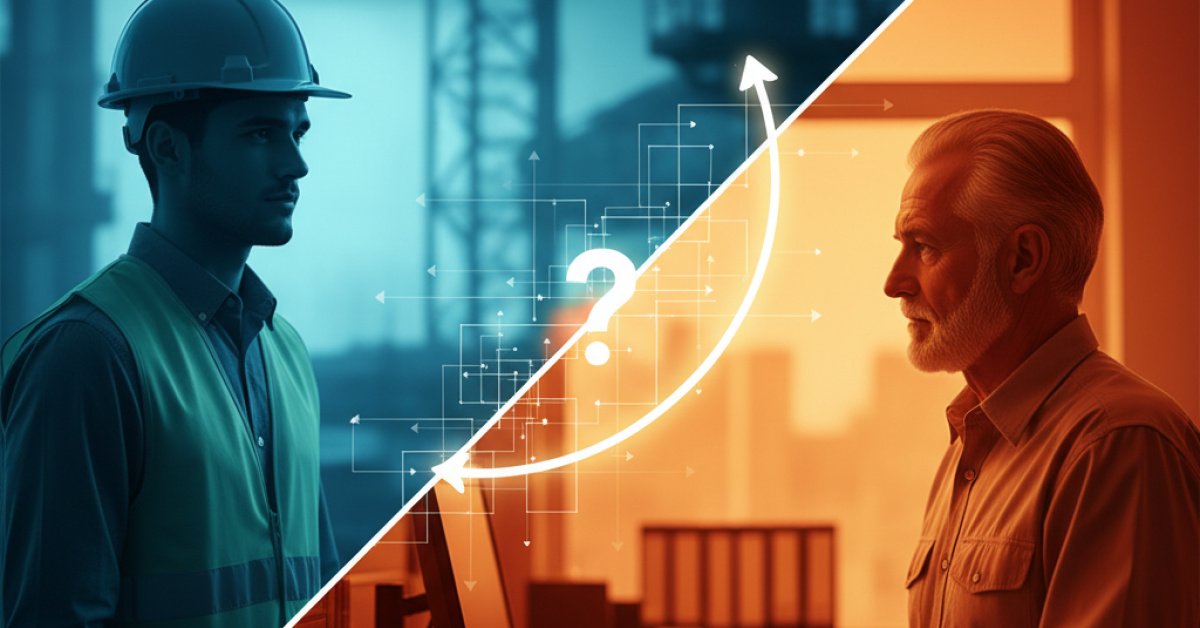
For years, the gold standard for checking on workplace ergonomics has been to bring in an expert. You’d hire a specialist to come on-site, watch your team work, take notes with a clipboard, and give you a detailed report.
And don't get me wrong, that's incredibly valuable. These experts know their stuff. But this approach has some real-world challenges, doesn't it?
First, it can be expensive. Really expensive. For a small or mid-sized business, or one with a tight safety budget, bringing in a consultant for a full-scale assessment just might not be in the cards.
Second, it’s not always scalable. If you run a company with multiple locations or different shifts, getting an expert to every single site to observe every single task is a logistical nightmare. The result is that these assessments often become a one-time snapshot rather than an ongoing part of your safety culture. You might catch a problem on Tuesday, but miss a different one that only happens on Fridays.
Here's Where a Simple Video Can Change Everything
So, what’s the alternative? How can we get that expert-level insight without the logistical and financial hurdles? This is where technology is stepping in to fill a huge gap, and it's surprisingly simple: video analysis.
Think of it like this. Instead of having a doctor make a single house call, what if you could give your team a fitness tracker that constantly monitors their health? That’s the kind of shift we’re seeing.
By using simple video—often from a phone or a strategically placed camera—you can capture how tasks are actually being performed day in and day out. This footage can then be analyzed by smart software (and sometimes a remote expert) to pinpoint risky movements you’d never catch with the naked eye.
We’re talking about things like:
- An employee who consistently bends from the waist instead of the knees when lifting.
- A worker whose wrist is at an awkward angle hundreds of time per shift.
- A subtle, repetitive twisting motion that, over time, could lead to a serious injury.
This approach gives you real, objective data. It’s not just a guess or a one-off observation. You get a clear, data-driven picture of where your risks truly are, allowing you to make small changes—like adjusting a workstation height or providing a different tool—that can prevent a major injury down the line. It makes proactive safety accessible to everyone, not just companies with massive budgets.
It’s About Prevention, Not Just Payouts
This shift toward proactive, tech-driven safety is something we’re seeing even in the insurance world. Good carriers aren't just there to write a check after something goes wrong; they want to be your partner in making sure that bad day never comes.
I was recently struck by something Dan Campany, the Head of Risk Services at The Hartford, said. He put it perfectly: “Our mission is to help our customers thrive as businesses. While risk transfer and insurance is an important financial backstop and safety net, we’re going to help prevent bad things from happening whenever possible by working with the customer.”
That right there is the future. It’s about using tools and insights to get ahead of the problem. Insurance is, and always will be, a critical safety net. But what if we could help you avoid falling in the first place? That’s what new tools like video analysis are making possible.
Ultimately, keeping your team safe isn't just about compliance or avoiding claims. It's about building a stronger, healthier, and more productive workplace. And it’s incredible to see how something as simple as a video camera is helping us do that more effectively and affordably than ever before. It's a real chance to move from reacting to injuries to truly preventing them.