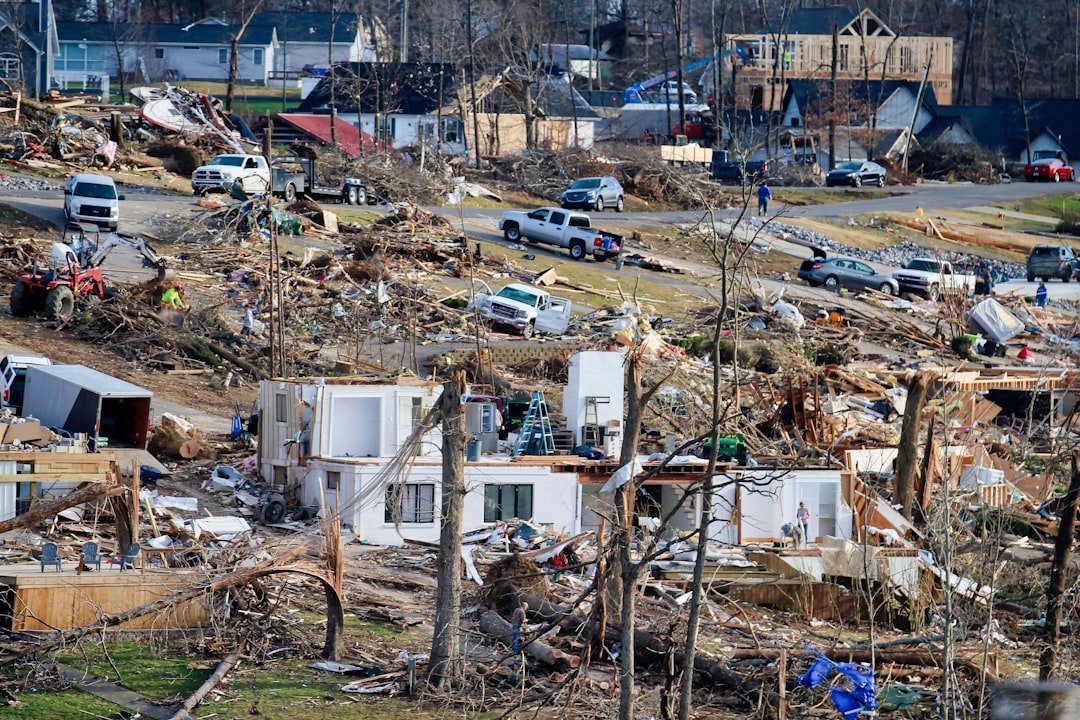
I remember watching the news back in December 2021, just horrified by the images coming out of Kentucky. A massive tornado had ripped through the state, and one of the hardest-hit places was a candle factory in Mayfield. The stories that came out of that tragedy were heartbreaking—workers killed and severely injured, trapped under the rubble.
In the aftermath, as these things often go, the conversation turned to insurance and legal responsibility. The immediate, almost automatic, answer in situations like this is "workers' compensation." It's the system we've had in place for over a century to handle workplace injuries.
But a recent decision from a Kentucky appeals court just threw a massive wrench in that assumption. And honestly, it’s a ruling that has sent some pretty big shockwaves through the insurance and business world. The court basically said that for the victims of that factory collapse, workers' comp might not be their only path to getting help. This could be a huge deal, and we need to talk about why.
Let's Back Up: What's the "Deal" with Workers' Comp Anyway?
Before we get into the court's decision, let's do a quick refresher on how workers' compensation is supposed to work.
Think of it as a kind of grand bargain, a deal struck between employers and employees a long, long time ago. Here’s the trade-off:
- For the employee: You get medical bills and a portion of your lost wages paid for if you're hurt on the job, no matter who was at fault. You don't have to hire a lawyer and spend years in court proving your boss was negligent. It's faster and more certain. The trade-off is that you give up your right to sue your employer for things like pain and suffering.
- For the employer: You get protection from massive, unpredictable lawsuits every time an employee gets hurt. You pay your workers' comp insurance premiums, and in return, that policy handles the claims. This protection is called the "exclusive remedy" rule—meaning workers' comp is the only legal path (or remedy) for an employee to take.
This system is the bedrock of how we handle workplace injuries in America. It's designed to keep things out of the courts and get injured workers the help they need quickly. But the key word here is supposed to.
So, What Did the Kentucky Court Say?
The families of the victims and the survivors of the candle factory collapse sued the company directly. The company's defense was, as you'd expect, the exclusive remedy rule. They argued that since this was a workplace incident, the only claims allowed were workers' comp claims. A lower court agreed with them.
But the Kentucky Court of Appeals looked at the situation and said, "Not so fast."
They overturned the lower court's decision, allowing the lawsuits to move forward. Their reasoning gets to the very heart of that "grand bargain" I mentioned. They suggested that the protections of workers' comp might not apply if an employer's actions go beyond simple negligence and cross over into something much worse.
The lawsuit alleges that the factory's management knew the tornado was coming—that they had hours of warning—and not only refused to let employees leave to seek shelter but actually threatened to fire them if they did.
This is the critical point. The court is looking at whether the employer’s conduct was "intentional."
The Line Between an Accident and an Intentional Act
This is where things get a little technical, but it's super important. The exclusive remedy rule is designed to cover accidents. A slip and fall, a machine malfunction, a repetitive stress injury—those are the kinds of things workers' comp is built for.
But there's something called an "intentional tort exception." A tort is just a legal term for a wrongful act that causes someone harm. This exception says that if an employer intentionally harms an employee, the workers' comp shield disappears, and the employee can sue them directly.
Now, you might be thinking, "Did the company intend for the tornado to hit the factory?" Of course not. But that's not what the court is focused on.
The question is whether the company's actions—allegedly forcing people to stay in a building directly in the path of a catastrophic storm—were so reckless that they essentially amounted to an intentional act. Did they know with "substantial certainty" that harm would come to their employees by forcing them to stay?
That’s what the plaintiffs will try to prove. And if they succeed, it changes the entire game.
Why This Case Is a Massive Wake-Up Call
Okay, so why does this one case in Kentucky matter so much to businesses and insurance carriers everywhere?
Because if this becomes a trend, the "exclusive remedy" shield that employers have relied on for decades could start to look more like Swiss cheese.
A workers' comp claim, while costly, is a known quantity. The benefits are defined by state law. A lawsuit, on the other hand, is a complete unknown. Juries can award millions—or even tens of millions—for things like pain and suffering, emotional distress, and punitive damages, none of which are covered by workers' comp.
This also brings up a huge insurance question. Workers' comp policies are designed to pay for workers' comp claims. They specifically exclude coverage for these kinds of direct lawsuits. That liability would typically fall under an Employer's Liability policy (often sold with a workers' comp policy) or a General Liability policy, but even those have exclusions that could come into play.
Ultimately, this case serves as a stark reminder that an employer's duty to provide a safe workplace doesn't just mean having fire extinguishers and clean floors. It means having real, actionable emergency plans for events like tornadoes, hurricanes, or active shooters. And it means empowering supervisors to make the right call—the human call—when disaster is imminent, not just the call that keeps the production line moving.
This case is far from over, and it could still go all the way to the Kentucky Supreme Court. But the appeals court has already sent a powerful message: the deal of workers' comp has its limits. And when an employer's actions are alleged to be egregiously wrong, the courts may just decide to let a jury have the final say.