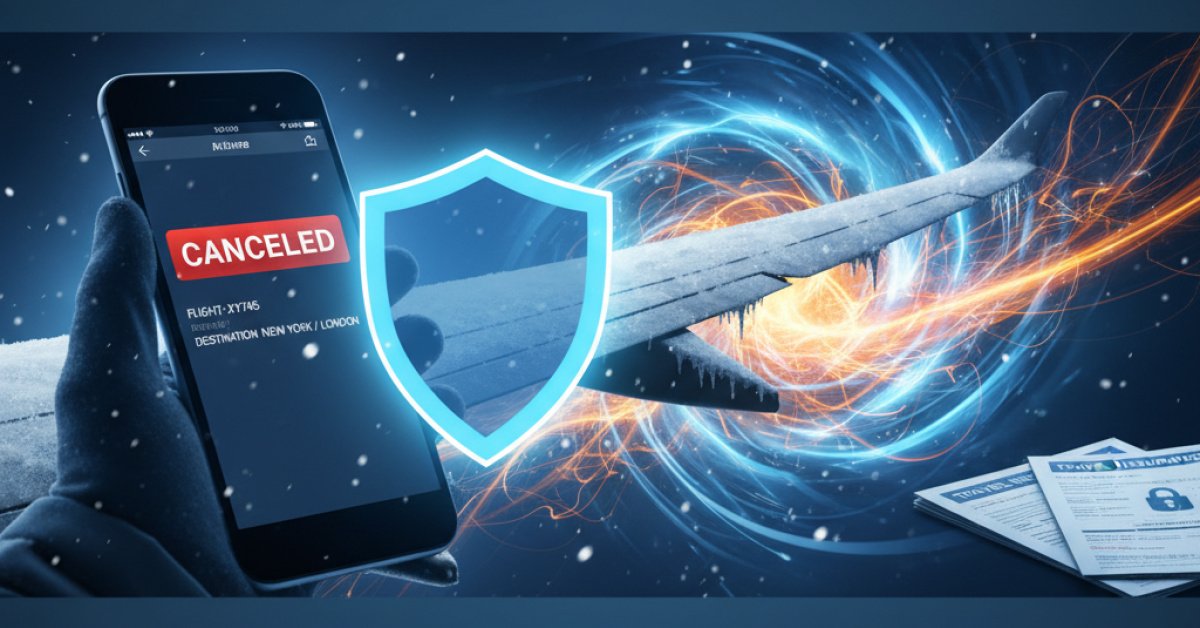
It’s a feeling we all know, and it’s a special kind of awful. You’ve got your bags packed, the out-of-office email is on, and you’re buzzing with that pre-holiday excitement. Then, your phone buzzes. You glance down, and there it is in big, bold letters: FLIGHT CANCELED.
Your heart just sinks.
With another massive winter storm system sweeping across the country, this exact scenario is playing out for thousands of people right now. Airports are turning into seas of frustrated travelers, and airlines are scrambling to get back on track after days of delays and cancellations. It’s a complete mess.
When this happens, it’s easy to feel totally helpless. But here’s the thing: you might have more power than you think, especially if you planned ahead with the right kind of insurance. Let’s break down what actually happens in this travel nightmare and how you can protect yourself.
So, a Snowstorm Canceled Your Flight. Now What?
First, take a deep breath. The initial chaos is overwhelming. You’re stuck in a massive line, the airline’s app keeps crashing, and you just want to get where you’re going.
The airline’s responsibility here is, honestly, a bit limited. Sure, they’ll try to rebook you on the next available flight. But "next available" could mean tomorrow, or two days from now, especially during the holidays. They might offer a flight credit or a voucher, but what about the money you’re losing on the other end? That non-refundable hotel room? The prepaid ski passes? The tour you booked months ago?
That’s where the airline’s help usually stops. And that’s precisely where travel insurance is supposed to step in. It’s designed to fill in all those expensive gaps that the airline leaves behind.
Let’s Talk About Trip Cancellation vs. Trip Interruption
These two terms sound similar, but they cover very different parts of your journey. Getting them straight is key to understanding your policy.
Trip Cancellation: When the Storm Hits Before You Go
Think of this as your "before you even leave the house" protection. Trip Cancellation coverage kicks in if you have to cancel your plans for a covered reason before your trip officially starts. A massive, flight-grounding winter storm is almost always a covered reason.
So, if you wake up to a blizzard and your airline cancels your flight, this is your safety net. It’s designed to reimburse you for your prepaid, non-refundable travel costs. We’re talking about things like:
- The full cost of your flight.
- Your hotel or vacation rental deposits.
- Pre-booked tours or event tickets.
- Any other non-refundable payments you made for the trip.
Basically, it helps you hit the reset button financially so you’re not out hundreds or even thousands of dollars for a trip you never got to take.
Trip Interruption: When You’re Already on Your Way
Now, let’s flip the script. Imagine you made it to your destination just fine. You had a great week visiting family, but the day you’re supposed to fly home, that winter storm hits your connecting city, and your flight home is canceled indefinitely. You're stuck.
This is where Trip Interruption coverage comes to the rescue. It’s designed to help when your trip is cut short or derailed by a covered event. It can help cover the cost of a last-minute, one-way flight home on another airline. It can also reimburse you for the unused portion of your trip, like the hotel nights you paid for but won’t get to use because you had to leave early.
Don't Overlook Travel Delay Coverage—It’s a Lifesaver
Okay, so maybe your flight isn't canceled outright, but it's delayed. And delayed. And delayed again. This is where a lot of the real misery happens.
Travel Delay coverage is one of the most underrated parts of a good insurance policy. It usually kicks in after a specified delay time, say six or twelve hours. Once you pass that mark, your policy can start reimbursing you for reasonable expenses you rack up while you wait.
What does that mean in the real world? It means you can:
- Go get a proper meal instead of living off stale airport pretzels.
- Book a hotel room for the night so you’re not trying to sleep on a metal bench.
- Buy some essential toiletries and a change of clothes if your luggage is checked and you can’t get to it.
This coverage is what turns a truly miserable experience into a merely inconvenient one. It gives you the financial freedom to take care of yourself while you’re stuck in limbo.
The Big Catch: The 'Known Event' Rule
Now for a dose of tough love. This is probably the single most important thing to understand about buying travel insurance. You can’t buy it after the problem has already started.
In the insurance world, once a winter storm is officially named and starts showing up on the news, it becomes what’s called a "known event" or a "foreseeable event."
Let me give you an analogy. It’s like trying to buy fire insurance for your house while it's on fire. No insurance company is going to sell you that policy, right? The same logic applies here.
Once a storm is on the radar, it's too late to buy a new policy and expect it to cover you for that specific storm. Insurance is a tool for managing unexpected risks, not for getting a payout on something that’s already guaranteed to happen.
What’s the takeaway here? You have to buy your travel insurance when you book your trip, or at least well before any bad weather is in the forecast. Think of it as just another part of the booking process, like choosing your seat or adding a checked bag.
Okay, I'm Stuck. How Do I Actually Use My Insurance?
If you find yourself in the middle of this travel chaos and you have a policy, here’s a quick game plan.
- Call Your Insurance Provider ASAP: Most policies come with a 24/7 assistance hotline. These people are your new best friends. Call them! They can help you understand your coverage, advise you on the best way to rebook travel, and tell you exactly what documentation you'll need. Don't try to figure it all out alone.
- Keep Every Single Receipt: I mean everything. The burger you bought for dinner, the toothbrush from the airport convenience store, the receipt for your emergency hotel room. Create a folder on your phone and just take pictures of everything. No receipt, no reimbursement.
- Get Proof from the Airline: Get something in writing (an email, a screenshot from the app) from the airline that officially states your flight was canceled or delayed and the reason why (e.g., "due to weather"). This is crucial for your claim.
Dealing with a claim can take a little patience, but having all your ducks in a row makes the process so much smoother.
At the end of the day, we can’t control the weather. These massive storms are going to happen, and they seem to love targeting the busiest travel days of the year. But we can control how prepared we are. Having a solid travel insurance policy isn't about being pessimistic; it’s about being smart. It’s about giving yourself a backup plan, so a travel nightmare doesn’t turn into a financial one, too.
Here's to hoping your next trip goes off without a hitch. But if it doesn’t, you’ll be glad you were ready for it.