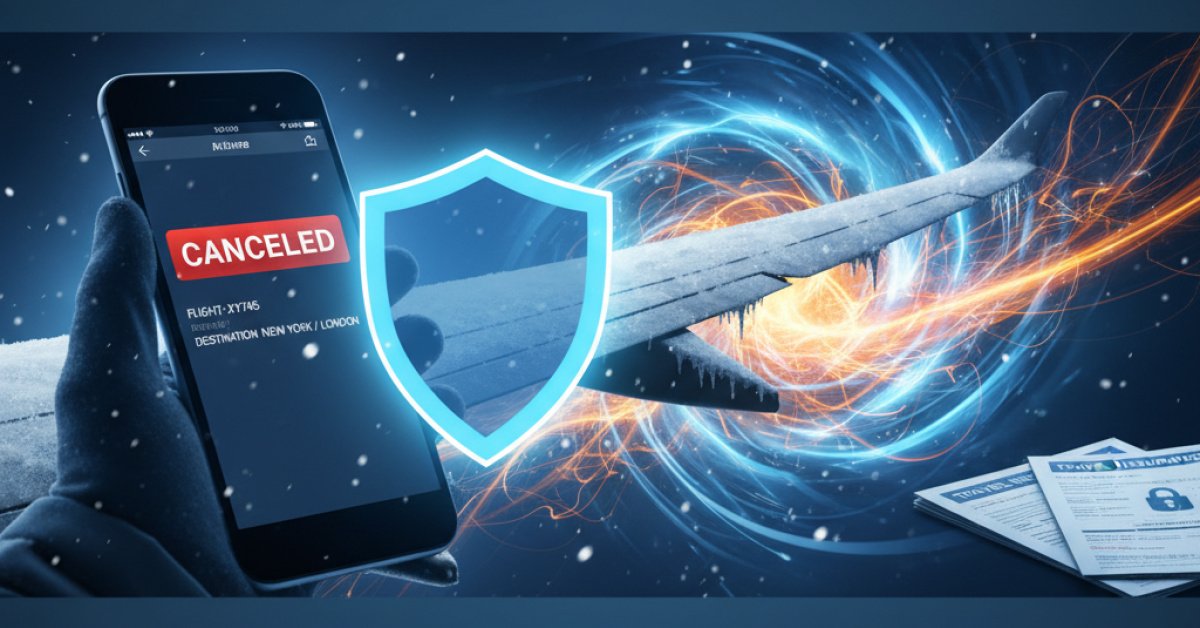
Have you seen the news? It’s enough to give anyone with a flight booked a bit of a panic attack. The Federal Aviation Administration (FAA) is talking about slashing flights at some of the country's busiest airports.
Honestly, when I first read the headline, my stomach dropped. I immediately thought about the chaos at the airport, the long lines, and the frustration of a canceled trip. It’s a traveler’s worst nightmare.
But as an insurance writer, my brain quickly shifted gears. I started thinking past the immediate headache and into the financial fallout. What happens when your long-awaited vacation or critical business trip gets grounded? You’d think, "No problem, that's what travel insurance is for!"
Well, here’s the thing. It’s not always that simple. Let’s break down what’s happening and what it really means for your insurance coverage.
So, What's the Deal with These Flight Cuts?
First, let's get on the same page about what’s actually going on. It’s not just random cancellations.
The FAA is working on a plan to cut flights by as much as 10% at 40 of the most high-traffic airports in the U.S. We’re talking about the big hubs—the places you’re almost guaranteed to connect through. This whole thing is being driven by some serious safety concerns. Apparently, there’s a shortage of air traffic controllers, and the recent federal government shutdown really put a strain on the system.
Think of it like a restaurant kitchen. If you’re short-staffed on a Saturday night, you can’t serve a full house safely or efficiently. You have to limit the number of tables you take. That’s essentially what the FAA is proposing for our skies—fewer planes in the air to make sure the controllers who are on duty aren't overwhelmed.
It’s an unprecedented move, and it shows just how serious the situation is. But for you and me, it means a higher chance of disruption.
The Million-Dollar Question: Is This Covered by Travel Insurance?
Okay, here’s where it gets tricky. You bought travel insurance to protect your investment. So if the FAA’s plan leads to your flight being canceled, you should get your money back, right?
Maybe. But honestly, probably not for the reason you think.
Most standard travel insurance policies cover you for a specific list of "named perils." These are things like:
- You or a family member getting sick
- Severe weather, like a hurricane, hitting your destination
- Your airline going out of business
What you probably won't see on that list is "cancellation due to a government shutdown" or "air traffic controller staffing shortages." It’s just too specific and unusual. Insurers see this as a kind of government action or a general "failure of infrastructure," which is often a specific exclusion in the fine print.
So, if your flight is canceled because of these FAA cuts, your standard trip cancellation benefit likely won’t kick in. I know, it’s frustrating.
But Don't Panic! There's Still Hope
Just because the reason for the cancellation isn't covered doesn't mean you're totally out of luck. Your coverage might kick in through a different door.
For example, your policy almost certainly has benefits for Trip Delay and Trip Interruption. If your flight is delayed by a certain number of hours (usually 6-12), your policy can reimburse you for things like a hotel room, meals, and transportation. If you miss a connecting flight and it ruins a huge chunk of your trip, Trip Interruption benefits could help you recoup the cost of the unused portions.
The key is that the delay or interruption is the trigger, not the reason behind it. It’s a subtle but really important difference.
The Ultimate "Get Out of Jail Free" Card: CFAR
If you want true peace of mind for situations just like this, you need to know about "Cancel For Any Reason" coverage, or CFAR.
It’s an optional upgrade to a standard travel insurance policy, and it does exactly what it says on the tin. You can cancel your trip for any reason at all—fear of a government shutdown, your dog-sitter bailed, you just don't feel like going—and get a significant portion of your money back (usually 50-75%).
Of course, it costs more, and you typically have to buy it within a couple of weeks of booking your trip. But for an expensive, once-in-a-lifetime journey, knowing you can pull the plug for any reason can be incredibly valuable. In a world where things like FAA flight cuts can pop up out of nowhere, CFAR is looking more and more like a smart move.
What About Businesses and Big Events?
This doesn't just impact vacationers. Think about businesses that rely on travel. Sales teams, executives, and technicians are constantly in the air.
A standard Business Interruption policy probably won’t help here. That type of insurance is designed to cover lost income after a direct physical loss—like a fire burning down your warehouse. Flight cancellations don’t count as physical damage.
However, if you're planning a major conference or trade show, Event Cancellation Insurance is your best friend. If widespread flight cuts prevent your keynote speakers or a critical mass of attendees from showing up, this is the policy that could save you from a massive financial loss. It’s designed for exactly these kinds of logistical nightmares.
What Should You Do Now?
This news is a perfect reminder that when it comes to insurance, you can’t just buy a policy and forget it. You have to be proactive.
- Read Your Policy: I know, it’s boring. But you have to do it. Look for the "covered reasons" for cancellation and, more importantly, the "exclusions." See what it says about airline or government actions.
- Call Your Provider: Don't be afraid to pick up the phone and ask direct questions. "If my flight is canceled due to the FAA's new plan, what part of my policy would help me?" Make them explain it in plain English.
- Consider CFAR for Big Trips: If you're dropping thousands on a trip, the extra 40-50% for a CFAR policy might be worth the investment for the flexibility it gives you.
At the end of the day, news like this is a wake-up call. The world is a complicated place, and weird things happen that can derail our plans. Having the right insurance isn't about expecting the worst; it's about having a smart, simple plan so you're not left holding the bag when the unexpected happens. It’s all about knowing what you’re covered for before you’re stuck at the gate.