Have you ever stood near the Golden Gate Bridge and just watched the ships go by? You see these massive cargo ships, tankers, and ferries cutting through the water, each one a floating city of commerce. It’s an incredible sight.
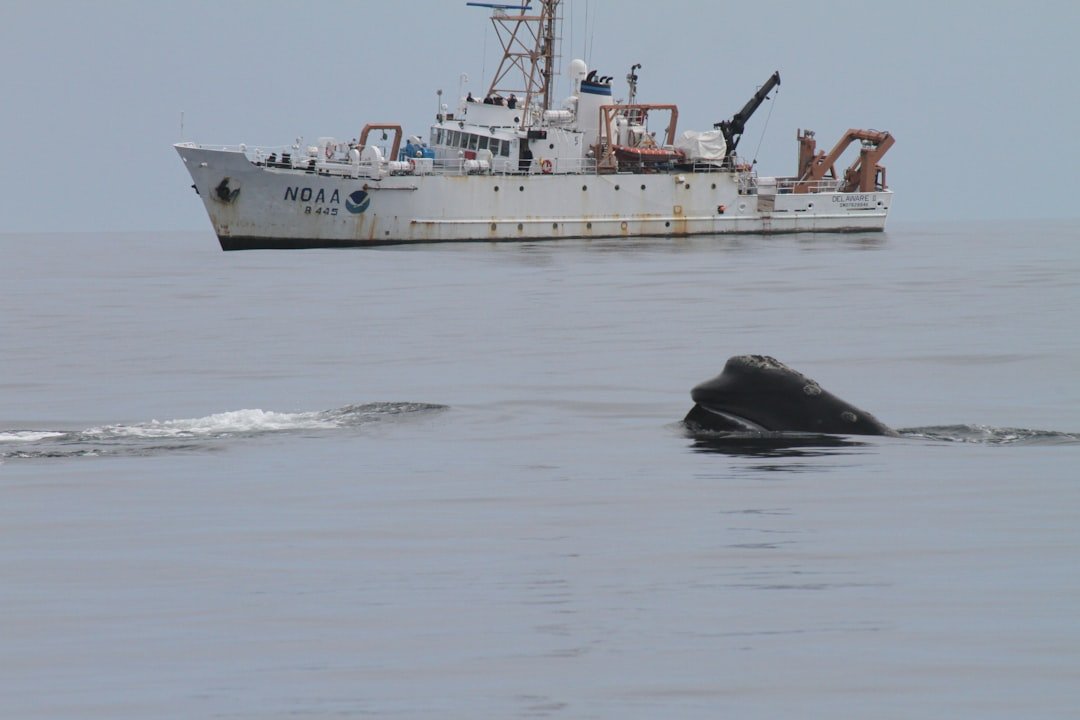
But here’s something you don’t see. Beneath those choppy waves, there’s another world teeming with life. And in that world are some of the largest creatures on Earth—whales. They’re migrating, feeding, and just… being whales. For decades, these two worlds have existed in a state of uneasy, and often tragic, overlap. A ship captain, high up in the bridge, can’t easily spot a whale that surfaces for just a moment.
Until now, that is. There’s some incredible new technology being used in San Francisco Bay that’s acting as a high-tech lookout, and frankly, it’s the kind of thing that gets people in my line of work—insurance—very excited. Let’s talk about it.
The Problem is Bigger Than You Think
So, a ship hits a whale. What’s the big deal, right? From an insurance and risk perspective, it’s a massive deal. It’s not just a sad headline; it’s a cascade of potential liabilities that can spiral into a multi-million dollar nightmare.
First, there’s the obvious tragedy. Many of these whale species are protected or endangered. A collision can be fatal for the animal, and that brings a whole lot of regulatory heat. We’re talking about hefty fines from agencies like NOAA (the National Oceanic and Atmospheric Administration). These aren’t just slaps on the wrist; they are serious financial penalties.
Then, think about the vessel itself. A collision with an animal the size of a school bus can cause real damage to a ship’s hull, propeller, or rudder. That means downtime, expensive repairs, and delays in cargo delivery—all of which lead to costly insurance claims.
And let’s not forget the reputational risk. In today’s world, no shipping company wants to be known as the one that isn’t careful about marine life. The public relations fallout can be brutal and have long-lasting effects on business. It’s a messy, complicated, and incredibly expensive problem.
So, How Does This AI Actually Work?
This is the really cool part. Instead of relying solely on human eyes, a new AI-powered system is essentially giving ships superhuman hearing and sight.
Think of it like this: You’re trying to find a friend in a massive, noisy crowd. You could scan the crowd all day and miss them. But what if your friend had a special whistle that only you could hear through a high-tech headset? You’d know exactly where they were.
That’s kind of what this system does. It uses a network of sensors and hydrophones (underwater microphones) to listen for whale vocalizations. The AI has been trained to recognize the specific calls of different whale species, like humpbacks and blue whales. When it "hears" one, it can pinpoint its location.
The system then instantly sends an alert to the mariners in the area. It’s a real-time notification, almost like a traffic alert on your phone saying, "Heads up, whale ahead." This gives the ship’s crew the crucial time they need to slow down or alter their course, preventing a collision before it ever has a chance to happen. It’s not about reacting to a disaster; it’s about avoiding it altogether.
Why Your Marine Underwriter is Paying Attention
Okay, let's get down to the insurance side of things. Why do we care so much about this? Because at its core, insurance is the business of managing risk. And this technology is one of the most effective risk-reduction tools I’ve seen in the maritime world in a long time.
Here’s what this means for us:
- Fewer Claims: This one’s a no-brainer. Every collision that’s avoided is a complex, expensive claim that never gets filed. It means fewer payouts for vessel damage, fewer liability claims from regulatory bodies, and fewer business interruption losses.
- Smarter Underwriting: Insurers love data. We thrive on it. A shipping company that invests in and uses this kind of technology is demonstrating a serious commitment to safety. They can provide data that proves they are actively mitigating risk. When an underwriter sees that, it can translate into better terms, more favorable premiums, and a stronger partnership. You’re no longer just saying you’re safe; you’re proving it with data.
- Reducing "Black Swan" Events: A catastrophic collision can be a "black swan" event—rare, but with a massive impact. These are the kinds of events that keep risk managers up at night. This AI helps turn an unpredictable risk into a manageable one. By providing that early warning, it dramatically lowers the probability of a worst-case scenario.
This is More Than Just About Whales
While the focus right now is on protecting whales in San Francisco Bay, the potential for this kind of technology is huge. Imagine applying the same "detect and alert" principle to other maritime hazards.
We could see similar AI systems used to detect and track:
- Large, semi-submerged shipping containers that have fallen overboard.
- Icebergs in treacherous northern shipping lanes.
- Swarms of smaller, unflagged vessels that might pose a security risk.
What we're seeing in San Francisco isn't just a local conservation effort. It's a blueprint for the future of maritime safety. It’s about using technology to create a more predictable and, therefore, more insurable environment on the open water.
It's not every day you see something that makes perfect sense for the environment, for a shipping company's bottom line, and for an insurance underwriter's peace of mind. This is one of those rare win-win-win situations. And honestly, it’s pretty exciting to see technology being used not just to make things faster or cheaper, but genuinely safer for everyone—and every creature—out on the water.