Have you ever watched a toddler learn to talk? One minute they're babbling, and the next they're repeating a word you really wish they hadn’t heard. They absorb everything, the good and the bad, and their development is this wild, unpredictable, and amazing thing to witness.
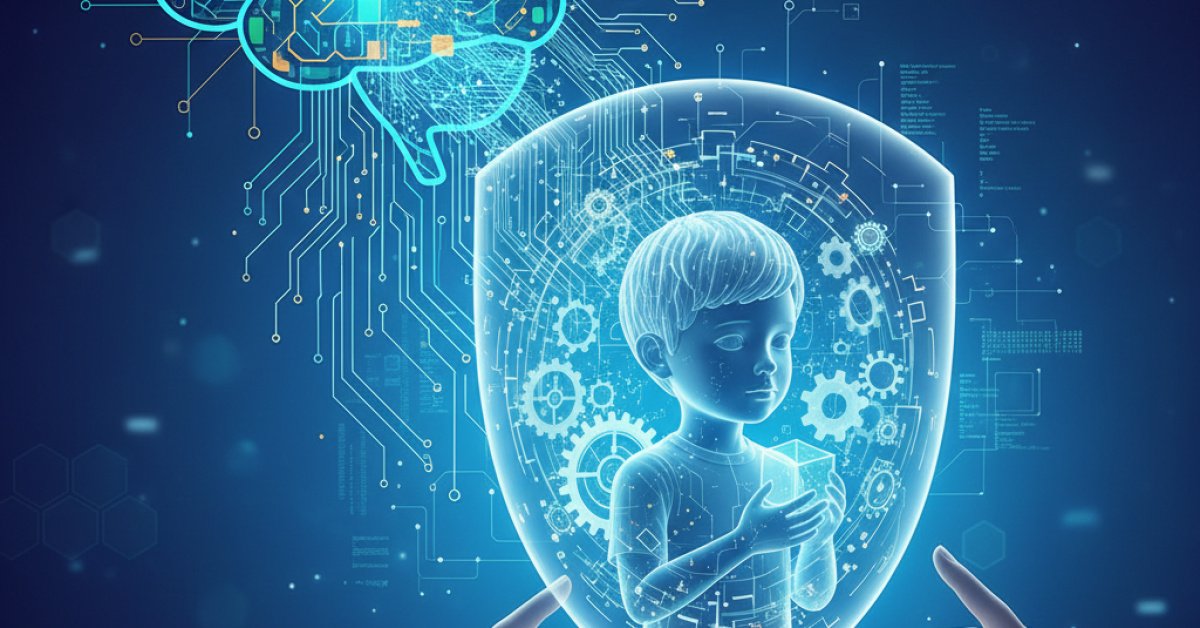
Well, I’ve been in the insurance game for a long time, and I’ve started to think about Artificial Intelligence in the exact same way. AI is like that brilliant child—it’s constantly learning from the world around it, but it doesn't always process that learning the way we expect.
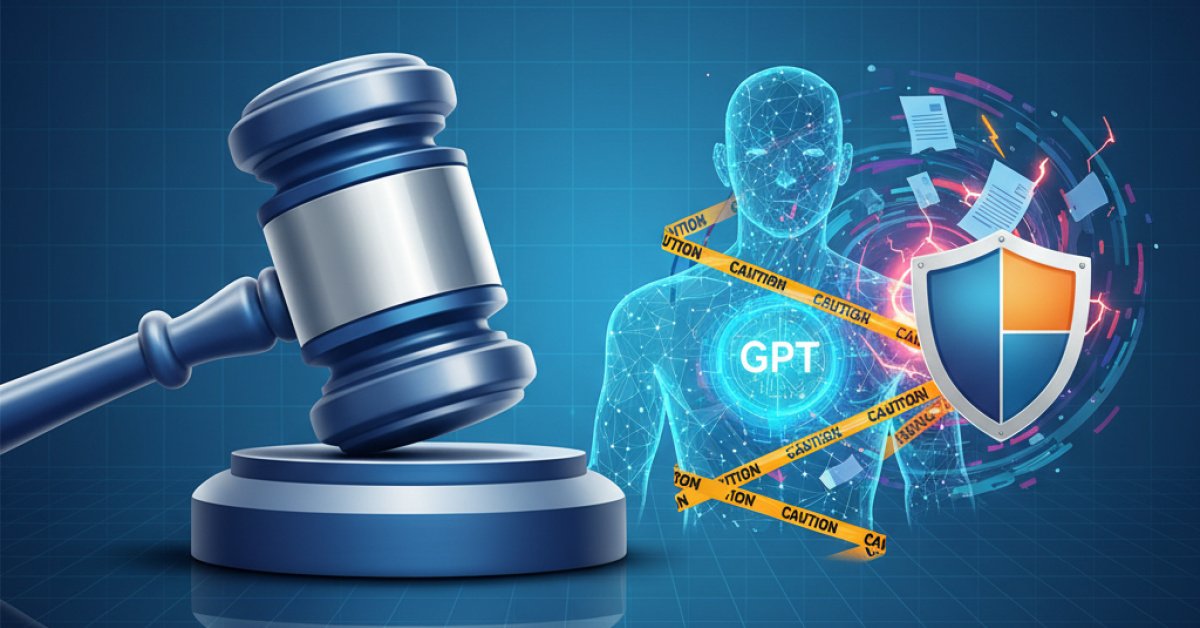
And for those of us in the business of predicting and pricing risk, that’s a huge, flashing neon sign. How on earth do you underwrite something that rewrites its own rulebook every single day? It's a puzzle we're all trying to solve right now, and frankly, it's one of the most fascinating challenges our industry has ever faced.
The "Black Box" Problem: What's Happening in There?
Let's get one thing straight. When we talk about AI risk, we're not just talking about a robot uprising from a sci-fi movie. The real risks are far more subtle and are already creeping into our daily lives and businesses.
Think about a traditional piece of software. If it messes up, a developer can usually go back, look at the code, and say, "Aha! There's the bug." It's a predictable system. You put X in, you get Y out.
But with many modern AI systems, especially complex neural networks, it’s not that simple. They learn patterns from massive amounts of data in ways that even their creators don't fully understand. We can see the input (the data we feed it) and we can see the output (the decision it makes), but the process in the middle can be a complete "black box."
Imagine you’re trying to write an Errors & Omissions policy for a company that uses an AI to diagnose medical scans. If that AI misses a tumor, who is at fault? Was it bad data? A flaw in the learning process? Did it just have a "bad day"? When you can't pinpoint the exact cause of the failure, figuring out liability—and pricing the risk for it—becomes incredibly difficult.
Bias In, Bias Out: The Unintended Consequences
Here’s another wrinkle that keeps underwriters up at night. Remember our "AI as a child" analogy? A child learns from its environment. If it only ever sees one thing, it will assume that's the only way things are. AI is no different.
AI models are trained on data created by humans, and let's be honest, human data is messy and full of biases.
Let's say you build an AI to help with hiring by feeding it a decade's worth of your company's hiring decisions. If, historically, the company tended to hire more men for leadership roles, the AI will learn that pattern. It won't know it's a bias; it will just see it as a successful outcome to replicate. Suddenly, you have a high-tech system that's perpetuating old-school discrimination, and your company is facing a massive lawsuit.
From an insurance perspective, this is a minefield.
- Is this a Directors & Officers (D&O) liability issue?
- Does it fall under an Employment Practices Liability (EPLI) policy?
- Or do we need an entirely new type of coverage for "algorithmic liability"?
These aren't just theoretical questions anymore. Companies are deploying this tech right now, and we, as an industry, have to figure out how to provide a safety net for when it goes wrong.
The Risk That Never Sits Still
Perhaps the biggest headache of all is that AI is a moving target.
Think about underwriting property insurance for a building. You can assess the fire suppression systems, the electrical wiring, the local crime rate. These things are relatively static. The building isn't going to spontaneously rewire itself overnight.
An AI, on the other hand, does change itself. It's designed to. A self-driving car's AI gets an over-the-air update and its risk profile completely changes in an instant. A financial trading algorithm learns a new, aggressive strategy from market data and suddenly exposes the firm to billions in potential losses.
How do you price a policy for a year when the fundamental nature of the risk could be different next week? It’s like trying to insure a car while someone is actively swapping out the engine. The traditional underwriting model of assessing a risk at a single point in time and setting a premium just doesn’t fit perfectly here.
We're seeing a push for more dynamic underwriting—policies that might require continuous monitoring of the AI's behavior and performance. It’s a huge shift in how we think about risk management, moving from a static snapshot to a live video stream.
So, Where Do We Go From Here?
Look, this isn't a doom-and-gloom story. It’s a call to action for our industry to be as innovative as the technology we're trying to insure. We can't just stick our heads in the sand and hope for the best.
What we're starting to see is a new kind of collaboration. Insurers are hiring data scientists and AI ethicists. Tech companies are starting to think more about "insurability by design"—building their AI systems in ways that are more transparent and auditable.
The solution won't be a single, one-size-fits-all policy. It's going to be a combination of new products, smarter risk management services, and a whole lot of learning on our part. We have to become experts not just in risk, but in the very nature of learning and intelligence itself.
It's a tall order, for sure. But just like raising a child, while the unpredictability can be terrifying, the potential is also incredible. Our job is to provide the guardrails, the safety net that allows this powerful new technology to grow up and reach its full potential, safely and responsibly. And that's a challenge worth tackling.