Have you ever looked at your insurance policy and seen the term "Act of God"? It’s that catch-all phrase for things completely out of human control—hurricanes, floods, massive storms. For decades, that’s how we’ve treated extreme weather. It’s a tragic, random event, and that’s what insurance is for.
But what if it’s not so random anymore? What if you could trace the cause of a devastating drought or a historic flood back to specific decisions made in a corporate boardroom?
That’s the incredible question at the heart of a lawsuit that just kicked off in a Belgian courtroom. And trust me, while it might seem like a distant headline, the outcome could send shockwaves through the entire insurance industry. It’s a story about a single farmer taking on one of the biggest energy companies in the world, and it could change how we think about risk forever.
So, What’s Actually Happening in This Courtroom?
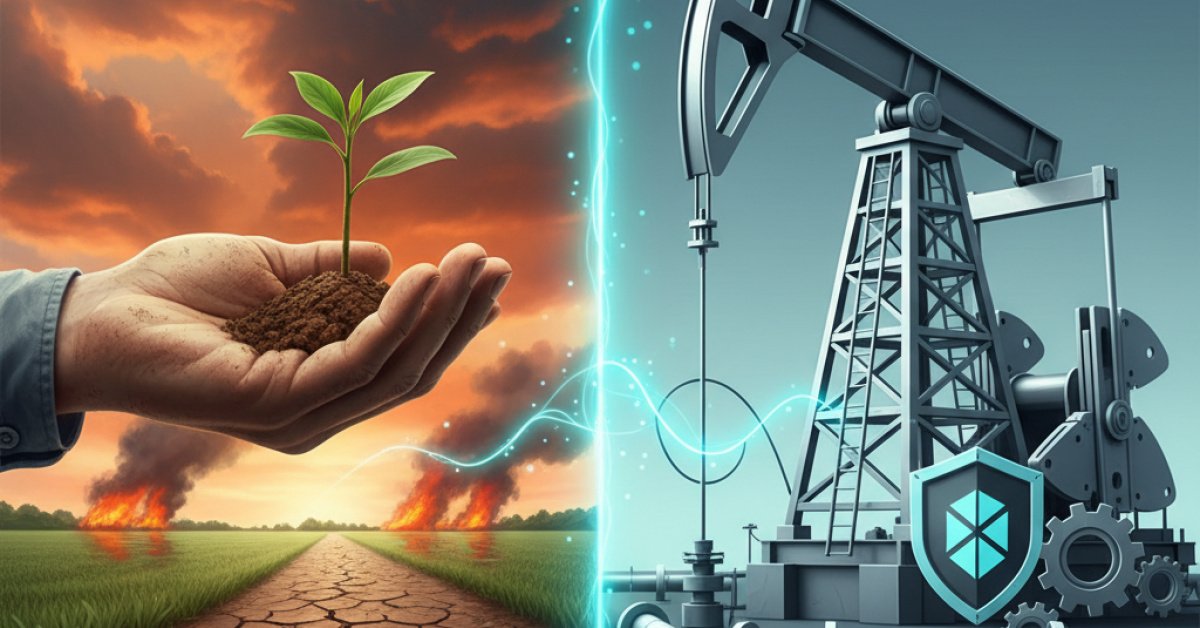
Let's break it down. On one side, you have a Belgian farmer. Like many farmers, his livelihood is completely at the mercy of the weather. In recent years, he's been hit hard by a series of extreme events—intense droughts, heatwaves, and flooding that have damaged his crops and threatened his farm.
On the other side, you have TotalEnergies, the massive French oil and gas company.
The farmer is arguing something pretty bold. He’s saying that TotalEnergies, through its historical and ongoing contribution to greenhouse gas emissions, is directly responsible for the climate change that’s causing this destructive weather. And because of that, he believes the company should pay for the damages.
This isn't just a simple plea for help. It’s a direct legal challenge, one of a growing number of lawsuits trying to hold major polluters financially accountable for the effects of climate change.
This Isn't Just Another Lawsuit—It's About Redefining Blame
You might be thinking, "Haven't we seen cases like this before?" And yes, there have been others. But this one feels different, and it’s part of a trend that’s gaining serious momentum.
For a long time, proving a direct link between one company’s emissions and one specific weather event was almost impossible. It was like trying to blame a single raindrop for a flood.
But that’s changing. Fast.
Scientists are getting incredibly good at what’s called "attribution science." They can now analyze an extreme weather event, like a heatwave, and say with a high degree of confidence how much more likely or intense it was because of man-made climate change.
This is the key that could unlock the courthouse doors. When you can start connecting the dots with scientific data, the argument shifts from a philosophical debate to a question of legal liability. And when you start talking about liability, you better believe the insurance industry pulls up a chair and pays very close attention.
The Giant Question: Who Pays for Climate Change?
This is where it gets really interesting for anyone who deals with insurance, whether you’re an underwriter, a broker, or just a business owner trying to protect your assets.
Think about it. Our entire insurance system is built on predicting risk. Insurers use historical data to figure out the likelihood of a fire, a car crash, or a flood. But climate change is throwing all that historical data out the window. The "100-year storm" is now happening every few years. Wildfire seasons are longer and more destructive.
This lawsuit against TotalEnergies pushes the question one step further. It asks: Is climate change an insurable, unpredictable risk? Or is it a predictable harm caused by the actions of specific entities?
If courts start agreeing with the second argument, the entire landscape of risk changes.
The Ripple Effect on Your Insurance Policy
This isn’t just some abstract legal theory. The outcome of cases like this could have very real-world consequences for the insurance you buy and the claims you file. Here’s how:
- Property & Casualty Insurance: If corporations can be held liable for weather events, will property insurers try to recover their claim payouts from those companies? Imagine your insurer paying for your flooded business, then turning around and suing an energy company to get that money back. It’s a process called subrogation, and it could become a major new front in the climate battle.
- Directors & Officers (D&O) Liability: This is a huge one. D&O insurance protects a company's executives from lawsuits alleging they made bad decisions. Activist shareholders and environmental groups are already arguing that failing to have a credible plan for climate change is a bad decision. If a company like TotalEnergies loses a major lawsuit, you can bet their D&O insurers will be on the hook, and premiums for all corporate leaders could skyrocket.
- The End of "Unforeseeable"? The core of many liability defenses is that an event was unforeseeable. These lawsuits aim to prove that for decades, some companies knew about the risks of their products but chose to ignore them. If that’s proven in court, the "unforeseeable" defense crumbles, leaving them exposed to massive liability claims.
Insurers Are Caught in the Middle
Right now, the insurance industry is in a tough spot. On one hand, they are paying out record-breaking sums for claims related to wildfires, hurricanes, and floods. The costs are becoming staggering.
On the other hand, they are also the ones providing the liability coverage for the very companies being targeted by these lawsuits. It’s a complicated and frankly, pretty precarious position to be in.
Some insurers are already pulling back coverage from certain high-risk coastal areas or fire-prone regions, leaving homeowners and businesses in the lurch. Others are drastically increasing premiums to cover their growing risk.
This Belgian farmer’s case, and others like it, will force the industry to make some hard choices. They can’t continue to simply absorb these ever-increasing costs. The fundamental question of who is responsible—and who ultimately pays—has to be answered.
So, while the legal battle between one farmer and one energy giant unfolds, we’re really watching a test case for the future. This isn't just about money or legal precedent. It's about accountability. It’s a powerful signal that the conversation around climate change is shifting from the political arena to the courtroom, where the consequences are very real and very expensive. And you can be sure the insurance world is watching every single minute of it.