You see the headlines about the White House and California fighting over oil drilling, and it’s easy to just scroll past. It feels like one of those big, distant political battles that doesn't really touch our day-to-day lives.
But after years of working in the insurance world, I’ve learned to see these stories a little differently. When I see a headline about expanding offshore drilling, I don't just see politics. I see risk. Massive, complicated, and incredibly expensive risk.
And that risk has a funny way of trickling down and landing right in our laps, often in the form of higher insurance premiums or, even worse, coverage that’s suddenly harder to get. So, let’s talk about what’s really going on with this plan and why it’s something we should all be paying attention to.
First, What’s Actually on the Table?
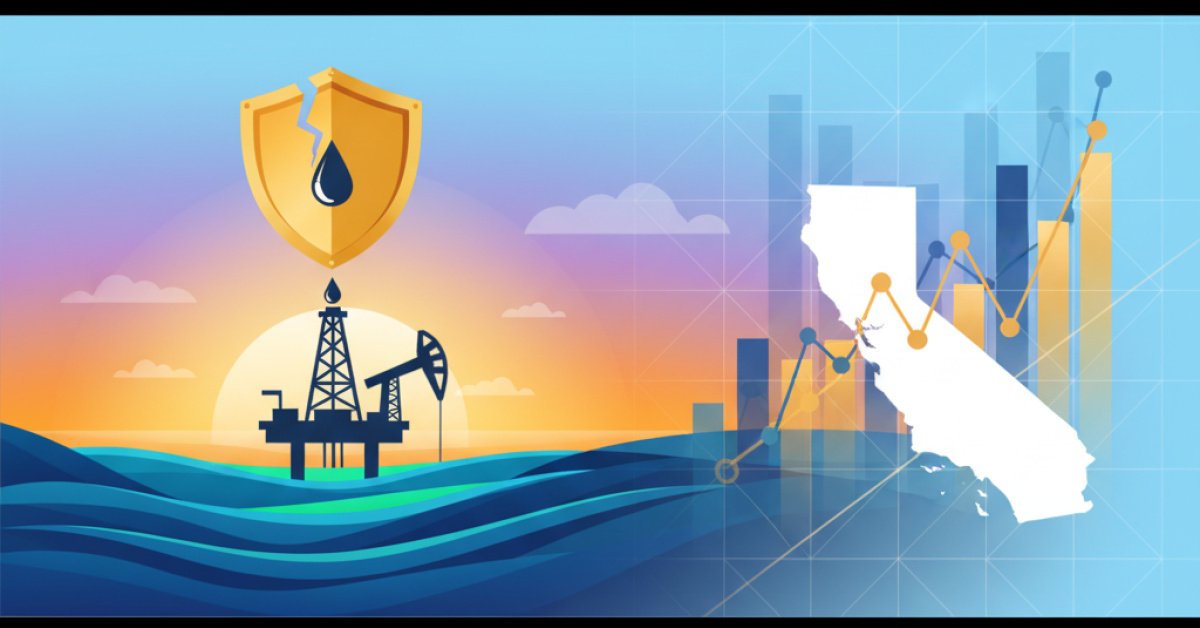
Okay, let's quickly break down the news that started all this. The Trump administration, through the Interior Department, essentially rolled out a blueprint to open up huge new areas of U.S. coastal waters to oil and gas drilling auctions. We're talking about the Atlantic, the Arctic, and yes, the Pacific—right off the coast of California.
As you can probably imagine, this did not go over well in California. State officials, from the governor on down, came out swinging. They’ve made it crystal clear they are strongly against any new energy development along their iconic coastline.
So you have this classic standoff: the federal government wants to open the doors for drilling, and the state is trying to bolt them shut. But while the politicians and lobbyists battle it out, the insurance industry is quietly doing the math on what a worst-case scenario could look like.
The Ghost of Deepwater Horizon: A Terrifying Insurance Case Study
Remember the Deepwater Horizon disaster back in 2010? It’s hard to forget the images of that rig burning and the oil gushing into the Gulf of Mexico. It was an environmental catastrophe, a human tragedy, and an economic nightmare.
It was also one of the largest and most complex insurance events in modern history.
Think about it. The final bill for that disaster has been estimated at over $65 billion. That’s a staggering number. It covered everything from cleanup costs to claims from fishermen who lost their livelihoods, hotels that saw bookings evaporate, and property owners whose beachfronts were ruined.
The operator, BP, had a massive liability insurance program, but the sheer scale of the disaster sent shockwaves through the global insurance and reinsurance markets. It was a brutal lesson in just how much can go wrong, and how quickly the costs can spiral into the stratosphere. For insurers, it wasn't a theoretical risk anymore; it was a multi-billion dollar reality check.
So, How Could This Drilling Plan Affect Our Insurance?
This is where the rubber meets the road for most of us. An oil rig operating miles offshore might feel irrelevant, but its presence fundamentally changes the risk profile of an entire region. And when risk changes, you can bet insurance premiums will, too.
For Coastal Homeowners and Businesses
If you own a home or run a business anywhere near the coast, your property insurance is already priced based on risks like hurricanes, floods, and erosion. Now, imagine adding "potential for a major oil spill" to that list.
Insurers are not big fans of uncertainty. The possibility of a spill, even a small one, could cause them to re-evaluate the entire coastline. We could see:
- Higher Premiums: This is the most obvious one. More risk almost always equals higher costs for coverage.
- New Exclusions: Policies could be rewritten to specifically exclude damage from oil spills, leaving property owners on the hook.
- Non-Renewals: In the most extreme cases, some insurers might decide the risk is just too high and pull out of certain coastal areas altogether, making it incredibly difficult and expensive to get coverage.
Your beautiful beachfront property or thriving seaside cafe suddenly has a new, unpredictable neighbor, and your insurance company is definitely taking notice.
The Ripple Effect on the Whole Economy
It’s not just about property damage. Think about all the businesses that depend on a clean, beautiful coastline. We’re talking about tourism, fishing, recreation—entire local economies.
A spill could be devastating. A hotel owner might have business interruption insurance, which is designed to cover lost income during a disaster. But what happens when the "interruption" lasts for years as the environmental cleanup drags on? What happens when an entire region's reputation is tarnished?
An insurance policy can help a single business get back on its feet, but it can't fix a shattered local economy. The claims would be a tangled mess, and many small businesses might not survive the long-term fallout.
Who Really Pays When Disaster Strikes?
This is the big, uncomfortable question. You'd think the oil company responsible would cover everything, right? Well, it's not that simple.
Yes, energy companies are required to carry massive environmental liability insurance policies. But these policies have limits. Federal law, like the Oil Pollution Act of 1990 (which was passed after the Exxon Valdez spill), also sets liability caps for offshore spills. While those caps are high, a truly catastrophic event like Deepwater Horizon can blow right past them.
When the insurance money and the company's direct payments run out, who picks up the rest of the tab? Often, it’s a combination of government funds and, ultimately, the taxpayers.
That’s a key reason why California officials are so opposed to this. They know that if something goes terribly wrong off their coast, their state and its citizens could be left holding a very, very expensive bag.
So, while the debate rages on in Washington and Sacramento, the real story is one of risk management. The proposal to expand drilling isn't just an energy policy decision; it's a decision that could rewrite the insurance landscape for an entire coastline. It introduces a new, high-consequence variable into an already complex equation.
And as anyone in our industry knows, when you add that much risk to the board, the house always adjusts the odds. In this case, that could mean we all end up paying the price.