When you think about the danger of a wildfire or a major flood, what comes to mind? For most of us, it’s the immediate, visible threats—the flames racing toward a home, or the muddy water creeping up the front steps. We worry about our families, our pets, and our property.
But what if the biggest danger is the one you can’t see?
Imagine that floodwater isn't just carrying silt and debris. What if it’s also carrying a toxic soup of chemicals from an old industrial site just a few miles upstream? Or what if the smoke from that wildfire isn't just ash, but also contains vaporized contaminants from a nearby hazardous waste dump?
This isn’t a scene from a disaster movie. It’s a real, and growing, concern that’s just been flagged by the U.S. Environmental Protection Agency’s own internal watchdog. And frankly, it’s something we all need to start talking about.
So, What's the Big Deal? Let's Break Down the Report
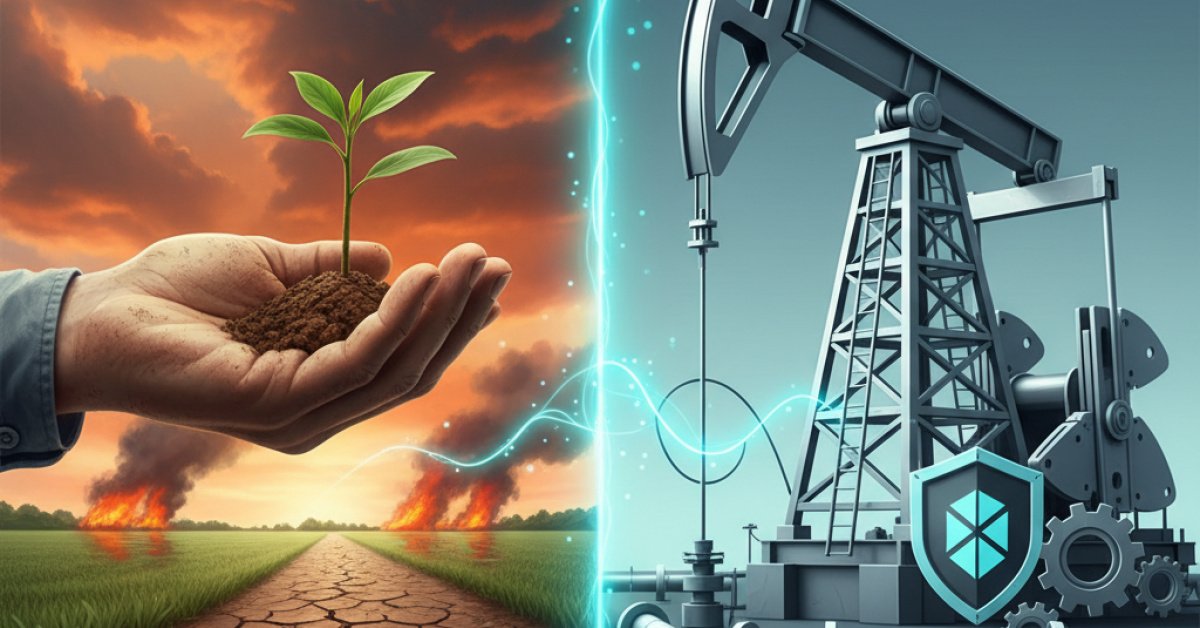
Let’s get right to it. The EPA’s Office of Inspector General recently dropped a report that’s, to put it mildly, alarming. They found that about 100 of the nation’s most contaminated toxic waste sites—the places so polluted they’ve earned the infamous "Superfund" designation—are sitting in areas prone to flooding, wildfires, and other climate-related disasters.
Think of it like this: America has these pockets of really nasty industrial legacy waste—things like lead, arsenic, dioxins, and other carcinogens. For decades, the plan has been to contain them, to keep them locked away where they can't hurt anyone.
But that containment plan was often made with last century’s weather in mind. Now, with climate change fueling more intense storms and more ferocious wildfires, the fences we built to contain these toxins are starting to look awfully flimsy. That sturdy shed where we stored the poison is now in the path of a hurricane it was never designed to withstand.
And we’re not talking about a few isolated sites in the middle of nowhere. We’re talking about locations that put millions of Americans at risk.
Okay, But What Does This Actually Mean for People Like Us?
This is where the abstract idea of a government report becomes a very real, kitchen-table issue. The potential consequences here are serious, and they hit on three fronts: your health, your property, and your finances.
Let’s play out a scenario. A major hurricane makes landfall, causing a massive storm surge that inundates a coastal Superfund site. The floodwaters churn through the contaminated soil and groundwater, picking up a chemical cocktail. When those waters flow into surrounding neighborhoods, they don’t just damage homes—they deposit a layer of invisible, toxic residue everywhere. On lawns, in playgrounds, inside the first floor of people’s houses.
Suddenly, the cleanup isn’t just about ripping out drywall and drying out floors. It’s a hazardous materials situation.
The same goes for wildfires. A fire burning over a contaminated site can send toxic particles airborne, threatening the air quality for communities miles downwind. These aren’t just irritants; they can be chemicals linked to long-term, serious health problems.
The Insurance Question: Are You Covered?
As an insurance writer, this is the part that keeps me up at night. Because when I see a risk like this, my first thought is, "Who pays for the damage?" And the answer is deeply unsettling.
If your home is contaminated by a pollution event—even one caused by a flood or fire—your standard homeowner's insurance policy will almost certainly not cover the cleanup.
Let me say that again. Your policy, the one you faithfully pay for every year, likely has a "pollution exclusion." It’s buried in the fine print, but it’s one of the most powerful and sweeping exclusions in the insurance world. It basically says that if the damage is caused by the release of pollutants, the insurer is off the hook.
So, you could have flood insurance that pays to repair the water damage, but it won't touch the chemical contamination left behind. You’re left with a house that’s structurally repaired but potentially unlivable and worthless, and you’re on your own for the staggering cost of environmental remediation. This is the definition of a coverage gap, and it’s a massive one.
For insurers, it’s a nightmare, too. How do you accurately price the risk for a home located a mile from a vulnerable Superfund site? The data is a moving target. It creates uncertainty that can make it harder and more expensive to get coverage in these areas in the first place.
This is Scary. What Can We Actually Do?
I know this is heavy stuff. It’s easy to feel powerless, but you’re not. It’s all about awareness and taking proactive steps. This isn't about panicking; it's about being smart.
Here’s a simple game plan:
-
Know Your Surroundings. The first step is to find out what’s around you. The EPA has a public map of all Superfund sites. It’s worth taking five minutes to look up your address and see what’s in your region. You can’t manage a risk you don’t know exists.
-
Read Your Policy (or Call Your Agent). I know, nobody wants to read their insurance policy. It's dense. So call your agent or broker and ask them direct questions. Say, "I'm concerned about pollution risk from a nearby site. Can you walk me through the pollution exclusion in my homeowner's policy?" Get a clear "yes" or "no" on whether you have any coverage for this kind of event.
-
Double Down on Basic Protections. While you may not be able to get specific "toxic waste" insurance, you can control what you can control. If you're in a flood-prone area, have good flood insurance. If you’re in a wildfire zone, focus on creating defensible space around your home. Mitigating the initial peril is your best first line of defense.
This issue is a perfect storm—a collision of our industrial past with our climate future. The findings from the EPA’s watchdog aren't just a warning to a government agency; they're a warning to all of us.
Understanding these hidden risks is no longer just for environmental scientists or insurance nerds. It's becoming a crucial part of what it means to be a responsible homeowner in the 21st century. It's about protecting not just your property, but your family's health and your financial well-being.