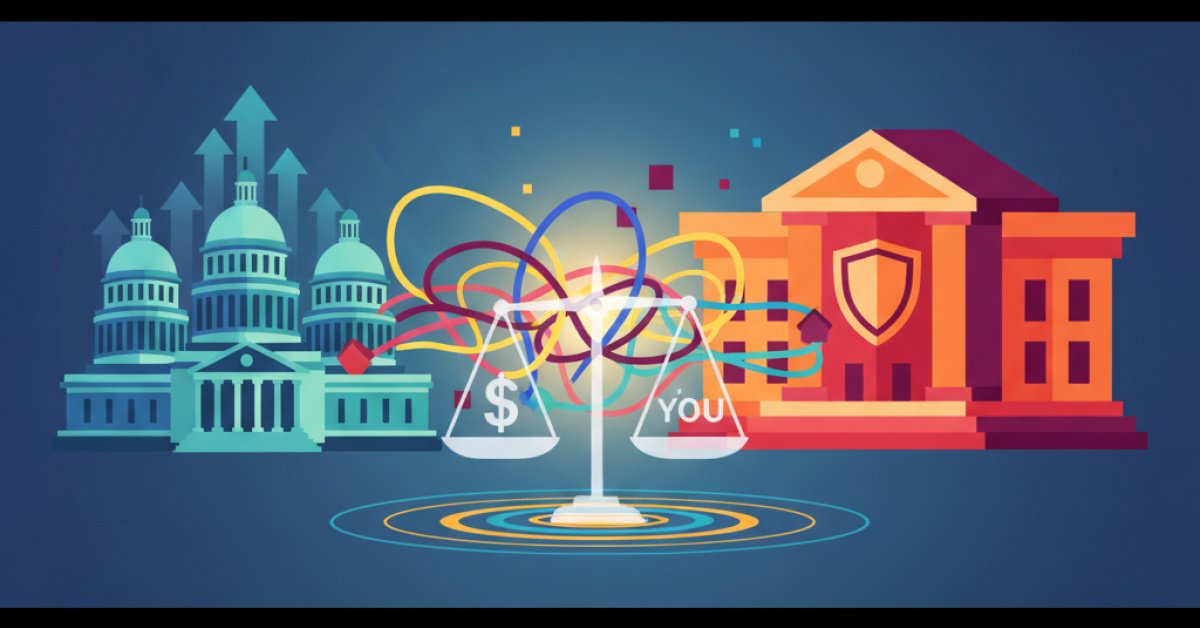
Have you ever felt like you’re in a David vs. Goliath situation when dealing with a massive financial company? You know the feeling. You spot an error on a statement or get tangled in some fine print, and suddenly you’re on your own, trying to get a straight answer from a faceless corporation. It’s frustrating, to say the least.
Well, for years, we’ve had a powerful ally in our corner: the Consumer Financial Protection Bureau, or CFPB. Think of them as the official referee in the financial world, making sure the big players don’t bend the rules.
But recently, that referee was almost pulled from the game. In a move that flew under the radar for many, the Trump administration tried to cut off the agency's funding. It was a huge deal, and for a moment, it looked like the consumer’s biggest advocate might be sidelined. Then, a federal judge stepped in and said, "Not so fast."
So, What Exactly Just Happened?
Let's break this down without the legal jargon. On a recent Friday, a federal judge delivered a pretty decisive ruling. The judge ordered the administration to keep funding the CFPB. Not just for a little while, but indefinitely.
The core of the issue was why the administration wanted to stop the funding. They claimed they were acting on legal advice. But the judge took a close look at that advice and, to put it mildly, was not impressed. The court called the legal reasoning "deficient" and said that relying on it was "unlawful."
Imagine trying to build a house, but your architect gives you blueprints that are full of mistakes. If you build it anyway, the whole thing is going to be unstable. That's essentially what the judge said happened here—the administration's entire argument was built on a faulty foundation, and the court wasn't having it.
Who is the CFPB and Why Should You Care?
Okay, I get it. "Consumer Financial Protection Bureau" sounds like another boring government agency. But trust me, this one is different. The CFPB was born from the ashes of the 2008 financial crisis. Remember that whole mess? A big part of the problem was that financial products like mortgages had become incredibly complex and, in some cases, downright predatory.
The CFPB was created to do a few key things:
- Be a Watchdog: They keep an eye on banks, lenders, credit card companies, and other financial institutions to make sure they're treating you fairly.
- Enforce the Rules: When companies break the law, the CFPB can take action, often resulting in huge fines and forcing companies to pay back consumers they've harmed.
- Be Your Megaphone: They run a consumer complaint database. If you have a problem with a financial product, you can file a complaint, and the CFPB will help you get a response from the company. It’s a way to get your voice heard when you feel like you’re being ignored.
Before the CFPB, you were pretty much on your own. Now, you have a heavyweight in your corner. This court ruling ensures that heavyweight can stay in the ring.
The Real-World Impact of This Ruling
This isn't just some abstract legal victory. This decision has real, tangible effects on your financial life, especially when it comes to insurance-related products and other complex financial agreements.
When you buy a house, for instance, you’re often dealing with mortgage insurance. When you finance a car, you might be offered GAP insurance or credit insurance. These are complex products, and it's the CFPB's job to make sure the terms are clear and the practices are fair.
Without a fully funded CFPB, who would be policing this? Who would you turn to if you felt a lender misled you about the terms of a loan or the cost of an associated insurance product? The agency's existence pushes companies to be more transparent and honest from the get-go because they know someone is watching.
This ruling means that the cop is staying on the beat. It sends a clear message that the systems put in place to protect everyday people can't just be dismantled based on questionable legal arguments.
What Happens Next?
The order for the funding to continue is "indefinite," which is a strong word in the legal world. It means the status quo remains, and the CFPB gets the money it needs to operate.
Honestly, this is a huge sigh of relief. It provides stability and ensures that the agency can continue its work without the constant threat of being defunded hanging over its head. It can keep investigating complaints, writing rules to protect consumers, and taking action against bad actors.
For you and me, it means we can continue to count on having a powerful advocate on our side. It’s a reminder that even when it feels like the system is stacked against us, the checks and balances are there for a reason. And sometimes, they work exactly as they’re supposed to. This quiet court ruling was one of those times, and it’s a bigger win for all of us than the headlines might suggest.