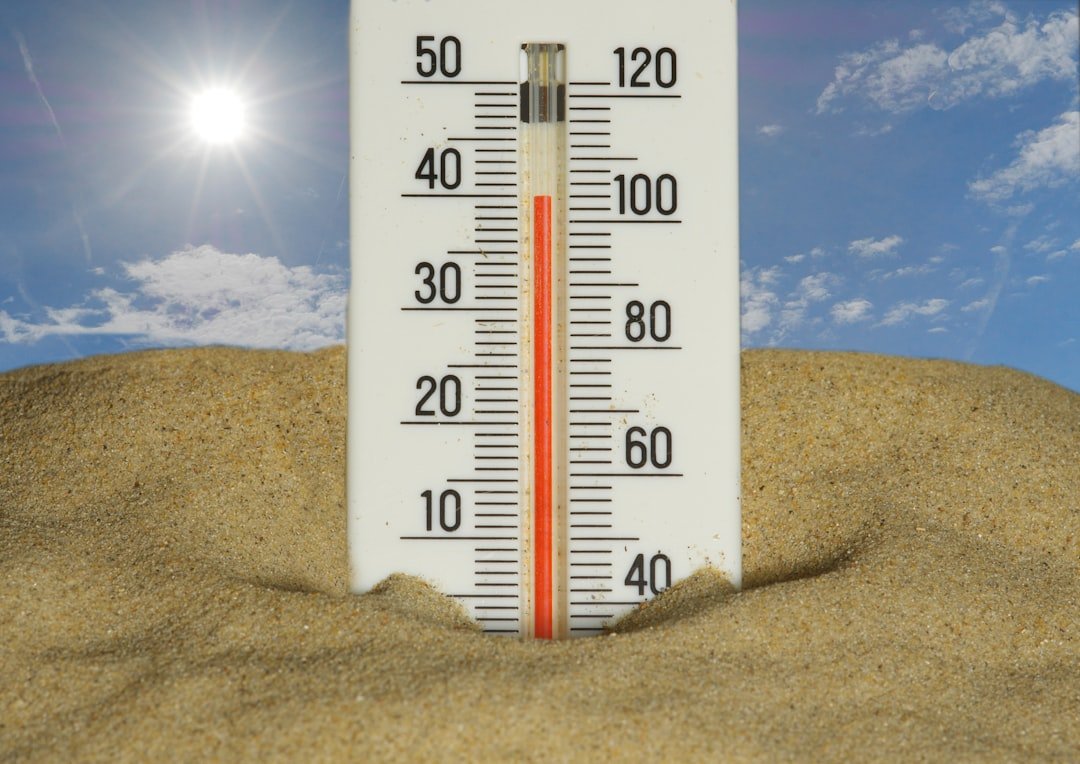
I want you to think about the last really, really hot day we had. You know the one. The air is thick and heavy, the sun feels like it’s pressing down on you, and just walking to your car leaves you drenched. We all grumble about it, crank up the A/C, and maybe dream of a swimming pool.
But what if I told you that this heat is becoming more than just an inconvenience? What if it's becoming one of the most significant, and fastest-growing, risks to human life on the planet?
It sounds like a movie plot, but the numbers are in, and honestly, they're staggering. A recent, major report from The Lancet—one of the world's most respected medical journals—dropped a bombshell. Soaring temperatures are now linked to the deaths of nearly 550,000 people around the globe. Every single year.
Let that sink in for a second. That's like losing the entire population of a city like Atlanta or Sacramento, year after year, just from heat.
And here’s the part that really got my attention as an insurance guy who spends his days looking at risk: this isn't a static problem. The death toll has climbed by more than 20% since the 1990s, even after you adjust for population growth. It’s not just that there are more people; it’s that the risk per person is getting worse.
Let's Unpack These Numbers, Because They're a Big Deal
When we talk about risk in the insurance world, we often think of dramatic events. A hurricane tearing through a coastal town, a sudden fire, a car accident. These are immediate, visible, and easy to understand.
Extreme heat is different. It’s a silent, creeping risk. It doesn’t have an epicenter or a storm path. It just… settles in. And that makes it dangerously easy to underestimate.
The report’s figure of nearly 550,000 deaths a year is a tough one to swallow. These aren't just statistics; they're grandparents, construction workers, and young children. They are people who succumbed to heatstroke, dehydration, or whose existing health problems, like heart or kidney disease, were pushed over the edge by the relentless heat.
What does "population-adjusted" even mean?
You'll see that phrase—"population-adjusted basis"—and it’s easy to gloss over, but it’s the most crucial part of this story.
Think of it this way: If you have a town of 100 people and 1 person gets sick, your sickness rate is 1%. If the town grows to 200 people and 2 people get sick, the number of sick people has doubled, but the rate is still 1%. Nothing has really changed about how dangerous the sickness is.
But what this report is saying is that our "sickness rate" from heat is going up. The 20% increase means that even if our global population had stayed exactly the same since the 90s, we'd still be seeing a massive jump in heat-related deaths. The danger itself is intensifying.
Who is Actually Most at Risk?
It’s easy to picture someone elderly and frail as the primary victim of a heatwave, and that’s certainly a huge part of the story. Older adults and very young children have a much harder time regulating their body temperature. The same goes for anyone with a chronic illness.
But the net is cast much, much wider than that. And this is where it starts to hit home for businesses and families.
Consider these groups:
- Outdoor Workers: Think about the folks in construction, agriculture, road crews, and landscaping. Their jobs don't stop when the temperature hits 95 degrees. This creates a massive and growing risk for them and a huge liability for their employers.
- City Dwellers: Concrete and asphalt absorb and radiate heat, creating "urban heat islands" where temperatures can be significantly higher than in surrounding rural areas. If you live or work in a dense city, your exposure is automatically higher.
- Low-Income Households: People who can't afford reliable air conditioning or live in poorly insulated homes are incredibly vulnerable. They have no easy way to escape the heat.
This isn't a problem for "someone else." It's a problem for our communities, our employees, and our families.
The Insurance Connection: How Heat Shows Up on a Balance Sheet
Okay, so why are we talking about this on an insurance blog? Because at its core, insurance is the business of understanding and managing risk. And this is a risk that is quietly reshaping the landscape for almost every type of coverage you can think of.
Let’s connect the dots.
Health and Life Insurance
This is the most direct link. More heat-related illnesses mean more emergency room visits, more hospitalizations, and more strain on the healthcare system. That translates to higher health insurance claims. For life insurance, this trend contributes to what's known as "excess deaths"—a higher number of deaths than would normally be expected. It’s a fundamental variable that life insurers have to model and prepare for.
Workers' Compensation
If you run a business with employees who work outside, this is now squarely on your radar. The Occupational Safety and Health Administration (OSHA) is paying very close attention to heat-related illness and death in the workplace. A single incident can lead to a devastating workers' comp claim, not to mention regulatory fines and a damaged reputation. Insurers are getting much more serious about asking businesses: "What's your heat safety plan?"
Business and Property Insurance
This might seem less obvious, but the ripple effects are real. Extreme heat can:
- Strain power grids, leading to blackouts that can shut down a business for days (hello, business interruption claims).
- Damage sensitive equipment that isn't designed to operate in extreme temperatures.
- Reduce productivity across the board, as employees (even those indoors) can become lethargic and less effective.
- Increase the risk of wildfires, which is a massive and direct threat to property.
So, What Can We Do? This Isn't Just Gloom and Doom
Look, these numbers are scary. There's no way around it. But ignoring a risk doesn't make it go away. The first step is acknowledging it, and the second is taking practical steps to manage it.
For you and your family:
- Have a plan. Know the signs of heatstroke and heat exhaustion. Check in on elderly relatives or neighbors on dangerously hot days.
- Review your coverage. Does your health insurance provide good emergency room coverage? Is your life insurance policy adequate for your family's needs? These are the moments when that peace of mind really counts.
For business owners:
- Talk to your broker. Seriously. This is a real, insurable risk. Discuss your specific vulnerabilities. Do you need to update your workers' comp policy? Is your business interruption coverage up to snuff?
- Create a heat safety program. This is non-negotiable for outdoor workers. It should include things like mandatory water breaks, providing shade, adjusting work hours to avoid the hottest part of the day, and training employees to recognize heat illness.
This isn't about some far-off, abstract climate debate. This is about right now. It’s about a clear and present danger that’s getting worse every year. Seeing it for what it is—a fundamental risk to our health and financial well-being—is the only way we can start to properly prepare for it.