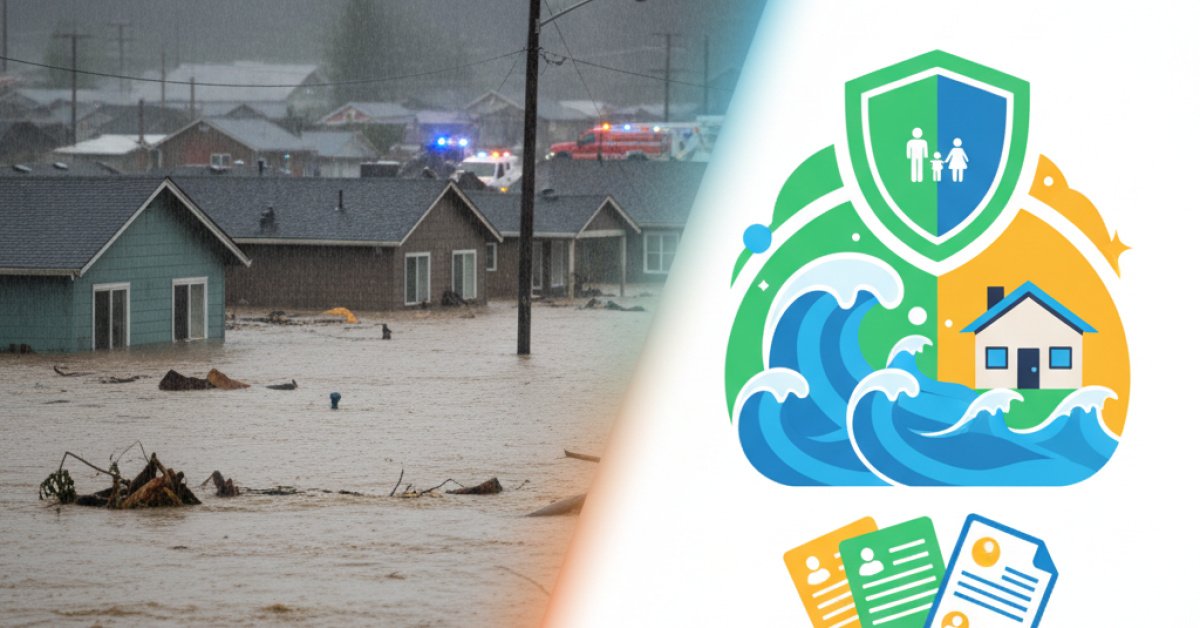
The news coming out of Washington and Idaho this week has been just heartbreaking. First, the relentless rain and flooding. Then, as if that wasn't enough, ferocious winds came through, knocking out power to half a million people and, tragically, causing serious injuries and even a death.
When you see headlines like that, it’s natural to feel a mix of things. First, empathy for the families whose lives have been turned upside down. But if you’re a homeowner, there’s probably another thought that creeps in, a little knot of anxiety in your stomach: "What if that happened to me? Would my insurance even cover it?"
It’s a great question, and honestly, it’s more complicated than you might think. This kind of "stacked" disaster—one event right on top of another—is a real-life stress test for any insurance policy. So let’s talk about it.
The One-Two Punch: Why Wind After a Flood is Different
Think of it like this. Imagine you get a small crack in your car's windshield. Annoying, but manageable. But then, before you can get it fixed, a hailstorm hits. Now that small crack is a spiderweb of shatters. The second event made the first one so much worse.
That’s exactly what happened in the Northwest. The ground was already completely water-logged from days of heavy rain and flooding. The soil was soft, almost like mud. Tree roots that are normally anchored deep in firm earth were sitting in a soupy mess, losing their grip.
Then, the high winds arrived.
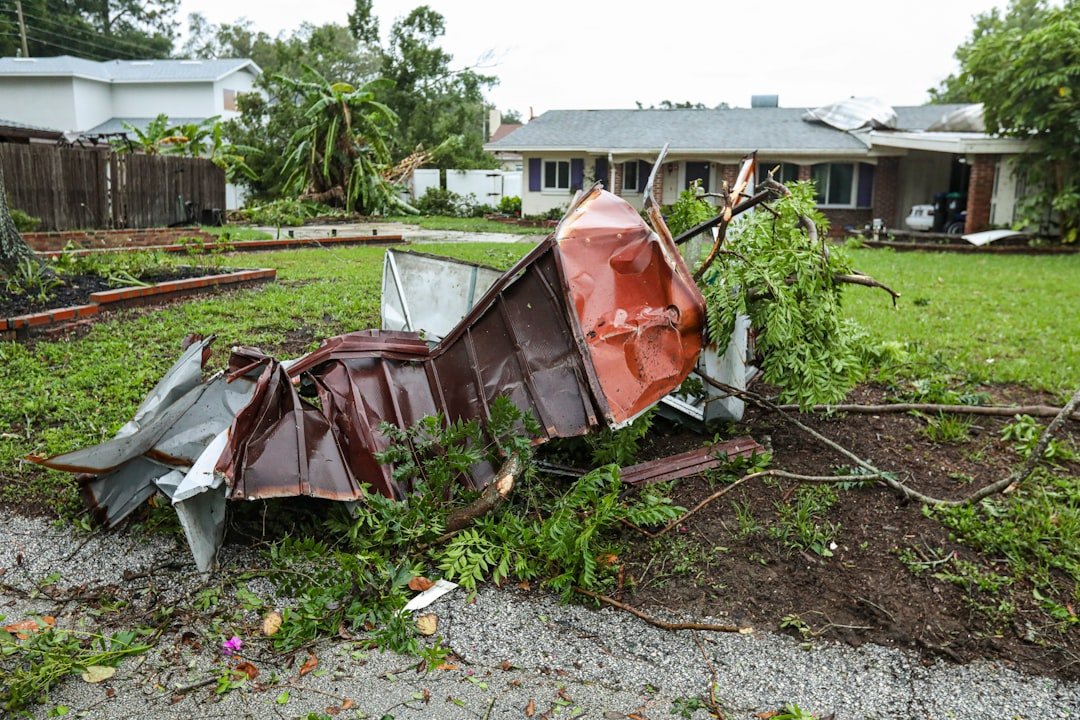
A healthy tree in dry soil might have just bent and swayed in that wind. But a tree with its roots swimming in water? It doesn't stand a chance. The wind just pushes it right over, taking power lines with it and sometimes, tragically, crashing into homes. This is what we call a compounding event, and it creates some seriously tricky situations for insurance claims.
So, What's Actually Covered? The Wind vs. Flood Puzzle
Here's the single most important thing you need to understand about your homeowner's insurance: a standard policy almost always covers wind damage, but it does not cover flood damage.
Let me say that again because it’s that crucial.
- Wind Damage: A tree branch snaps in a gale and punches a hole in your roof? Covered. Shingles get ripped off your house? Covered. A gust of wind shatters your living room window? Covered.
- Flood Damage: Water from a rising river or overflowing creek seeps into your basement and ruins everything? Not covered by a standard policy.
To be covered for flooding, you need a separate flood insurance policy, which is usually administered by the National Flood Insurance Program (NFIP).
Now, you can see where the problem starts with a storm like the one in the Northwest. What caused the tree to fall? Was it the wind (a covered peril)? Or was it the flooded, unstable ground (an uncovered peril)?
This is where insurance claims can get messy.
The Challenge: Proving the Cause of Damage
When you file a claim after a complex storm, the insurance adjuster's job is to figure out the "proximate cause" of the damage. In simple terms, they need to pinpoint the primary event that set the chain of destruction in motion.
If the adjuster determines the wind was the main culprit that toppled the tree onto your house, your homeowner's policy should respond. But if they argue that the tree would have been fine if the ground hadn't been washed out by flooding first, they might try to deny the claim, pushing it toward your (non-existent?) flood policy.
It can feel like a frustrating game of chicken, and you're stuck in the middle.
So, what can you do? Your best defense is documentation. You have to become the chief investigator of your own property damage.
Your Post-Storm Action Plan
If you find yourself in a situation like this, take a deep breath. It's overwhelming, but a clear head and a plan will make all the difference. Here’s what we advise our clients to do immediately:
-
Prioritize Safety. First and foremost, make sure everyone is safe. Stay away from downed power lines—assume every single one is live. Watch out for unstable trees or structures. Don't wade into floodwater if you can avoid it; it can be contaminated or hide dangers.
-
Document Everything. I can't stress this enough. Before you move a single branch or board, take pictures and videos. Get shots from every angle—wide shots of the whole scene, and close-ups of specific damage. If you can safely do so, narrate your video, explaining what you're seeing. "This is the big oak tree from the backyard. You can see the ground is still completely soaked, and it fell directly onto the garage." This evidence is invaluable.
-
Prevent Further Damage. Your policy requires you to take reasonable steps to mitigate further loss. This doesn't mean you need to start a full-scale renovation! It means doing things like putting a tarp over a hole in the roof to keep more rain out or boarding up a broken window. These are temporary fixes.
-
Keep Every Single Receipt. Did you buy a tarp? Plywood? Paid a contractor for emergency tree removal from your driveway? Keep the receipts for all of it. These costs are often reimbursable as part of your claim.
-
Call Your Insurance Agent. Don't just call the 1-800 number on your policy. Call your local agent, the person you have a relationship with. They can offer immediate advice, help you understand the process, and get the claim started on the right foot. Tell them exactly what happened in as much detail as possible.
The events in Washington and Idaho are a powerful and tragic reminder that Mother Nature doesn't play by our rules. Sometimes, she hits us with everything at once.
While we can't stop the storms, we can be prepared. Take a few minutes this week to pull out your insurance policies. Do you have flood coverage? Do you understand your deductible for wind damage? If you’re not sure, call your agent. A ten-minute conversation today could save you a world of headache and heartache tomorrow. Stay safe out there.