Have you ever seen a news story about a big disaster and wondered what happens after the cameras leave? We see the immediate, tragic human cost, but there’s a whole other story that unfolds in the background—one that plays out on stock market tickers and in corporate boardrooms.
It’s a story about risk, money, and the promises companies make. And a perfect, if heartbreaking, example of this happened recently. A single, catastrophic fire in a Hong Kong apartment complex didn't just devastate a community; it sent a massive insurance giant reeling and had investors running for the hills.
Let's break down what happened and why it matters so much, not just for the company involved, but for how we think about insurance and risk.
What Exactly Happened in Hong Kong?
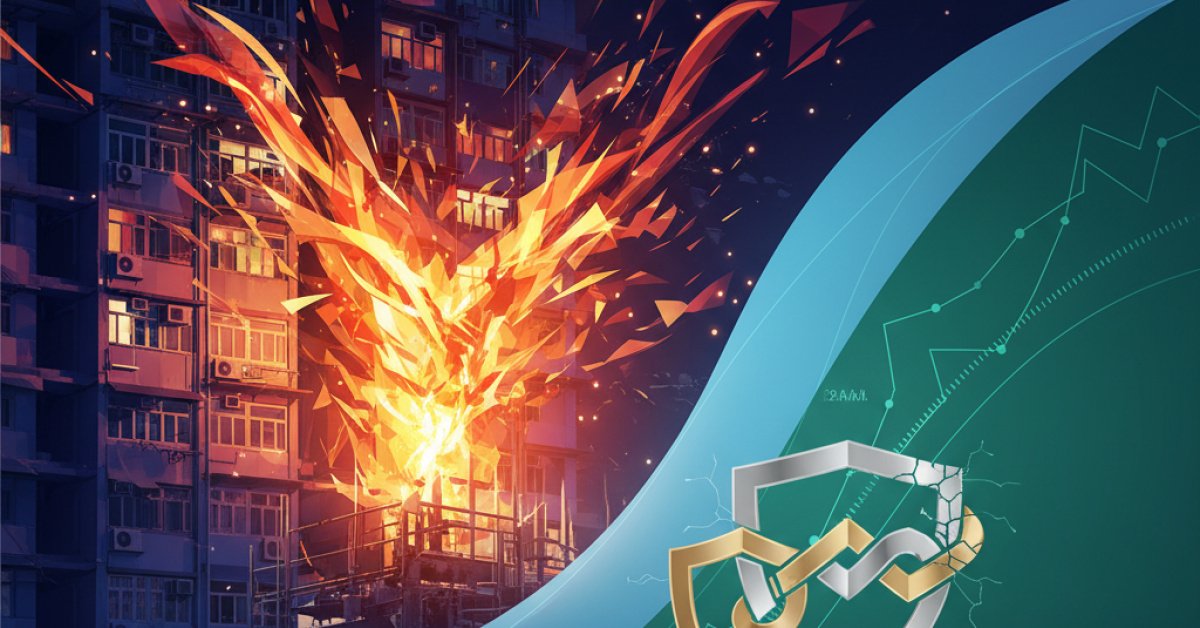
The event itself was horrific. A massive fire tore through a Hong Kong apartment complex, and in the end, at least 55 people tragically lost their lives. It was a deeply human tragedy, and the kind of event you hope never to see.
But for the insurance world, this kind of disaster immediately triggers a different set of alarm bells. The first question that pops into an underwriter's head is, "Who was on the hook for this?"
It turns out, the answer was China Taiping Insurance Holdings. And they weren't just a little bit on the hook. They were facing a massive exposure.
The $200 Million Question: Just How Big Was the Hit?
Here’s where the numbers get staggering. Word quickly got out that Taiping Insurance had more than $200 million in coverage exposure tied to that single apartment complex.
Let me put that into perspective for you. Insurance is all about spreading risk. Think of it like a casino. The house can afford to pay out a few jackpots because they're taking in small amounts of money from thousands of players. They never want to have too much of their money riding on a single spin of the roulette wheel.
In this case, it seems Taiping had a massive bet on one "number," and that number just came up. An exposure of over $200 million on a single property is a huge concentration of risk. It’s the kind of figure that makes investors and market analysts incredibly nervous.
Watching the Stock Tumble in Real-Time
So, what happens when Wall Street gets nervous? They sell.
On the Thursday following the fire, shares of China Taiping Insurance Holdings took a nosedive. At one point, the stock was down as much as 8%. Now, 8% might not sound like a world-ending number, but for a massive, established insurance company, that's a huge one-day drop. It represents a massive loss in the company's total value, all because of one fire.
Investors weren't just reacting to the potential payout. That $200 million, while massive, is something a company of Taiping's size can likely handle. The real fear was about something bigger.
The sell-off was driven by a few key concerns:
- Concentration of Risk: It raised serious questions about the company's risk management. Why was so much liability tied up in a single location? Are there other properties where they are similarly over-exposed?
- A Hit to Profits: A payout of that size is a direct hit to the company's bottom line for the quarter, and maybe the year. That's money that won't be going to profits or dividends.
- Loss of Confidence: More than anything, it was a crisis of confidence. The market suddenly saw Taiping as a riskier bet than it had the day before.
What This Teaches Us About the Business of Insurance
This whole situation is such a stark reminder of what insurance is fundamentally about. It’s not just paperwork and premiums. It's a promise to pay when the worst happens.
But for the company, it's a constant, high-stakes balancing act. They have to collect enough in premiums to cover their day-to-day claims, pay their employees, and turn a profit. But they also have to have enough in reserve to withstand a catastrophic event, like this fire.
When investors see a single event cause this much financial turmoil, it makes them wonder if the company has its balancing act right. It’s a brutal, immediate report card on their underwriting and risk assessment strategies.
This single fire in Hong Kong became a multi-million-dollar lesson, broadcast live on the stock market, about the very real consequences of concentrated risk. It’s a story that, I’m sure, had risk managers at every other major insurer double-checking their own books and making sure they hadn't placed too big a bet on any single outcome.