In our line of work, we talk a lot about "risk." We throw around terms like "mitigation," "exposure," and "liability." But every now and then, a story comes along that cuts through the jargon and reminds us of the real, human stakes behind those words. The recent news out of Kentucky is one of those stories.
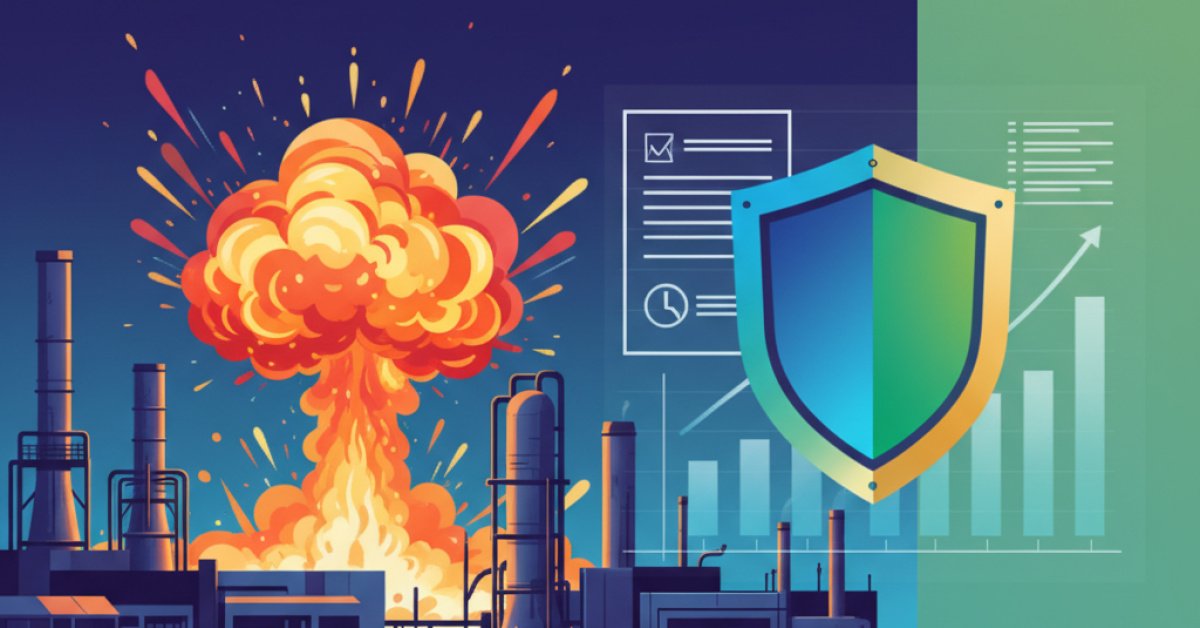
You’ve probably seen the headlines about the explosion at a food-coloring manufacturer. It’s a tragedy, plain and simple. Two people went to work one morning and never came home. Millions of dollars in damage was done not just to the plant, but to the surrounding community. It’s the kind of event that sends a shiver down the spine of any business owner or risk manager.
But here’s the part that really gets me. The U.S. Chemical Safety Board (CSB) just released its findings, and their conclusion is chilling. They didn’t call it an unforeseeable accident or a stroke of bad luck. They called it a “catastrophe waiting to happen.” And that, my friends, changes everything. It means this wasn't just a tragedy; it was a preventable one.
So, What Exactly Went Wrong?
When you hear "runaway chemical reaction," it sounds like something out of a science fiction movie. But the reality is often much more mundane. It’s not one big, dramatic mistake. It’s usually a series of small, seemingly minor oversights that stack up until the whole thing comes crashing down.
Think of it like a row of dominoes. The first domino is a small, wobbly one. Maybe it’s a piece of equipment that isn’t quite right. The next is a lack of training. The one after that is a procedure that everyone knows is flawed but nobody has fixed. One by one, they start to fall.
According to the CSB, that’s pretty much what happened here. The investigation pointed to a whole list of missteps that, when you look at them all together, paint a pretty grim picture. It wasn't just that the company was unprepared for this specific event; it seems they weren't equipped to prevent it in the first place.
The Anatomy of a Preventable Disaster
Let's break down what the experts are saying. While the full report is dense, the core issues are things we see time and time again in major industrial losses.
- Inadequate Safeguards: The plant reportedly lacked the proper systems to stop a chemical reaction once it started to spiral out of control. It’s like having a fire extinguisher that’s too small for the fire you’re trying to fight. You might feel safe having it on the wall, but when you actually need it, it’s basically useless.
- Process Flaws: The way the chemicals were being handled was inherently risky. When an underwriter looks at a manufacturing plant, they’re not just looking at the building; they’re digging into the process. How are things made? What are the safety checkpoints? If the fundamental process is flawed, no amount of insurance can fix the underlying danger.
- Warning Signs Ignored: Often, before a big disaster, there are little ones. Small leaks, minor temperature spikes, near-misses. These are the warning lights on your car's dashboard. The CSB's language suggests that the conditions for this disaster had been building over time. The question is, was anyone paying attention to the signals?
This wasn’t a lightning strike from a clear blue sky. It was a storm that had been brewing for a long, long time.
The Insurance Angle: It’s Not Just About the Check
When something like this happens, the first conversation in our world is often about the insurance policy. Will it cover the property damage? What about the business interruption? The liability claims from the families and the community?
Those are all critical questions, of course. A robust insurance program is the financial backstop that allows a company to survive an event like this.
But here’s the thing we have to remember: insurance is the last line of defense, not the first. The real goal of risk management isn’t to make sure you get a payout after a disaster; it’s to make sure the disaster never happens to begin with.
When an underwriter sees a report like the one from the CSB, they see a story of unmanaged risk. They see a company that, for whatever reason, didn't have the culture or the systems in place to protect its people and its assets. And that has a huge impact on everything from premium costs to insurability itself. You simply can't insure your way out of a fundamentally unsafe operation.
Asking the Hard Questions in Your Own Business
It's easy to read about a tragedy in another state and think, "That could never happen here." But the lessons from this Kentucky plant are universal. Whether you’re running a massive chemical facility or a small local workshop, the principles are the same.
This is a good time to take a hard look in the mirror and ask some tough questions about your own operations:
- Do we just have safety rules, or do we have a safety culture? Is safety something you talk about once a year in a meeting, or is it part of every decision, every single day?
- Are we listening to the "canaries in the coal mine"? Are your front-line employees empowered to speak up when they see something that isn’t right, without fear of reprisal? They’re the ones who see the small problems before they become big ones.
- When was the last time we really pressure-tested our emergency plans? It’s not enough to have a plan in a binder on a shelf. Have you run drills? Have you walked through worst-case scenarios?
These aren't just questions for your safety manager; they’re questions for everyone, from the C-suite to the shop floor.
The story of the Kentucky food-coloring plant is a heartbreaking reminder that the work we do in insurance and risk management is about more than just policies and premiums. It’s about protecting livelihoods. It’s about protecting lives. These reports are tough to read, but we owe it to the people who were lost, and to everyone who shows up for work tomorrow, to learn from them. Let’s make sure we do.