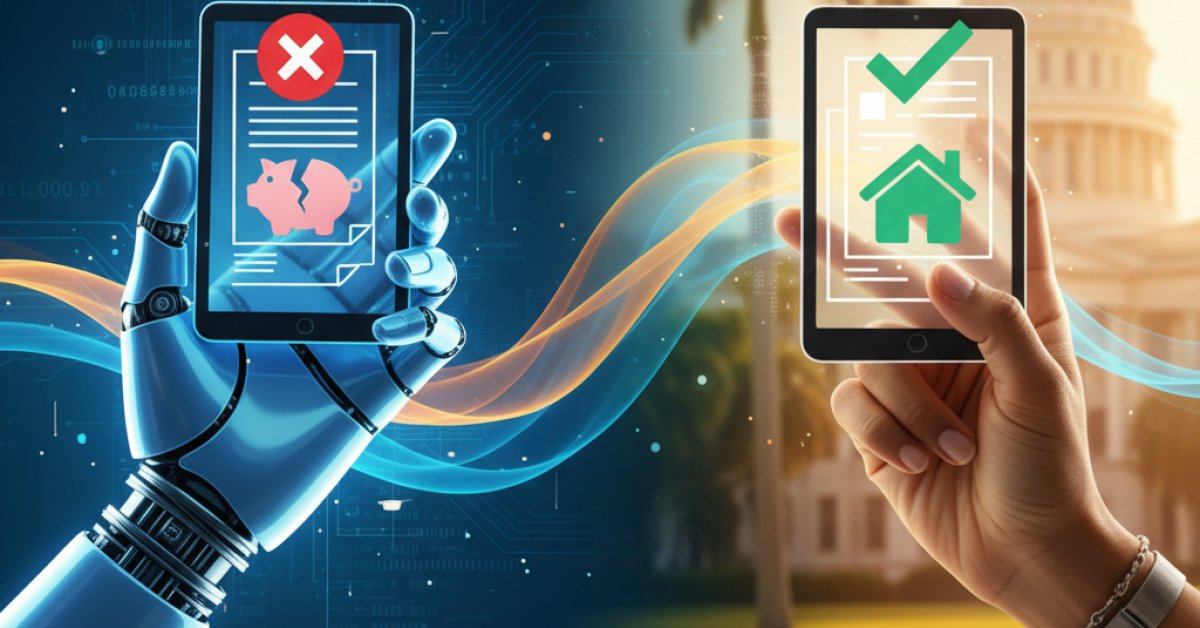
Have you ever gotten a letter from your insurance company, read the word "denied," and had that sinking feeling that a real person never even looked at your file?
It’s a frustrating thought, isn't it? You feel like you’re just a number in a massive, faceless system. You picture your carefully prepared claim getting fed into a machine, only for a cold, unfeeling algorithm to spit out a rejection notice. You're left wondering, "Did anyone even understand my situation?"
Well, it seems you’re not alone in feeling that way. Lawmakers down in Florida are taking a hard look at this exact issue, and they’re proposing a pretty straightforward fix: put a human back in the loop.
So, What's This New Bill All About?
Let’s break it down. A new bill is making its way through the Florida legislature that, if passed, would make it illegal for an insurance company to deny your claim without a real, live human being reviewing it first.
It sounds like common sense, right? But in an age of increasing automation, it’s a bigger deal than you might think.
The core idea is simple: before that denial letter gets stamped and sent, an actual person with the right qualifications has to look at the claim and sign off on the decision. No more letting a software program make the final call on its own. This isn't about getting rid of technology altogether; it's about making sure technology serves as a tool for people, not a replacement for them.
Why Are Lawmakers Stepping In Now?
The timing here is no accident. We're seeing a huge push across all industries, including insurance, to use artificial intelligence (AI) and complex algorithms to speed things up and cut costs. And look, I get it. From an efficiency standpoint, it makes sense. These systems can process thousands of claims in the time it takes a human adjuster to get through a handful.
But here’s the thing: efficiency can’t be the only goal.
The big concern is that these automated systems, while fast, might be a little too black-and-white. An algorithm might be programmed to look for specific keywords or data points, and if your claim doesn't tick the right boxes, it could get automatically flagged for denial.
Think of it like this: Imagine you’re explaining a complicated situation to a customer service chatbot. It’s great for simple questions, but the moment you have a problem with any nuance, the bot gets stuck in a loop. It doesn't understand context. It doesn't have empathy.
That’s the fear with AI-driven claim denials. A human adjuster can read between the lines. They can understand that a situation might be unusual or that a piece of documentation, while not standard, still proves the loss. An algorithm? Not so much. It just follows the code. This legislation is essentially a safeguard against letting the "code" have the final say over a person's life and finances.
What This Could Mean for Your Insurance Claims
If this bill becomes law, it could change a few things for policyholders in Florida, and potentially set a precedent for other states.
The Good News First
For you, the policyholder, the biggest benefit is peace of mind.
- A Human Touch: You’ll know that your claim wasn't just kicked out by a machine. A person with experience had to review the details and agree with the denial.
- More Accountability: It puts the onus back on the insurance company. They can't just blame a "system glitch" if a pattern of wrongful denials emerges. A person's name and credentials will be attached to the decision.
- Potentially Fewer Errors: The hope is that a human reviewer will catch mistakes that an automated system might make, leading to more fair and accurate outcomes.
Honestly, it just feels better knowing you’re dealing with people, not just a process. When you’re dealing with the stress of a car accident, a house fire, or a health issue, that human element matters. A lot.
Are There Any Downsides?
Now, let's be realistic. Every change has potential trade-offs. Some in the industry might argue that forcing a manual review on every single denial could slow things down.
It’s possible the claims process could take a bit longer if everything has to pass through another set of human eyes. There’s also the question of cost. Will hiring more people to review claims cause insurers’ administrative costs to go up? And if so, could those costs eventually be passed on to us in the form of higher premiums?
It’s a valid question, and one that will certainly be part of the debate as this bill moves forward. The goal is to find that sweet spot between efficiency and fairness.
Is This Just a Florida Thing, or a Sign of What's to Come?
I think this is much bigger than just one state. What’s happening in Florida is a perfect example of a conversation we’re having as a society. How much do we want to automate? Where do we draw the line, especially in fields like insurance and healthcare where decisions have such a massive impact on people’s lives?
Other states are absolutely watching to see what happens here. If this bill passes and proves to be successful, you can bet you’ll see similar proposals pop up in other statehouses across the country.
It’s a fascinating tug-of-war between the promise of technology and the need for human judgment. We all want the claims process to be faster and easier, but not if it comes at the cost of fairness. This bill is a clear statement that, at least for now, there’s no substitute for a real person who can look at a situation with understanding and common sense.
We’ll have to wait and see if it becomes law, but it’s a powerful step toward making sure the insurance industry remembers that behind every claim number, there’s a human being.