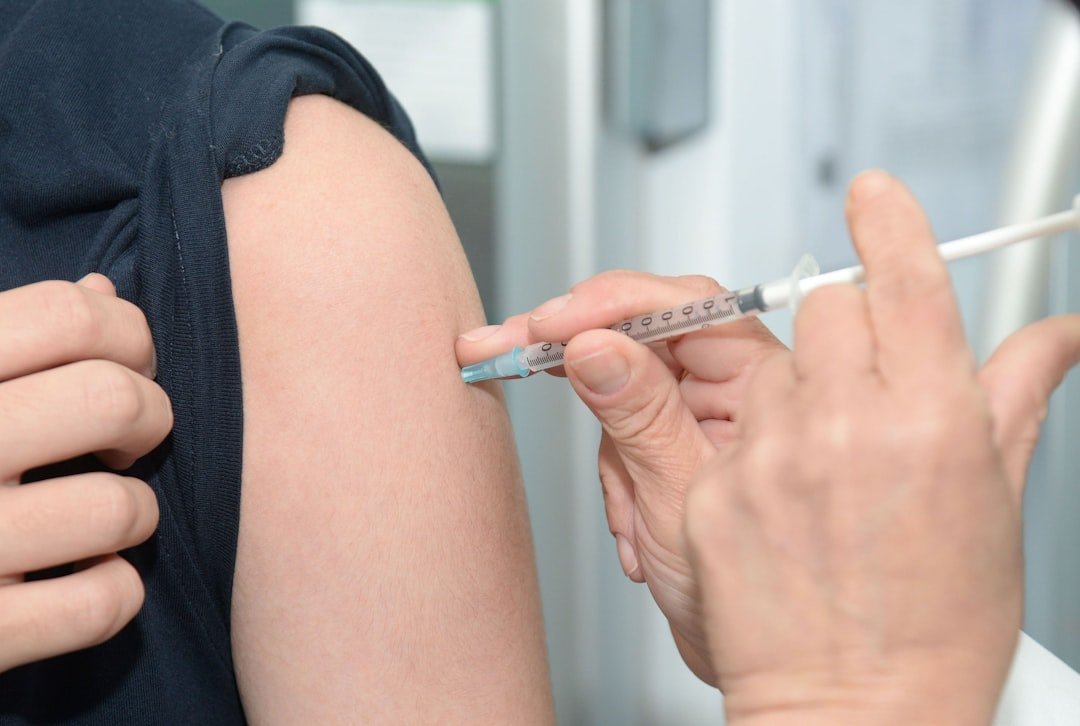
You might have seen a headline recently about a group pushing to add hundreds of new injuries to the federal government's official list of vaccine-related harms. On the surface, it sounds like a purely medical or political story.
But as someone who spends their days in the world of insurance and claims, I see something else entirely. I see a story about a very unique, little-known national insurance program that could be facing a massive shake-up.
This isn't about taking sides in a debate. It's about understanding the machinery that runs behind the scenes when something goes wrong. So, let's pull back the curtain on the National Vaccine Injury Compensation Program (VICP) and figure out what this petition is really all about.
So, What Exactly is This "Vaccine Injury Table"?
Before we get into the petition itself, you need to understand the "Table." Officially, it’s called the Vaccine Injury Table.
Think of it like a pre-approved claims list for an insurance policy.
Imagine you have car insurance. If you get into a fender-bender, your policy clearly covers the repair costs. It's straightforward. But what if a meteor hits your car? That's probably not on the "standard events" list, and you'd have a much tougher time proving your claim should be covered.
The Vaccine Injury Table works in a similar way. It lists specific, known injuries and conditions that are scientifically linked to certain vaccines. If you receive a vaccine and then suffer an injury that’s on the Table within a specified time frame, the program presumes the vaccine was the cause.
You don't have to fight tooth and nail in a traditional court to prove causation. The link is already established. This makes the claims process much, much simpler. If your injury isn't on the Table? You can still file a claim, but the burden of proof is all on you. You have to bring in experts and evidence to convince a special court that the vaccine, and not something else, caused your problem. It's a much harder road.
The VICP: A Different Kind of Insurance Policy
This all operates under a program that was set up back in the 1980s. At the time, lawsuits against vaccine manufacturers were piling up. The fear was that these companies might just stop making essential vaccines altogether because the financial risk was too high.
So, Congress created a solution: the National Vaccine Injury Compensation Program (VICP).
Here’s the thing—it’s a “no-fault” system. This is a key concept in insurance. In a no-fault system, you don't have to prove someone else was negligent to get compensation. You just have to show that you were injured by the covered event. This program shields manufacturers from most lawsuits and, in return, creates a dedicated fund to help people who are genuinely harmed.
And how is it funded? Not from your regular income taxes. It's funded by a 75-cent excise tax on every dose of a vaccine recommended by the CDC for routine administration to children. In essence, a tiny premium is paid on each vaccine to fund this national insurance pool.
What's This New Petition All About?
Now, let's get back to the news. A group aligned with Robert F. Kennedy Jr., who now serves as the head of the U.S. Department of Health and Human Services, has officially petitioned him.
They want to add more than 300 different injuries and conditions to that Vaccine Injury Table we talked about. Their list includes things like autoimmune disorders, neuropsychiatric conditions, and a range of other ailments they believe are linked to immunizations.
Their goal is pretty clear: to move these 300+ conditions from the "hard to prove" category to the "presumed to be covered" category. If they succeed, anyone who experiences one of those conditions after a vaccination would have a much more streamlined path to receiving compensation from the VICP fund.
And they’re serious. The group has stated that if the department doesn't respond or move forward with their request, they're prepared to sue.
What Happens if the List Gets Bigger?
This is where it gets really interesting from a risk and compensation standpoint. Expanding the Table isn't just a small administrative change. It could have massive ripple effects.
For People Filing Claims
For individuals, this could be a game-changer. If you believe you were harmed by a vaccine and your condition is one of the 300+ they want to add, your path to getting financial help could become dramatically easier. You'd no longer face the uphill battle of proving causation from scratch.
For the Program's Finances
On the other hand, you have to think about the fund itself. This is a multi-billion dollar trust fund built from those 75-cent taxes. If you suddenly make it easier for thousands, or even tens of thousands, more people to file successful claims, the outflow of money could skyrocket.
It raises some big questions:
- Is the fund large enough to handle a potential surge in claims?
- Would the 75-cent tax per vaccine dose need to be increased to keep the program solvent?
- How would this impact the program's ability to pay out existing and future claims?
It’s the classic insurance balancing act. You want to provide broad coverage, but you also have to make sure the pool of money is sustainable for the long haul.
This whole situation is a perfect example of how a decision in Washington can have very real, practical consequences for a system that’s designed to function like a national safety net. It’s not just a headline; it's a potential shift in how we manage a very specific, and very sensitive, type of risk. We'll have to watch and see how the department responds, because the outcome could reshape this unique corner of the compensation world for years to come.