Let's be honest, opening your home insurance renewal notice lately can feel like a gut punch. If you've found yourself staring at the new premium and thinking, "How did it get this high?", you are absolutely not alone. It’s a conversation I’m having more and more with friends, family, and clients.
It’s easy to think it’s just one company raising rates, but what we're seeing is something much bigger. It’s a tremor running through the entire foundation of the U.S. property insurance market. And according to some of the top minds in the business, those tremors are getting stronger.
A recent discussion with experts from The Conference Board laid it out in pretty stark terms. The market is becoming unstable, and the main culprit won't surprise you if you’ve turned on the news in the last few years: wild, unpredictable, and incredibly expensive weather.
The $200 Billion Elephant in the Room
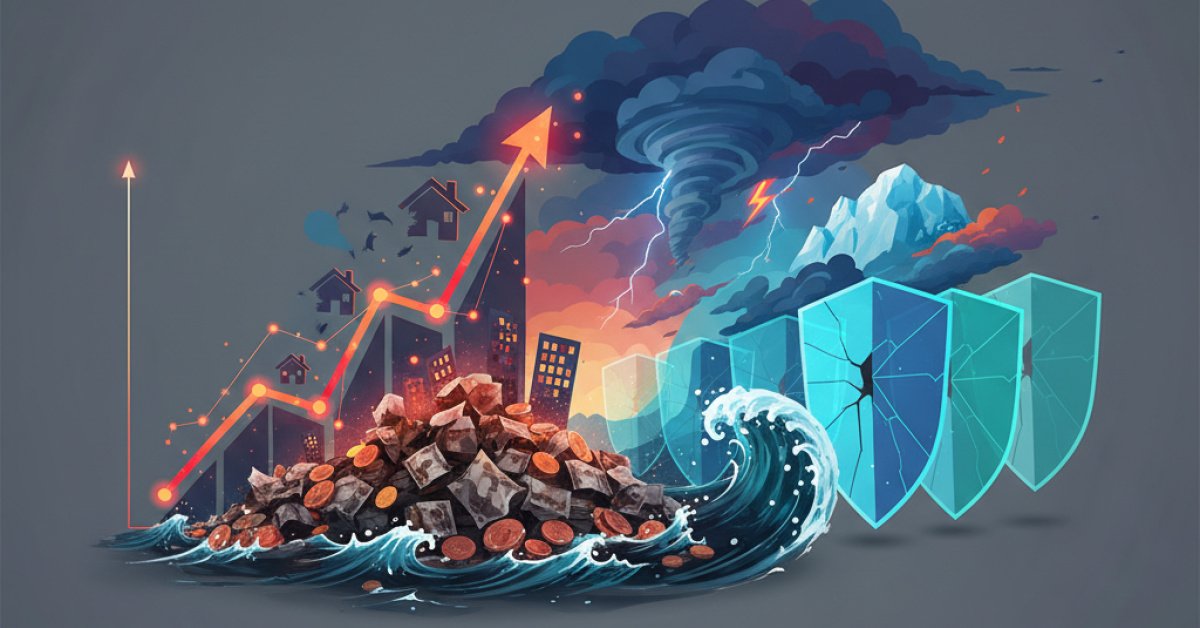
Think about the sheer number of headlines we see now for massive storms, floods, and wildfires. It’s not just your imagination; they’re happening more often and they’re causing way more damage. We’re now at a point where weather events are costing the country a staggering $200 billion every single year.
Erin McLaughlin, a senior economist with The Conference Board, pointed out that the number of "billion-dollar disasters" has been climbing for over a decade. In fact, 2023 and the start of 2024 have been record-breakers.
You might be picturing massive hurricanes, and you're not wrong. The National Oceanic and Atmospheric Administration (NOAA) confirms that tropical cyclones, like the ones that hit in 2005, 2017, and again this year, carry the biggest price tags. But what’s really driving the frequency of these events are convective storms. That’s the technical term for those nasty thunderstorms with torrential rain, hail, and destructive winds that seem to pop up everywhere.
Here’s the Kicker: Insurance Only Covers Half the Story
Now, here’s a detail that really stopped me in my tracks. When one of these disasters hits and we see the jaw-dropping cost of the damage, you’d assume insurance covers most of it, right?
Wrong.
McLaughlin said that only about 50% of the cost to rebuild is actually covered by insurance. You might be wondering, "How is that possible?" Well, think about it. Your policy is designed to rebuild your house. It doesn’t cover the cost of rebuilding the roads, the bridges, the power grid, and all the public infrastructure that gets wiped out. That’s a whole separate, and massive, bill.
Feeling the Squeeze? Your Wallet Isn't Lying
So, with insurers on the hook for their half of these ever-growing bills, they have to react. And we’re all feeling that reaction in our bank accounts.
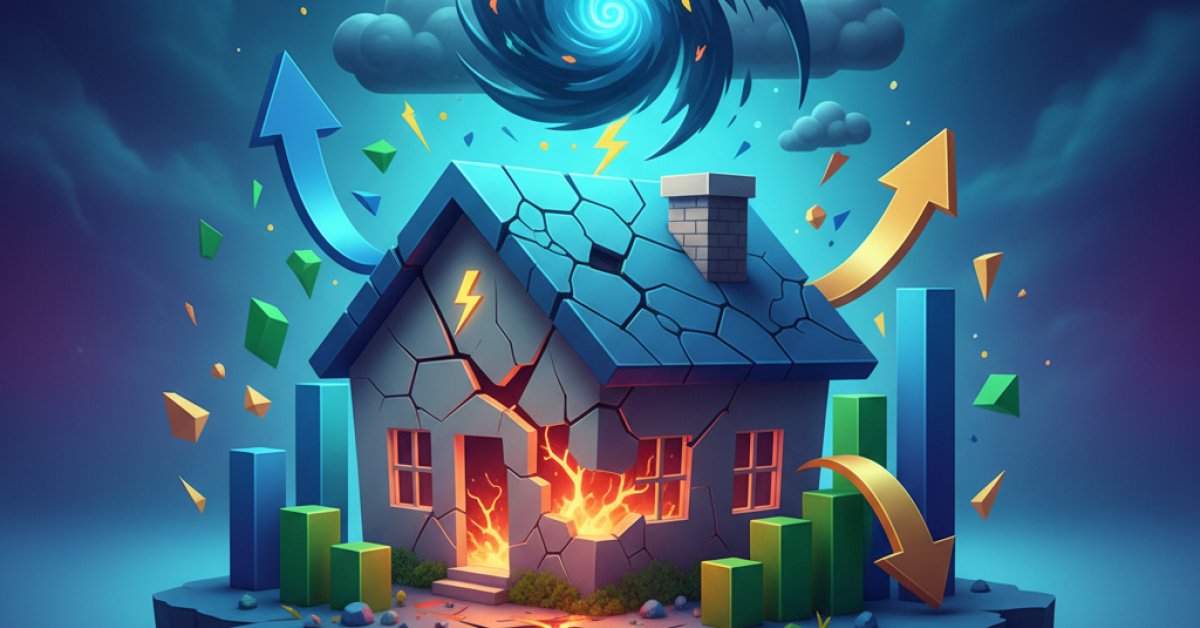
Over the last six years, the average cost of residential insurance premiums has jumped by 44%. That’s a huge increase. But if you live in one of the 10 states that gets hit the hardest by natural disasters, that number is an unbelievable 108%. Your insurance bill has more than doubled in just six years.
It’s gotten so bad that we’re moving beyond a simple pricing problem into an availability crisis. Insurers are starting to make the tough call to stop renewing coverage on certain homes or, in some cases, pull out of entire states altogether. We've all seen the stories coming out of places like Florida and California.
This creates a terrifying domino effect. As McLaughlin explained, most property needs to be insured to hold its value and be sellable. If you can’t get insurance, or it’s so expensive that no one can afford it, what happens to the value of your biggest asset? It’s a systemic issue that could devalue a huge chunk of property across the country.
The Frightening Choice to "Go Bare"
Faced with impossible premiums, a growing number of homeowners who have paid off their mortgage are making a risky choice: they’re dropping their insurance completely.
The Federal Reserve’s latest report on the well-being of U.S. households found that 7% of all homeowners surveyed had no insurance. When they asked why, the answers were heartbreakingly predictable:
- 43% said they simply couldn’t afford it.
- 19% said they didn’t think it was worth the cost.
- 7% said they tried to get insurance but were denied.
This is a huge gamble. These families are one bad storm away from losing everything, with no safety net to help them rebuild.
This Isn't Just a Homeowner Problem. It's Everyone's Problem.
It’s easy to frame this as a battle between struggling homeowners and big insurance companies, but the reality is that a destabilizing market puts everyone at risk.
- For P/C Insurers: They're facing massive financial losses. If they can't price policies in a way that allows them to pay claims and stay in business, the whole system collapses.
- For Homeowners: You’re on the front lines, facing soaring costs, the risk of being dropped, and the potential destruction of your home's value.
- For Commercial Property Owners: It’s the same story. Businesses are seeing their insurance costs skyrocket, putting their equipment, inventory, and the value of their buildings at risk.
- For Our Local Governments: This is the ripple effect we don't often talk about. If property values fall, property tax revenues plummet. That’s the money that funds our schools, fixes our roads, and pays for first responders. It also means the local government has fewer resources to help residents recover after a disaster strikes.
So, What Can We Actually Do?
It all feels pretty overwhelming, but there is a path forward. One of the biggest keys, McLaughlin says, is to focus on making our homes and communities more resilient. That means building smarter and stronger to withstand things like flooding and wildfires before they happen. It’s about proactive defense, not just reactive recovery.
And if you think this is just a problem for Florida, Texas, or California, think again. Alex Heil, another economist with The Conference Board, made it crystal clear.
"It used to be that some of the interior states weren’t going to be affected," he said. But now, we're seeing rainfall rates rising in states far from any coast, like North Carolina, at levels they’ve never seen before.
His final words on it were chilling: "There is no corner to hide. It is a nationwide problem."
He's right. This isn't an isolated issue for a few unlucky states anymore. It's a fundamental challenge to how we live, build, and protect our families and communities in a changing world. The conversation about what to do next is just getting started, and it’s one we all desperately need to be a part of.