Have you ever bought a plane ticket online? You get to the checkout, and a little box pops up: "Add travel insurance for $19.99?" Or maybe you bought a new smartphone, and the salesperson asked if you wanted to add on a protection plan right then and there.
If you’ve nodded yes to either of those, you’ve already experienced embedded insurance. And I'm telling you, as someone who's been watching the insurance world for years, this isn't just a small-time upsell anymore. It’s on the verge of completely changing how we buy and think about coverage.
We're talking about a market that's growing so fast it’s blowing past all the old predictions. It’s quietly nearing a major tipping point, and frankly, it’s one of the most exciting shifts I’ve seen in this industry.
So, What's the Big Deal with "Embedded Insurance"?
Let’s get on the same page. Embedded insurance is just insurance that’s offered as an add-on when you’re buying something else.
Think of it like this: you go to a burger joint to buy a burger. You don't have to leave and go to a separate "fry store" to get your fries. They ask you right at the counter, "Want to add fries to that?" It’s convenient. It makes sense. It’s right there at the moment you need it.
That’s what’s happening with insurance. Instead of buying a product (like a car) and then having to go shop around for insurance separately, companies are starting to bundle it all together into one seamless purchase. It’s all about making protection simple and putting it right where you need it, when you need it.
We're Talking About a Trillion-Dollar Shift
Okay, so it's convenient. But why is this suddenly front-page news in the insurance world? Because of the sheer scale of what’s happening.
Recent reports are projecting that the market for embedded insurance is going to hit an absolutely staggering $1.1 trillion by 2033.
Let that sink in for a minute. That’s not a typo. That’s a trillion with a "T". A few years ago, analysts thought this was a neat little niche. Now, the growth is exceeding everyone's wildest expectations. It’s like a startup that everyone thought was a hobby project suddenly getting a billion-dollar valuation.
So, what’s pouring all the fuel on this fire? One industry, more than any other, is responsible for this explosive growth.
The Real Engine Behind It All: Your Car
Yep. The auto industry.
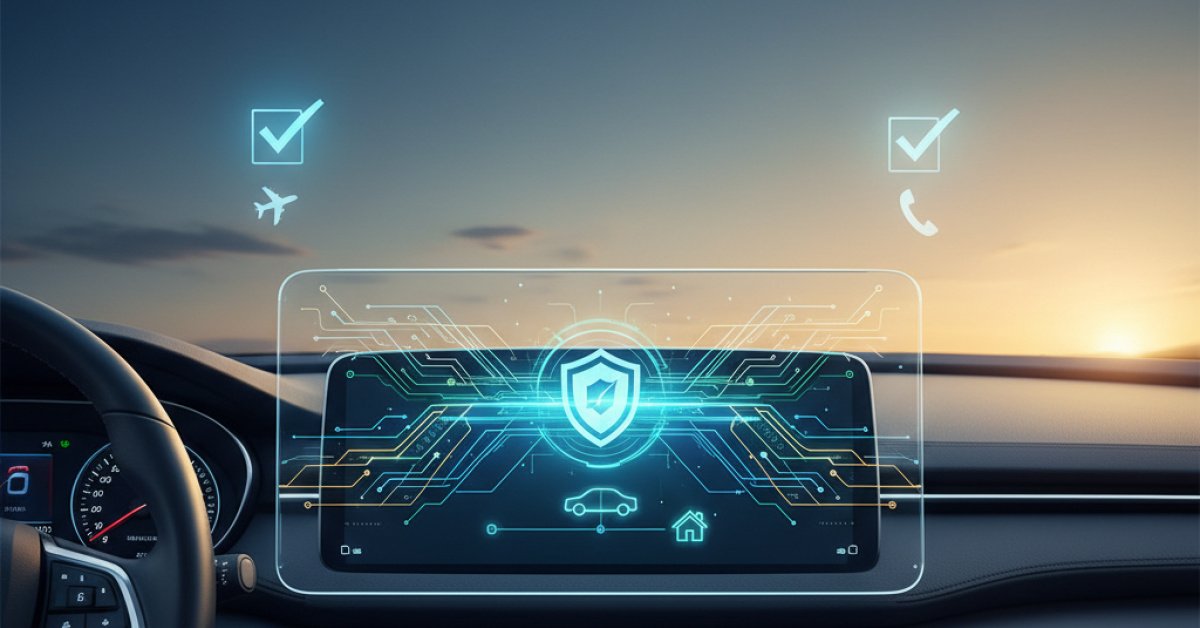
More than anything else, the way we buy and insure our cars is driving this massive financial forecast. This is where embedded insurance is moving from a simple checkbox to a fully integrated, high-tech experience.
Think about Tesla. They don’t just sell you an electric car; they offer you Tesla Insurance right through their app. They can do this because their cars are packed with sensors that track how you drive—your speed, how hard you brake, how often you make sharp turns.
They use that real-time data (what we call telematics) to give you a personalized insurance quote. If you’re a safe driver, you could get a much better rate than you would from a traditional insurer who just knows your age and zip code.
And here’s the thing: it’s not just Tesla anymore.
Pretty much every major car manufacturer is looking at this and realizing they need to get in the game. They're building the technology to offer their own branded insurance right at the point of sale.
Why? Because it’s a perfect fit.
- The timing is perfect. When is the one moment you are 100% guaranteed to need car insurance? The exact moment you buy a car.
- The data is there. Modern cars are basically computers on wheels, collecting tons of data that can be used to price insurance more fairly.
- The experience is better. No more calling around for quotes. You can drive your new car off the lot, fully insured, with just a few taps on a screen.
This integration within the auto industry is the single biggest reason we're seeing that trillion-dollar projection. It's turning car insurance from a chore you do after buying a car into a simple, integrated part of buying a car.
What This Shift Means for You
This isn't just some abstract industry trend; it's going to affect how all of us get coverage in the coming years. And honestly, it’s a mixed bag, but mostly for the better.
On the one hand, you get incredible convenience. The process becomes faster and way less of a headache. Plus, if you’re a safe and responsible driver, you could see your rates go down as more companies adopt data-driven pricing. It’s a move towards insurance that’s priced on how you actually behave, not just what demographic box you check.
On the other hand, you’ll want to be mindful. Will bundling your insurance with your car purchase limit your ability to shop around? Maybe. You'll also want to be comfortable with how your driving data is being used. These are fair questions we'll all have to navigate.
But the momentum is undeniable. The age of insurance as a separate, clunky, standalone product is fading. We're moving toward a future where protection is woven right into the fabric of the things we buy and the services we use. It’s becoming less of a product we have to hunt for and more of a feature that’s just… there. And it looks like our cars are leading the charge.