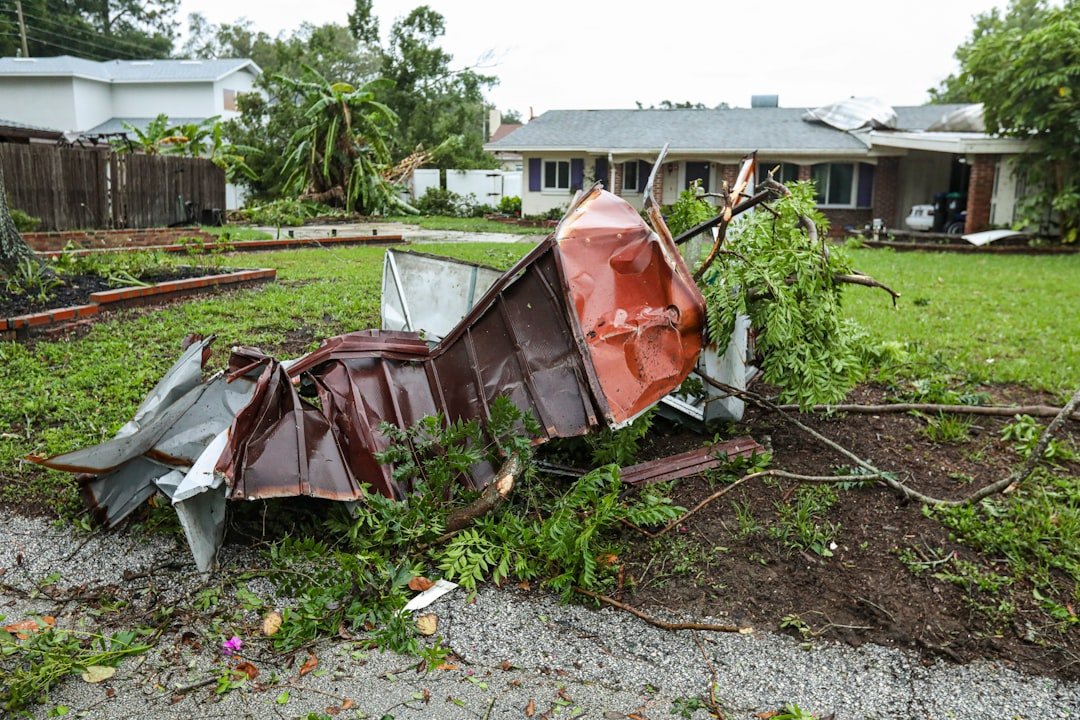
When you see the devastating images on the news after a major hurricane, it’s hard to process. The winds, the water, the sheer destruction—it’s heartbreaking. As someone who has spent years in the insurance world, my mind immediately jumps to another, less visible part of the story: the numbers.
And the first numbers coming out of Jamaica after Hurricane Melissa are staggering.
We’re hearing from property intelligence experts, a company called Cotality, that the storm is expected to cost insurers somewhere between $1 billion and $3 billion. That’s a huge number, no question. But here’s the thing that really caught my attention: that’s only a fraction of the total damage. Cotality estimates the full economic hit—all the property damage, insured or not—is closer to a whopping $20 billion.
Let that sink in for a second. An insurance payout of up to $3 billion to cover $20 billion in damage. It's a massive, gut-wrenching gap, and it tells a really important story about what happens long after the storm clouds have cleared.
So, What Do These Big Numbers Actually Mean?
When we talk about losses after a catastrophe, we’re really talking about two different things. It’s easy to get them mixed up, but the difference is everything.
First, you have the insured loss. This is the number that insurers are actually on the hook for. It’s the total of all the claims for damaged homes, wrecked businesses, and busted-up cars that are covered by an active insurance policy. In this case, that’s the $1 to $3 billion figure.
Then, you have the total economic loss. This is the big one. It’s the grand total of everything that was damaged or destroyed, whether it was insured or not. This includes public infrastructure like roads, bridges, and power grids, which often aren't commercially insured. It also includes all the homes and businesses that were uninsured or underinsured. That’s the $20 billion figure.
Think of it like this: Imagine your friend gets into a fender bender. The total repair bill for their car is $5,000. But they have a $1,000 deductible. The insured loss is $4,000 (what the insurance company pays), but the total economic loss is the full $5,000. Now, just scale that concept up to the size of an entire country. It’s a simple idea, but the implications are enormous.
Why Is There Such a Massive Gap?
Seeing a gap where insured losses only cover maybe 10-15% of the total damage is, unfortunately, not that surprising in many parts of the world. This is what we in the industry call the "insurance protection gap," and it’s a huge challenge.
So, why does it happen? A few key reasons come to mind:
- Affordability: In many places, high-quality insurance is simply too expensive for the average family or small business owner. They’re forced to take their chances because the premiums just aren't in the budget.
- Underinsurance: This is a sneaky one. Someone might have insurance, but not enough of it. Maybe they bought a policy years ago when their home was worth less, and they never updated it. When a disaster hits, they discover their policy only covers half the cost to rebuild.
- Availability: In high-risk areas—like a coastline that gets hit by hurricanes—insurers can sometimes be reluctant to offer coverage at all. Or they might exclude certain perils, like flooding, making the policies less useful when you need them most.
- Public Infrastructure: A huge chunk of that $20 billion in damage is likely tied to things we all use but don't personally insure—roads, utilities, ports, and government buildings. The cost to repair and rebuild this falls on taxpayers and government aid, not private insurance companies.
When you add all that up, you get a situation like the one in Jamaica, where the people and the government are left to figure out how to cover billions and billions of dollars in damages on their own.
What This Means for the Insurance World (and for You)
An event like this sends ripples through the entire global insurance market. A $3 billion loss is a major event, and it doesn't just disappear.
Insurers themselves have insurance, which we call reinsurance. These massive losses get passed up the chain to the big reinsurance companies that backstop the industry. When they have to pay out billions, they inevitably raise their prices for the next year. Those costs then trickle back down to the primary insurers, and eventually, they can show up in the premiums you and I pay, even if we live thousands of miles away.
It's a stark reminder that we're all connected in this market. A hurricane in the Caribbean can subtly influence the cost of your home insurance in Ohio or your business insurance in Texas.
More than anything, events like Hurricane Melissa are a wake-up call. They force us to confront the reality of climate change and the increasing frequency of severe weather. For the insurance industry, the challenge is clear: we have to find better, more affordable ways to close that protection gap and help communities become more resilient. Because these storms aren't going to stop, and the human and economic costs are just too high to ignore.