Have you opened your home insurance renewal notice lately and felt your stomach drop? If so, you are definitely not alone. Across the country, homeowners are getting sticker shock, and it’s leading to some really tough conversations around the kitchen table.
For a growing number of families, the conversation ends with a scary decision: to take on the risk themselves and go without insurance. We call this being "self-insured," and it’s a trend that’s picking up steam in some surprising places. In Idaho, for instance, there was a nearly 9% drop in the number of home insurance policies from 2022 to 2023. That’s a huge number of people deciding to roll the dice.
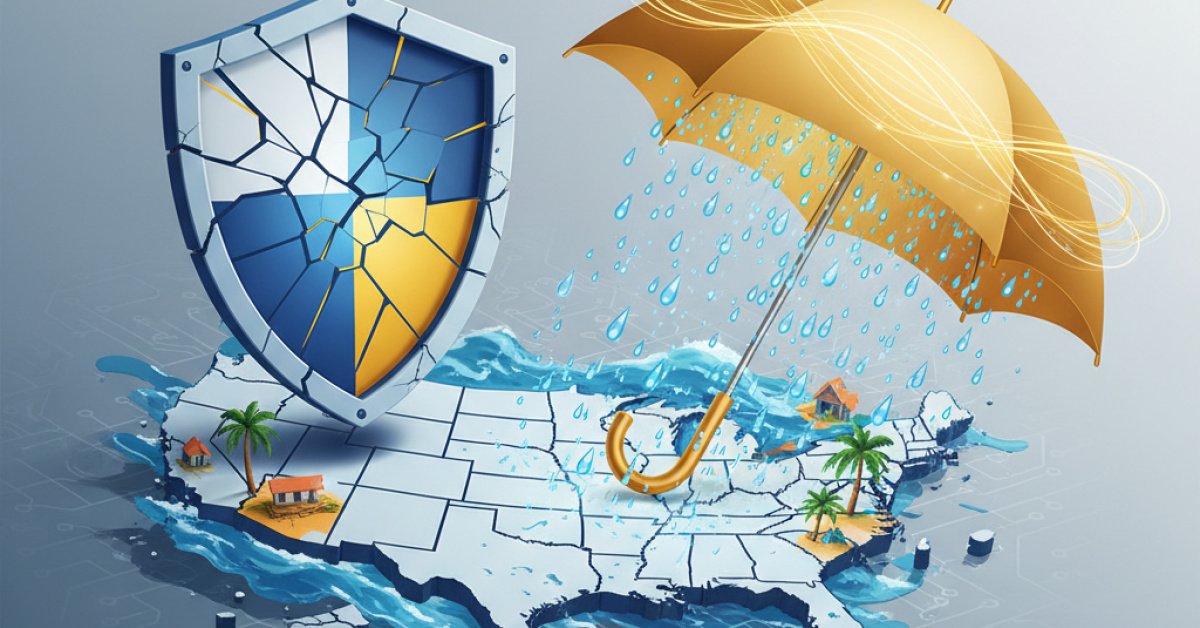
And it’s not just Idaho. We’re seeing pressure everywhere. California is grappling with a constant threat of wildfires. States like Florida and Louisiana have always been in the path of hurricanes. And places you might not expect, like Texas and Colorado, are getting hammered by massive hail and wind storms year after year.
All of this adds up to a tough market and even tougher choices. So, let’s get real about what’s going on, why it’s happening, and what it means for you.
So, Why Is My Home Insurance Bill So High?
It’s easy to feel like you’re being singled out when you see a big premium increase, but there are some massive forces at play here that are affecting the entire industry. It really boils down to a few key things.
Wild Weather is the New Normal
First off, it’s not just your imagination—the weather really is getting more extreme. We all see the massive wildfires on the news, but that's just one piece of the puzzle.
As Lauren Dowling, Head of World Private Client Group, puts it, “Hail, high winds, winter storms, and flooding have all increased in both frequency and cost.” She points out that states like Idaho are now seeing losses that used to be a “once in a decade” event happening every few years. When insurers are paying out for these massive claims more often, they have no choice but to adjust their rates to cover those costs.
The Sky-High Cost to Rebuild
Think about the cost of a simple home renovation project right now. The price of lumber, finding a good contractor, dealing with delays… it’s all gone up. Now, imagine that on the scale of rebuilding your entire house after a total loss.
“Inflation, supply chain delays, and labor shortages have pushed rebuilding costs up dramatically,” Dowling explains. This forces insurance carriers to increase premiums just to keep pace. If your policy is meant to cover the cost of rebuilding your home, the value of that promise has to reflect today’s real-world costs, not what it would have cost five years ago.
Insurers Are Getting a Lot Pickier
In the past, getting a policy might have felt like a simple transaction. Not anymore. Today, insurers are practicing what they call “disciplined underwriting.”
In plain English? They’re taking a much closer look at the risks they’re taking on. They’re no longer just trying to write as many policies as possible. Instead, they’re focused on making sure every home is insured for its true replacement value and that the price accurately reflects the local weather risks.
They’re also actively encouraging homeowners to be part of the solution. They want to see you take steps to protect your property, like upgrading to a hail-resistant roof, clearing brush to create defensible space in a wildfire zone, or installing smart water shut-off systems. As Dowling says, “At the end of the day, the goal is profitability and sustainability, not just restriction.” They want to partner with homeowners who are serious about protecting their investment.
A Tough Spot for Everyone Involved
All these pressures have created a perfect storm. Coverage is more expensive and, in some high-risk areas, it’s just plain harder to find. This leaves families in a real bind, often forcing them to choose between paying a steep insurance premium and covering other essential living costs.
Going without insurance might seem like a way to save money in the short term, but it’s a massive gamble.
“While self-insurance may make sense for those with the financial capacity to absorb a major loss, many families are simply finding themselves priced out of the market,” Dowling notes. These are the families left weighing the terrifying risk of a total loss against the immediate pressure of their monthly budget.
Insurers don't want to leave people unprotected, but they also have to stay in business. So, they’re trying to find a balance. “That means focusing on rate adequacy, underwriting discipline, and proper valuation rather than broad withdrawal,” says Dowling. They are trying to price the risk correctly so they can be there to pay claims when disaster strikes.
Where Do We Go From Here? A Look at the Future
If you’re waiting for rates to magically drop back to what they were a few years ago, I have some tough news: that’s probably not going to happen. The entire landscape has changed.
The conversation is shifting. “The focus now is less about whether rates will drop and more about how insurers, legislators, agents, and homeowners can work together to address evolving market conditions,” Dowling explains.
The real goal is to build a future where protection is both available and affordable. And that future is going to be built on two pillars: prevention and partnership.
This is where you, the homeowner, have a huge role to play. Taking proactive steps to harden your home against risk is no longer a "nice-to-have"—it's becoming essential for long-term insurability. This could mean:
- Installing central station fire alarms and automatic water shutoff systems.
- Creating defensible zones around your home if you live in a wildfire-prone area.
- Making sure your home is prepared for hurricane season with storm shutters and reinforced roofing.
- Choosing building materials that are suited to your local environment.
These actions not only reduce the chance of a devastating loss but also show insurance carriers that you’re a good partner in managing risk.
You're Not in This Alone: The Power of a Good Agent
Navigating all of this can feel overwhelming. And surprisingly, even when people have insurance, they’re not always sure what they’re paying for.
Diane Delaney, Executive Director of the Private Risk Management Association (PRMA), shared a fascinating insight from a recent survey. “95% of respondents said they feel confident in their insurance, yet 65% are concerned about what may be excluded from their policy,” she said.
Think about that for a second. There’s a huge gap between feeling covered and truly understanding what your coverage does. As premiums rise, you deserve to have absolute clarity on the value you’re getting.
This is where a good insurance advisor becomes your most valuable asset. Their job is no longer just to sell you a policy.
“The role of the agent has never been more important,” says Dowling. An experienced agent can help you understand what’s happening in the market, what your options are, and how to make smart choices for your family.
Delaney agrees, explaining that the role is shifting “from simply placing policies to acting as a strategic risk advisor.” A great agent will help you evaluate risk-reduction options, explore different insurance markets, understand the trade-offs between deductibles and premiums, and plan ahead for your renewals.
Choosing to self-insure might feel like a solution to rising costs, but all it really does is trade a predictable monthly premium for the risk of a sudden, financially catastrophic loss. By working with a professional, you can navigate these challenges, find ways to manage your risk, and build a plan that keeps your family and your biggest asset protected as the market continues to change.