You know that feeling, right? You’re scrolling through the news, and you see the weather map. There’s that swirling blob of color heading up the coast, and your town is right in the path. For most of the Northeast, including New York, it looks like this weekend’s storm will be a near miss. A collective sigh of relief.
But if you’re on Cape Cod or in other parts of eastern New England, that blob looks a lot more personal. Forecasters are saying you’re facing the highest risk of significant snow from this new coastal storm.
And that’s when your mind starts racing. It’s not just about grabbing milk and bread from the store. It’s the bigger stuff. The house. The roof. The trees in the yard. As an insurance writer, I see these weather reports and my brain immediately switches to protection mode. This isn't just a weather event; it’s a real-world test for your home insurance policy. So let's talk about it, friend to friend.
So, What's the Real Threat from a Coastal Storm?
When we hear "snowstorm," we usually picture a beautiful, quiet blanket of white. But coastal storms are a different beast entirely. It’s not just about the inches of accumulation; it’s about the combination of threats that come together to create a perfect storm of potential damage.
Think about it:
- Heavy, Wet Snow: This isn't the light, fluffy stuff. This is the heavy, wet, cement-like snow that clings to everything. It puts an incredible amount of stress on roofs, especially older ones. It’s the kind of snow that snaps tree limbs, which can then fall on your house or car.
- Whipping Winds: A nor'easter can bring gale-force winds that can rip shingles off a roof, tear siding from the walls, and turn patio furniture into projectiles. That wind is a major driver of property damage claims.
- Coastal Flooding: This is the big one that often gets overlooked. Strong onshore winds can push seawater inland, creating a storm surge. This isn't about rain puddles in your yard; it's about seawater coming into your home.
This messy combination is why a "clipper" storm like this one, even if it doesn't become a full-blown blizzard, can be a serious headache for homeowners.
Does Your Homeowners Insurance Have Your Back?
Okay, let's get down to the nitty-gritty. You pay your homeowners premium every year. What are you actually covered for when a storm like this hits?
For the most part, a standard homeowners policy (often called an HO-3) is pretty solid when it comes to winter storms. It generally covers damage from the "perils" we just talked about.
Here’s a quick rundown of what’s usually covered:
Wind Damage
If those coastal winds tear shingles from your roof or a gust sends a neighbor's tree crashing through your living room window, you’re typically covered. This includes damage to the structure of your home and your personal belongings inside.
Weight of Ice and Snow
This is a huge one. If that heavy, wet snow piles up and causes your roof to sag or, in a worst-case scenario, collapse, your policy should cover the repairs. The same goes for damage to gutters, decks, or other attached structures.
Frozen Pipes
If the storm knocks out your power for an extended period and the temperature plummets, your pipes can freeze and burst. The resulting water damage—the ruined floors, drywall, and furniture—is almost always a covered event.
But here’s the thing, and it’s a big one. There’s a massive gap in that coverage that every single coastal resident needs to understand.
The Elephant in the Room: What About Flooding?
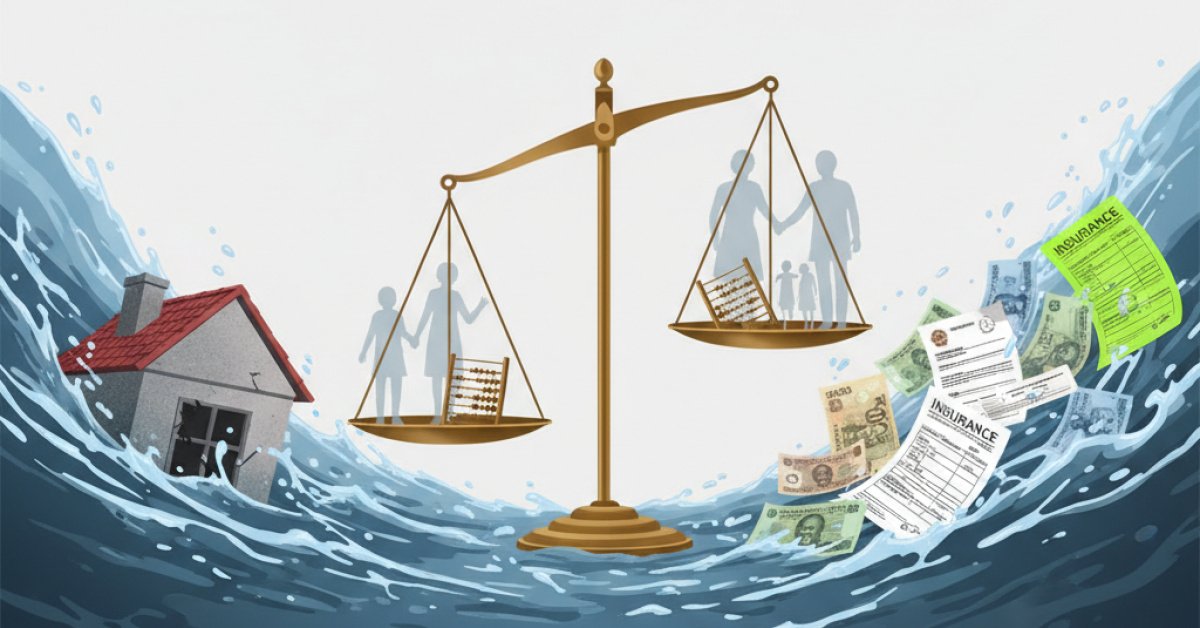
Let me say this as clearly as I can: Your standard homeowners insurance policy does not cover flood damage.
I’ll say it again because it’s that important. Homeowners insurance does not pay for damage caused by storm surge, overflowing rivers, or massive surface water accumulation.
It’s one of the most common—and heartbreaking—misunderstandings in insurance. People watch their homes get inundated by a coastal storm, they file a claim, and they’re denied. It's devastating.
So, what’s considered a "flood"? In insurance terms, it’s when water from a natural source (like the ocean) covers at least two acres of land or affects two or more properties. The water damage from that burst pipe inside your house? Covered. The water from the Atlantic Ocean that storm surge pushes into your first floor? Not covered. Not one penny.
For that, you need a separate flood insurance policy, which you can get through the government’s National Flood Insurance Program (NFIP) or a handful of private insurers. If you live anywhere near the coast, it's not a luxury; it’s a necessity.
Your Pre-Storm Insurance Game Plan
Alright, the storm is a couple of days away. You’re not helpless. Instead of just worrying, let’s channel that energy into a few simple, proactive steps. This is your 5-minute insurance check-up.
- Find Your Policy Documents: Seriously, do you know where they are? Whether it's a paper file or a PDF in your email, locate your declarations page. This is the summary of your coverage.
- Check Your Deductibles: Look for your "All Peril" deductible. That's what you'll pay out-of-pocket for most claims. Also, check if you have a separate, higher "Wind" or "Hurricane" deductible. It’s crucial to know this number before you need to file a claim. No one likes financial surprises during a crisis.
- Take "Before" Photos: This is the single best thing you can do right now. Grab your phone, walk through every room of your house, and take pictures and videos. Open closets, document your furniture, electronics, everything. Do the same for the outside of your house. If you need to file a claim, this visual proof is absolutely priceless.
- Know Who to Call: Find the 24/7 claims hotline for your insurance company and save it in your phone's contacts right now. Also, save your agent's number. When the power is out and you’re stressed, you don’t want to be scrambling to find a phone number.
Even if this storm turns out to be nothing more than a few inches of snow and some wind, think of it as the perfect fire drill. It’s a low-stakes opportunity to get your insurance house in order. These storms are a fact of life in New England, and being prepared is the best peace of mind you can buy.
Use this weekend’s forecast as a nudge. A reminder to have a real conversation with your insurance agent about your coverage. Ask them the tough questions. Are my limits high enough? Do I need flood insurance? What am I not covered for?
Because when the wind starts to howl and the snow starts to fly, you want to be confident that the roof over your head has the right protection behind it. Stay safe out there.