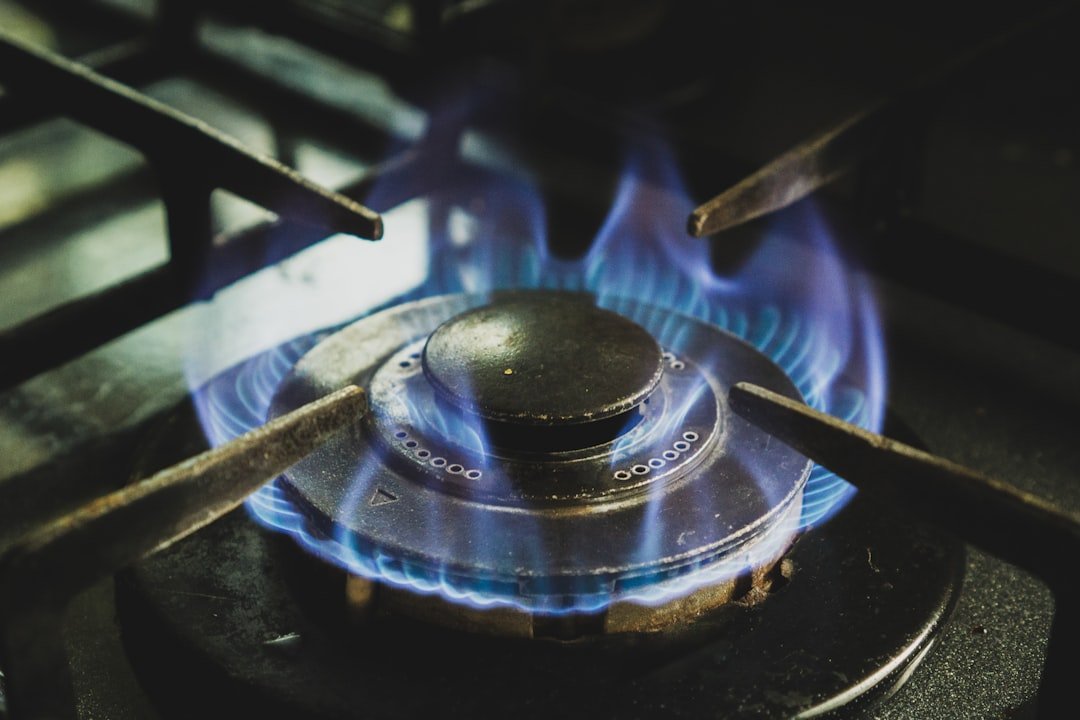
I want you to think about the last meal you cooked. Maybe it was a quick breakfast scramble or a big Sunday dinner. You probably walked into the kitchen, turned the knob on your gas stove, and got that familiar whoosh of the blue flame. It’s a sound most of us associate with home and a good meal.
But what if I told you something else was coming out of that stove? Something you can’t see or smell, but that could be a serious risk to your health.
It sounds like something out of a movie, I know. But a recent study just dropped some pretty unsettling news for those of us with gas stoves, particularly in Europe. Researchers found that the natural gas being piped into homes in several cities contains high levels of benzene, a chemical known to cause cancer.
Honestly, when I first read this, I had to read it again. We worry about so many things in our homes – fire, water damage, break-ins. But the gas we use to cook? That’s a new one for me, and it’s one we need to talk about.
So, What Exactly Did They Find?
Let's break it down, because the details are important.
A team of researchers took samples of unburned natural gas directly from homes in several European cities. What they were looking for was benzene, a nasty little chemical that’s a known carcinogen. And they found it. A lot of it.
To give you some perspective, the gas samples taken from homes in the UK had 37 times more benzene than the gas typically found in North American homes. That’s not a small difference. That’s a huge, glaring gap that makes you stop and think.
Here’s the thing that really gets me: benzene is completely odorless. You can't rely on your nose to warn you if it's present. It’s an invisible risk, silently mixing with the air in the one place you’re supposed to feel safest – your own kitchen.
Why This Is a Big Deal for Your Health
Okay, so there’s a chemical in the gas. Why should you lose sleep over it? Because benzene isn’t just some random compound. It’s directly linked to serious health problems, most notably leukemia and other cancers of the blood cells.
The risk comes from long-term exposure. It's not about a single whiff. It's about the small, cumulative amounts you might be breathing in day after day, year after year.
And here’s the kicker: the study found that the biggest risk might not even be from the flame itself. The real danger comes from the tiny, unburned gas leaks that happen all the time. Even when your stove is off, small amounts of gas can escape from fittings and the stove itself.
Imagine a dripping faucet, but instead of water, it’s a slow, invisible trickle of gas containing a cancer-causing chemical. That's essentially what could be happening in millions of kitchens. Over a year, the amount of benzene leaking into a home from an off stove could be equivalent to the benzene in secondhand cigarette smoke. That’s a powerful comparison.
Connecting the Dots: Your Home, Your Health, and Your Insurance
As an insurance writer, my brain immediately goes to one place: risk. How do we manage it? How do we protect ourselves? This news throws a new kind of risk into the mix, and it touches on a few key areas.
Your Health and Life Insurance
This is the most obvious one. Discoveries like this are a stark reminder of why having solid health insurance is non-negotiable. We can’t control the quality of the gas piped into our homes, but we can make sure we have a safety net if our health takes a hit.
Environmental factors are a wild card in our long-term health. We do our best to eat well and exercise, but we’re constantly exposed to things in our environment. This is precisely the kind of unforeseen risk that makes health and life insurance so foundational to a family’s financial security. It’s there for the "what ifs" you never even thought to worry about.
What About Homeowners Insurance?
This is a bit trickier. Your standard homeowners or renters policy is designed to cover "sudden and accidental" damage. A pipe bursting, a fire, a tree falling on your roof – you get the idea.
A slow, continuous leak of a chemical is a different animal entirely. It falls into a gray area that most policies don't explicitly cover. You almost certainly won't be able to file a claim for "benzene contamination in my kitchen air."
However, this news does highlight the importance of home maintenance. While your policy might not cover the air quality, it would likely cover a fire or explosion caused by a major gas leak. This is a good nudge to make sure your gas appliances are regularly serviced by a professional. Think of it as preventative care for your home.
Okay, Don't Panic. Here's What You Can Do.
Reading this can feel overwhelming, I get it. But the goal isn’t to make you want to rip out your stove tomorrow. It’s about being aware and taking small, smart steps to reduce your risk.
Here are a few practical things you can do right now:
- Ventilate, Ventilate, Ventilate! This is the easiest and most effective step. Every single time you use your gas stove, turn on your extractor fan or range hood. If you don't have one, open a window. The goal is to move the air and not let any of these compounds build up.
- Use Your Back Burners. It sounds weird, but most extractor fans are more effective at capturing fumes from the back burners than the front ones. Simple, but it can make a difference.
- Get Your Appliances Checked. If it's been a while, consider having a qualified technician come out to inspect your gas stove and connections for any small leaks.
- Think About Air Purification. A good air purifier with an activated carbon filter can be effective at removing volatile organic compounds (VOCs), like benzene, from the air. It’s an extra layer of defense for your indoor air quality.
Ultimately, this is a developing story. The findings from this one study are a huge wake-up call, and hopefully, they’ll lead to stricter regulations and cleaner gas supplies. For now, what we can do is control what happens inside our own four walls.
It’s just another reminder that our homes are complex systems, and being an informed homeowner is one of the best insurance policies you can have. Stay safe out there.