You know that feeling when you see a storm brewing on the weather app? That little knot in your stomach as the forecast gets more and more serious. For most of us, it means grabbing an umbrella or maybe rescheduling a picnic.
But imagine living somewhere like the Texas Hill Country, where a storm doesn't just mean rain—it can mean a life-threatening flash flood. For the folks in Kerr County, that feeling is all too real, and right now, they’re in a high-stakes race against the calendar.
With the next flood season just a few short months away, county officials are scrambling to get a long-overdue flood warning system up and running. It’s a project that could save lives and property, but it comes with a hefty price tag and a ticking clock.
What’s the Plan in Kerr County?
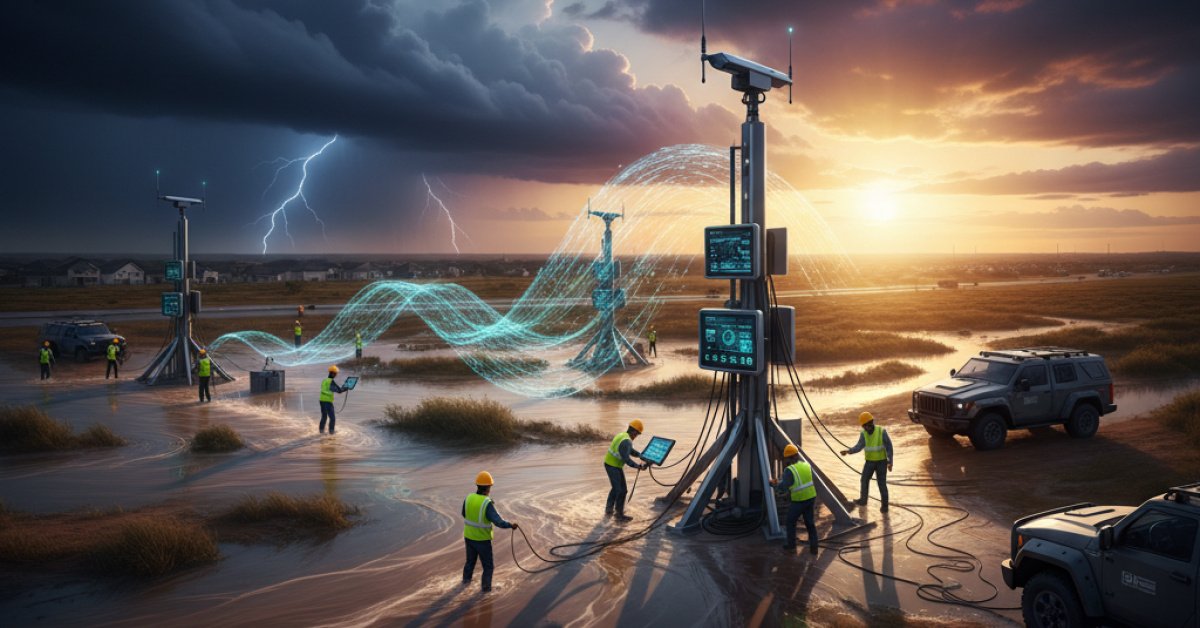
Let’s get right to it. Officials in Kerr County are trying to build a comprehensive flood warning system. This isn't just a couple of signs by the river; we're talking about a sophisticated network designed to give people precious, life-saving time to get to safety when the water starts to rise.
This has been on the drawing board for a while, but now there’s a real sense of urgency. They know the threat is coming. It’s not a matter of if another major flood will hit, but when. And they are determined to be ready this time.
The problem? It’s a massive undertaking. And it’s not cheap.
Let’s Talk About the Price Tag: A Cool $5 Million
When you hear a number like $5 million, it’s easy to get a little sticker shock. That’s a lot of money for any community, and it's certainly a major investment for a county government.
But here’s how we have to look at it, especially from an insurance and risk perspective. That $5 million isn't just an expense; it's an investment. Think of it like this: it's the ultimate form of community-wide insurance.
I’ve seen the aftermath of these floods. I’ve seen the claims roll in for homes destroyed, cars washed away, and businesses completely wiped out. The financial devastation from a single major flood event can easily run into the hundreds of millions of dollars. Suddenly, that $5 million price tag for a system that could prevent the worst of the damage doesn't seem so high, does it?
It’s the classic case of spending a little now to save an absolute fortune—and more importantly, human lives—later on. This is what we in the industry call "mitigation," and honestly, it’s the smartest money anyone can spend.
The Big Hurdle: Who's Footing the Bill?
So, the plan is solid and the need is desperate. What's the holdup?
Funding.
Kerr County officials are depending on the state of Texas to help cover the cost. They’ve done the hard work of planning and identifying the solution, but they simply don’t have a spare $5 million in the local budget. This is a story that plays out in communities all across the country.
It creates a really tense situation. You have local leaders who know exactly what their community needs to stay safe, but they’re stuck waiting for a check to be cut by a higher level of government. Every day of delay is a day closer to the next potential disaster. It’s a frustrating, high-stakes waiting game.
Why This Is More Than Just a Local News Story
It would be easy to dismiss this as just a local issue for one county in Texas, but it’s so much bigger than that. What's happening in Kerr County is a perfect snapshot of a challenge facing communities everywhere.
We are all dealing with increasing risks from severe weather. Whether it's floods, wildfires, or hurricanes, the old patterns are changing, and the threats are growing. We can't just keep rebuilding the same way and hoping for a different result.
This is where proactive investment becomes critical.
- It’s about saving lives. First and foremost, a warning system gives people time to evacuate. You can't put a price on that.
- It’s about protecting property. Less damage means fewer insurance claims, which helps keep insurance affordable for everyone in the region over the long term.
- It’s about community resilience. A community that invests in protecting itself can bounce back faster after a disaster, both emotionally and economically.
This effort in Kerr County is a real-world example of what it means to build a more resilient society. Instead of just reacting to disasters, they are trying to get ahead of one. We should all be watching and taking notes, because their race against the rain is a race we're all running, one way or another. Here's hoping they win.