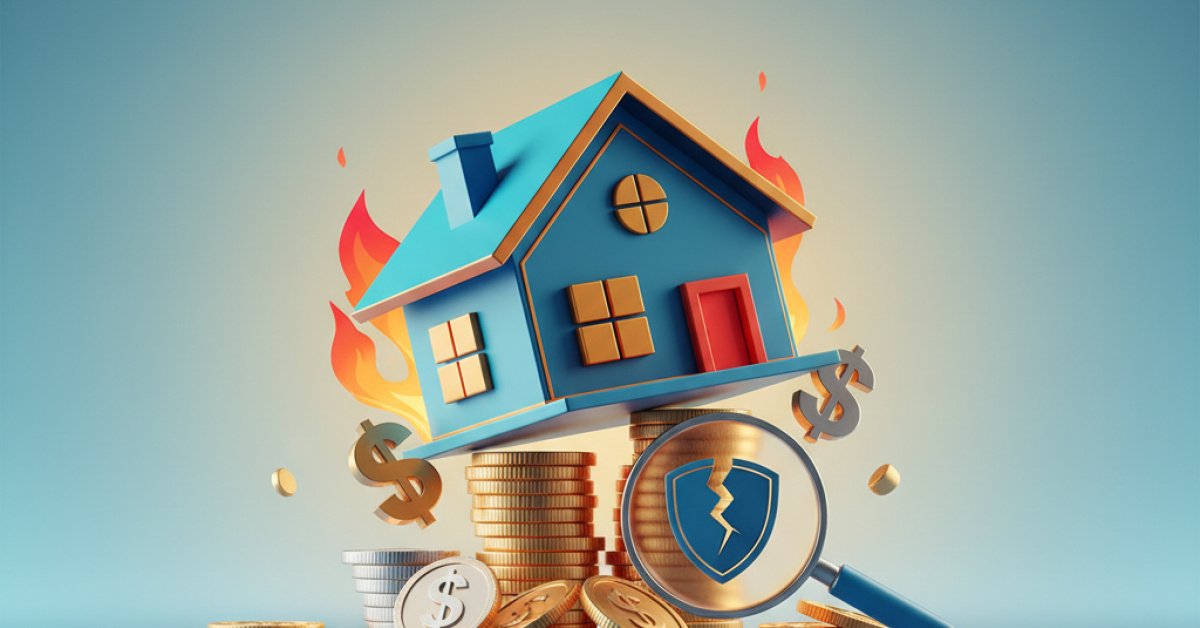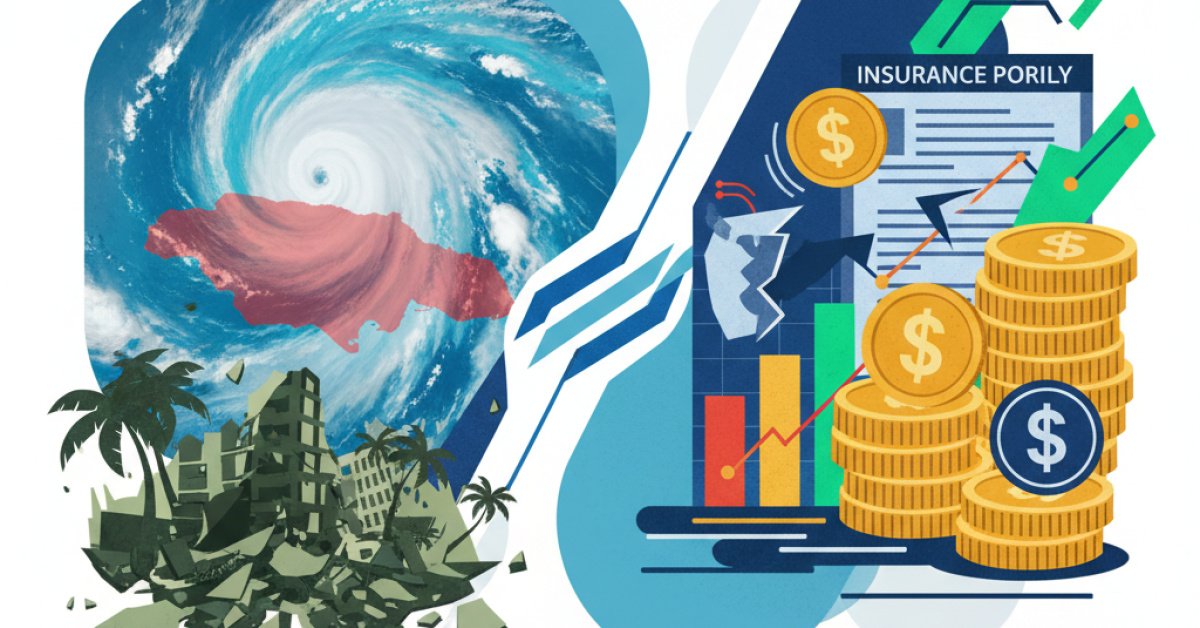
Ever look at your insurance renewal and feel your stomach drop? You’re not alone. Across the country, for both our homes and our businesses, insurance is getting harder to afford and, in some places, even harder to find.
It’s a really tough spot to be in. We all know we should have insurance. It’s the backstop that lets us sleep at night. But when you’re choosing between a policy premium and putting food on the table, the choice gets painfully clear.
This is leading to a huge, and growing, problem that people in the industry are calling the "coverage gap." It’s not that the risks have gone away—far from it. It’s that the financial safety net we’ve all come to rely on is starting to fray.
Just How Big Is This Problem, Really?
Honestly, the numbers are pretty staggering. Some recent studies suggest that nearly one in seven homes with an owner living in it is completely uninsured. That’s around 11.3 million properties. Even the more conservative estimates put it somewhere between seven and twelve percent. Whichever number you look at, the trend is clear: it’s going up.
And it’s not just homes. Business owners, especially those with small operations or properties in high-risk areas, are feeling the exact same squeeze.
You might be surprised who’s most likely to be going without. A huge chunk of American homeowners—more than 40%—actually own their homes outright, with no mortgage. And here’s the thing: when there’s no bank breathing down your neck requiring you to have insurance, it’s one of the first bills to get cut when money is tight.
We also see this happen a lot with manufactured homes or properties that people inherit. Often, the owners have lower incomes and face unique hurdles just to get a policy in the first place.
But the risk doesn’t just evaporate when the policy does. It just shifts. It lands squarely on the shoulders of families, business owners, and local governments. When a disaster strikes and there’s no insurance money to rebuild, it’s not just one family’s problem—it’s the whole community’s problem. Taxpayers end up footing part of the bill, and the local economy can take a massive hit.
So, What Are We Supposed to Do? Meet the "Safety Nets"
The good news is, the industry knows this is a crisis. No one wants to see people left with nothing after a fire or a hurricane. So, people are working on creative solutions—think of them as "safety nets."
These aren't the same as a full, comprehensive insurance policy. Not even close. But they’re designed to be a bridge, offering some protection that’s way better than zero. Let's walk through a few of the ideas being floated.
High Deductibles and Partial Limits
Think of this as the "you handle the small stuff, we'll get the big one" plan. The idea is to lower your premium by agreeing to a much higher deductible or a lower coverage limit.
It provides more help than a federal grant after a disaster, and it can be just enough to keep your home livable or save your equity. But, and this is a big but, you have to go in with your eyes wide open. You are still on the hook for a significant amount of risk. If a total catastrophe happens, the payout might not be enough to cover everything. Clear, honest communication from the insurance company is absolutely essential here.
Parametric "Micro" Covers
This one sounds complicated, but the idea is actually super simple. A parametric policy pays a fixed amount of money when a specific, measurable event happens.
Imagine a policy that says: "If a Category 3 hurricane's winds are recorded in your zip code, we will send you a check for $15,000 within 72 hours." That's it. No adjusters, no haggling over damages. The trigger is met, and the money is sent.
The beauty of this is speed. When you're standing in the wreckage of your home or business, getting cash quickly can be a lifesaver. The downside? It's what we call "basis risk." The trigger is objective, but it might not perfectly match your reality. A wildfire could stop one street away from the official trigger zone but still burn your business to the ground. Or, the trigger could be met, but you only suffered minor damage. It’s a bit of a gamble, but for fast liquidity, it’s a powerful tool.
Community Pools and Partnerships
This is the "we're all in this together" approach. Instead of everyone buying insurance on their own, a whole community, business district, or industry group pools their risk together.
Think of it like buying in bulk at Costco—when you buy together, you often get a better deal. These models, like reciprocal exchanges or captives, can secure better terms from reinsurers. They also encourage everyone in the group to work on reducing risk together, because it benefits the whole pool. It takes strong organization and often a partnership with the public sector, but it can be a really effective way to spread the risk more efficiently.
Embedded and Builder-Driven Coverage
What if insurance was just... there? This idea is about embedding coverage at natural transaction points, making it seamless.
For example, a basic policy could be included when you buy a new home, rolled into your HOA dues, or built into a commercial lease. The goal is to reduce the friction. When you don't have to actively go out and shop for a policy and write a separate check, you're much more likely to stay covered, even when your budget gets tight.
Let's Be Real: These Aren't a Magic Fix
These safety net ideas are promising. They represent a real effort to help people who are being priced out of protection. But we have to be honest with ourselves: they are Band-Aids, not a cure for the underlying disease.
Product design alone can't solve the affordability crisis. The real drivers of this problem are much bigger. We're talking about climate change amplifying catastrophes, soaring construction costs, and decades of decisions about where and how we build our communities. These are massive issues that no single insurance product can fix.
The Only Real Path Forward Is Working Together
If we truly want to close this coverage gap, it’s going to take a coordinated effort. Everyone has a part to play. It's not just an "insurance industry problem"; it's a societal one.
-
Governments and regulators need to step up. That means investing in community-wide mitigation (like better drainage or forest management), modernizing building codes so our structures are stronger, and providing support for low-income households and small businesses who are most vulnerable.
-
Insurance and reinsurance companies have to keep innovating responsibly with these partial covers and community solutions. They need to be crystal clear about what these products do—and what they don't do.
-
Agents and brokers are on the front lines. Their role as trusted advisors is more critical than ever. They're the ones who can help a family or business owner understand the trade-offs and find the best possible protection they can afford, preventing them from making the risky choice to go with nothing at all.
Safety nets can play a meaningful role in keeping people from financial ruin. But they can only work as one part of a much broader, more disciplined strategy. It’s a tough, complicated challenge, but ignoring it simply isn't an option. We have to start building a more resilient future, together.