Let’s have a frank conversation about something that’s been keeping people in the insurance world up at night. You’ve probably got cyber insurance, or you’re thinking about it. You see it as a safety net for when a hacker gets through, a ransomware attack locks up your files, or a data breach exposes customer info.
And you’re right. It’s an essential tool.
But what if I told you there’s a shadow looming over the entire cyber insurance market? A "what if" scenario so big, so potentially catastrophic, that it’s forcing experts to ask a really uncomfortable question: could cyber risk, at some level, become uninsurable?
It sounds like a doomsday headline, I know. But this isn't just speculation. The head of cyber at MSIG USA recently brought this exact issue into the spotlight, and it’s a conversation we need to have. So, let’s unpack what’s really going on here, in plain English.
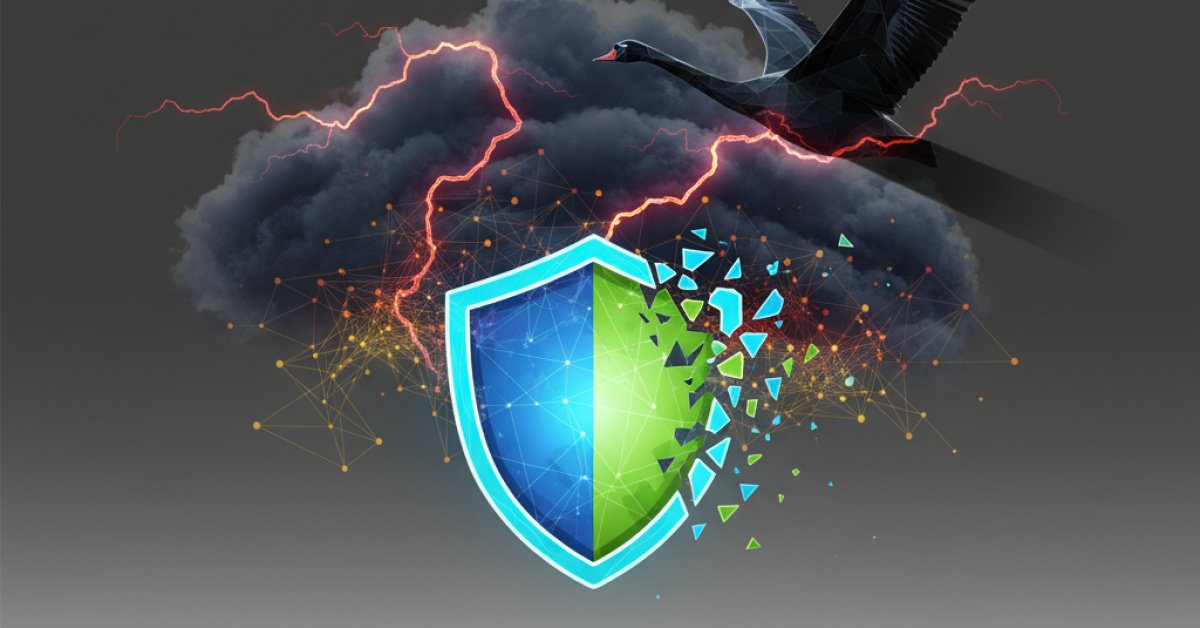
The “Black Swan” That Has Everyone Spooked
First off, what are we even talking about? The term getting thrown around is a "black swan" event.
Think of it this way: we know how to prepare for a hurricane. We can see it coming, track its path, and model the potential damage. A typical ransomware attack is kind of like that. It’s bad, destructive, and costly, but it’s a known threat. Insurers have gotten pretty good at understanding and pricing that risk.
A black swan, on the other hand, is the earthquake that hits a place that’s never had one. It's the event that comes out of nowhere and changes everything. In the cyber world, a black swan isn't just one company getting hacked. It’s a single event that causes a massive, cascading failure across the entire digital ecosystem.
Imagine a critical vulnerability is found in the software that runs a major cloud provider—one that hosts millions of businesses worldwide. An attacker exploits it, and suddenly, entire sectors of the economy go dark. Not for an hour, but for days or weeks. Supply chains halt. Financial transactions stop. The lights go out.
That’s the kind of systemic, widespread event we’re talking about. It’s not a single house fire; it’s the whole city burning down at once.
Why Is This a Bigger Problem Now Than Ever Before?
You might be thinking, "Haven't we always had big cyber threats?" And yes, we have. But the game has changed dramatically.
Everything is connected now. Your business relies on a dozen different software-as-a-service (SaaS) platforms. Those platforms run on one of three major cloud providers. Your supply chain partners are all interconnected in the same digital web.
This creates what we call "concentration risk." It's like building an entire city on a single fault line. A single point of failure can have a catastrophic domino effect that we’ve never seen before.
The scary part for insurers is that this kind of event is almost impossible to model. How do you calculate the premium for something that has never happened and could potentially cost trillions of dollars? The models we use to predict losses just break down when faced with a threat of this magnitude.
It’s this unpredictability that’s causing the real anxiety. The insurance industry is built on the law of large numbers—spreading risk out so that one person's claim doesn't sink the ship. But a cyber black swan could sink the whole fleet at the same time.
So, Are We Saying Cyber Insurance Is Going Away?
Okay, let's be clear. This doesn't mean your standard cyber policy is going to vanish tomorrow. The market for covering everyday data breaches and ransomware attacks is still very much alive, though it’s getting more expensive and demanding.
When experts talk about cyber becoming "uninsurable," they're referring to this specific, catastrophic, systemic level of risk.
The industry is essentially saying there might be a limit to what private insurance can handle. Just like your standard homeowner's policy probably doesn't cover acts of war, a standard cyber policy might eventually have to draw a line and say, "We can cover your company's breach, but we can't cover the collapse of the entire internet."
The potential losses from a true black swan event could easily exceed the total capital of the entire global insurance industry. No single company, or even a group of them, could possibly pay all those claims. It’s a mathematical impossibility.
What’s the Path Forward?
This isn’t just about pointing out a scary problem. The industry is actively grappling with how to solve it. This is where the conversation gets really interesting.
Here are a few of the ideas being floated:
-
Government Backstops: One of the most talked-about solutions is a partnership between the insurance industry and the government. Think of something like the Terrorism Risk Insurance Act (TRIA), which was created after 9/11. In that model, private insurers cover losses up to a certain point, and then the government steps in as a backstop for truly catastrophic events. A "Cyber TRIA" could provide the stability the market needs to keep offering coverage.
-
More Explicit Exclusions: We're already seeing policies get much more specific about what they do and don't cover, especially around nation-state attacks and cyber warfare. Expect this trend to continue as insurers try to wall off these unmanageable systemic risks from the more "normal" cyber claims.
-
A Focus on Resilience: The conversation is shifting from just insuring the risk to actively reducing it. Insurers are becoming much stricter, requiring businesses to have multi-factor authentication, endpoint detection, and solid backup plans in place before they'll even offer a policy. The goal is to make the entire ecosystem stronger and less vulnerable to a cascading failure.
Ultimately, this is a shared problem. It’s not just for insurers to solve. It requires businesses to take their own cybersecurity seriously and governments to help manage the kind of catastrophic risk that the private market simply wasn't built to handle.
The question of a cyber black swan isn't going away. It’s a tough, complex issue, but facing it head-on is the only way we can build a more secure and resilient digital future. For now, the best thing you can do is focus on what you can control: making your own organization as difficult a target as possible. Because in this environment, the strongest defense is still the best insurance policy of all.