Let’s have a frank conversation. You’ve probably got a business continuity plan sitting on a shelf somewhere, either physically or digitally. You know, the big binder you dust off once a year that tells you what to do if the office floods or a server crashes. You feel prepared, right? You’ve checked the box.
Honestly, that feeling of security might be a dangerous illusion.
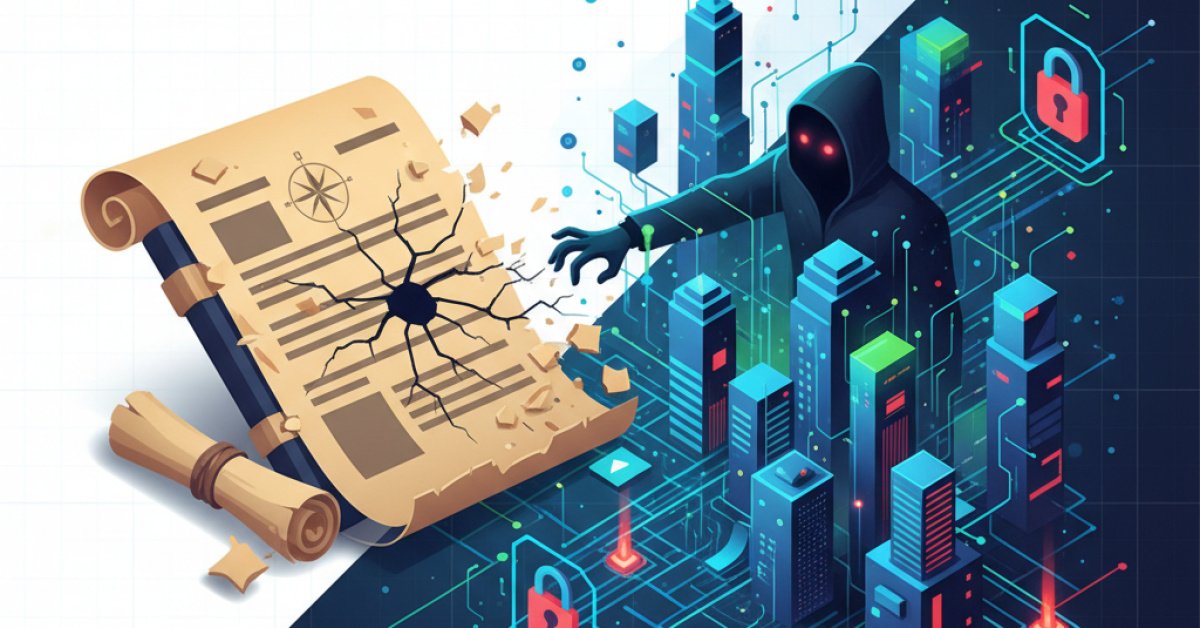
A stark warning recently came from Sedgwick’s Chief Information Security Officer, and it’s something we all need to hear: our old-school approach to business continuity is getting absolutely steamrolled by modern cyber threats. The game has completely changed, and a lot of businesses haven't gotten the memo yet.
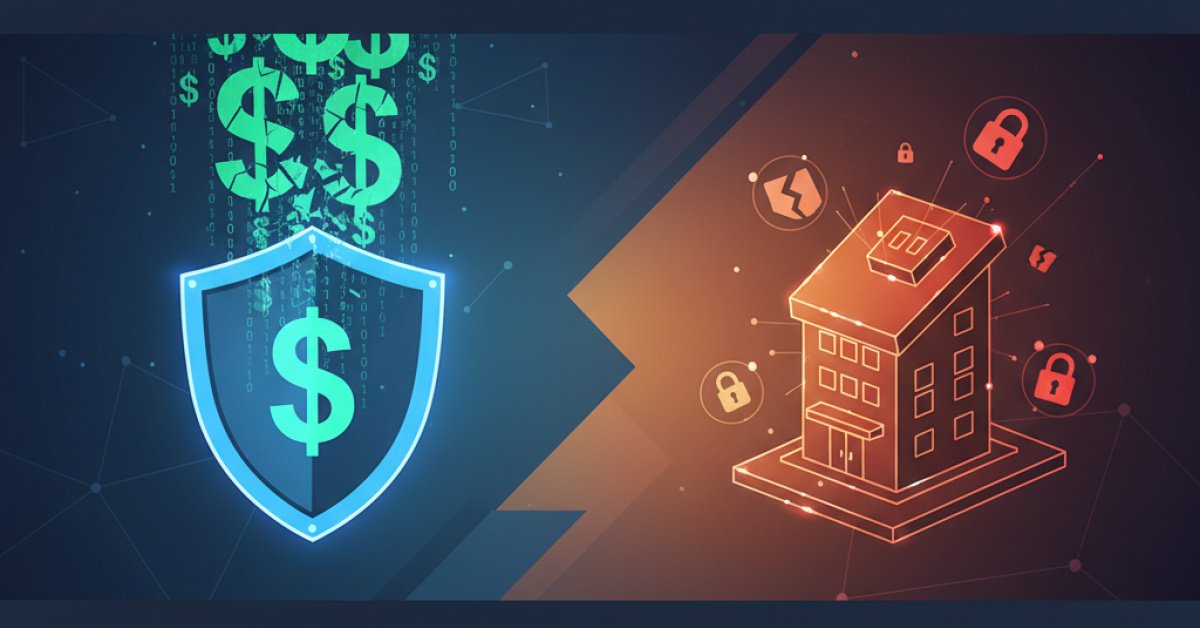
Think of it like this: your old plan was designed to handle a house fire. You knew the risks, you had an escape route, and you had insurance for the structure. But today’s cyber threats aren’t a house fire. They’re more like a silent, invisible gas that can seep in through a tiny crack you didn't even know existed, putting the entire neighborhood at risk.
The Real Danger Might Not Even Be Inside Your Walls
So, what’s the biggest blind spot? It’s the trust we place in our partners. We’re not just talking about your own cybersecurity anymore; we're talking about the security of every single vendor you work with.
This is what the industry calls a third-party attack, and it’s one of the most terrifyingly effective tactics hackers are using today.
Here's how it works. Imagine you run a tight ship. You’ve got top-notch security, firewalls, employee training—the works. But you use a small, third-party software for, say, managing your customer service tickets. That small vendor might not have the same budget or focus on security that you do.
Hackers know this. They don't waste their time trying to break down your front door. Instead, they find the unlocked window at your vendor's office. They breach the smaller, less-secure company and use their legitimate access to waltz right into your systems. You never saw it coming, because the attack didn't come from the outside; it came from a trusted partner.
This isn't a rare, one-off thing. It’s becoming the go-to strategy for cybercriminals. They see our interconnected business world not as a network of partners, but as a web of vulnerabilities. Every vendor, every supplier, every contractor is a potential doorway into your business. And if your continuity plan only focuses on your systems failing, you've missed the biggest threat of all.
That Cyber Insurance Policy? It Might Not Cover What You Think
Okay, so a breach happens. It’s a nightmare, but that's what cyber insurance is for, right? You file a claim, and they help you clean up the mess.
Well, maybe. But maybe not.
This is the second gut punch many businesses are facing. Just as the threats are evolving, so are the insurance policies designed to cover them. And frankly, insurers are getting nervous. The sheer scale and cost of these attacks mean they are rewriting the rules to protect themselves, and that can leave you exposed.
We're seeing a huge rise in policy exclusions. These are the tricky little clauses in the fine print that specify exactly what the policy won't cover. And they’re getting more and more specific.
Some of the big ones to watch out for include:
- Acts of "War" or Nation-State Attacks: If an attack is attributed to a government-backed hacking group from another country, your insurer might be able to deny the claim under a "war exclusion." The problem? It's incredibly difficult to prove who is behind a sophisticated attack, and this gray area gives insurers a potential out.
- Failure to Patch: Many policies now require you to keep your systems updated. If you’re hit by an attack that exploited a known vulnerability you hadn't patched yet, your claim could be denied. They’ll argue you didn’t do your part.
- Insufficient Security Controls: Insurers are no longer just handing out policies. They’re demanding that you have certain security measures in place, like multi-factor authentication (MFA). If you don't meet those minimum standards, you might not be covered when you need it most.
The safety net you thought you had might be full of holes. You can’t just buy a policy and assume you're covered for anything and everything cyber-related anymore. The burden is shifting back to you to not only prevent the attack but also to prove you did everything right to qualify for coverage.
It's Time for a Reality Check
So what does this all mean? It means we need to stop thinking about business continuity as a static, IT-focused plan. It needs to be a living, breathing strategy that sees cyber risk for what it is: a core business threat that can come from anywhere.
It’s no longer enough to plan for a server outage. You have to ask the tough questions:
- What happens if our key software provider goes down for a week?
- What’s our plan if a breach at a vendor exposes all of our customer data?
- Have we actually sat down with our broker and read our cyber policy, line by line, to understand every single exclusion?
This isn't about fear-mongering. It's about being realistic. The threats have moved on from the simple scenarios we used to plan for. They're more complex, they’re interconnected, and they exploit the trust that our businesses are built on.
It’s time to pull that dusty plan off the shelf, look at it through the lens of today's threats, and start building something that can actually stand up to the fight. Because in this new world, hoping for the best isn't a strategy—it's a liability.