You probably saw the headline pop up on your news feed: "Big Russian Port Operator Targeted by Foreign Hackers." It’s easy to see something like that, scroll past, and think, "Well, that's happening way over there. Doesn't really affect me."
But I’m here to tell you that’s exactly where we can get into trouble.
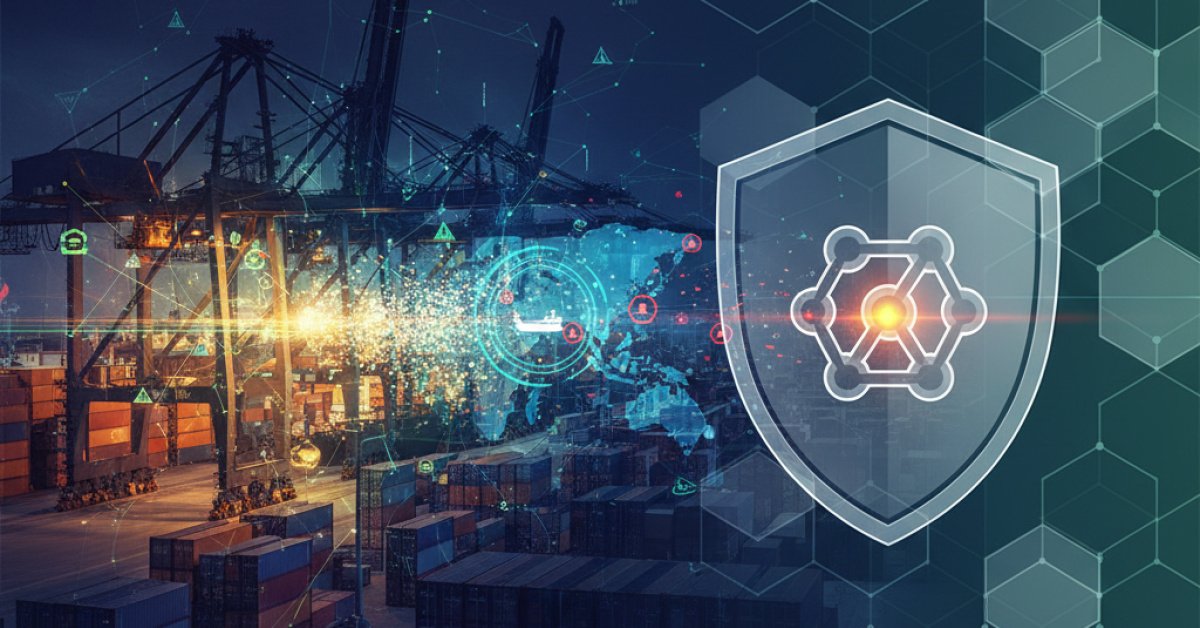
Think of a major shipping port as the front door to a country's economy. It's where goods come in, goods go out, and everything keeps moving. When someone attacks that front door, it doesn't just affect the person living in the house. It affects the mail carrier, the delivery driver, the person waiting for a package—everyone connected to it.
This recent attack on Russia’s Port Alliance group is a perfect, real-world example of this. It’s not just a tech story or a political story. It's a story about risk, and it’s a massive wake-up call for anyone who runs a business that depends on a supply chain. And let's be honest, that's pretty much all of us these days.
So, What Exactly Happened Over There?
Let's break down the basics. A company called Port Alliance group, which runs a whole network of sea cargo terminals in Russia, announced they were under attack. For three straight days, they were hit with what's called a Distributed Denial of Service (DDoS) attack, along with an attempt to actually hack into their systems.
Now, "DDoS attack" sounds super technical, but the concept is surprisingly simple.
Imagine you own a small coffee shop with one front door. Normally, customers can come and go easily. Now, imagine a hundred people who have no intention of buying coffee all decide to stand in your doorway at the same time, blocking it completely. Your real customers can't get in. You can't make any sales. Your business grinds to a halt, not because anything is broken, but because the entrance is totally clogged.
That’s a DDoS attack. Hackers use a network of computers to flood a company's servers with so much junk traffic that legitimate users—like shipping companies trying to log in or customs agents trying to clear cargo—can't get through. The system is overwhelmed and, for all intents and purposes, shut down.
Why This Isn't Just Some Random Tech Glitch
Here’s the thing that really gets my attention: this wasn't just a random event. The company specifically said they were targeted by "foreign hackers."
We're seeing more and more of these politically motivated or state-sponsored cyber attacks. They aren't always about stealing credit card numbers or customer data. Sometimes, the goal is pure disruption. To cripple a key piece of infrastructure—like a port—and cause chaos for a country's economy.
And that's where the risk for your business comes in, even if you're thousands of miles away.
Your supply chain is probably more fragile than you think. It relies on dozens of different companies, systems, and pieces of infrastructure all working together perfectly. A port is a critical link in that chain. If that link breaks, the whole chain can fall apart, and fast.
Let's Talk Insurance: Would Your Business Be Covered?
Okay, so a port gets shut down by hackers. A shipment of parts you need is stuck on a boat. A container of products you were supposed to send to a customer is sitting on the dock. You're losing money every day this drags on.
You have business insurance, right? So you're covered... or are you? This is where things get tricky, and it’s why you need to understand what your policies actually do.
The Obvious One: Cyber Insurance
For the port operator themselves, a good Cyber Insurance policy is their first line of defense. It would likely help cover the massive costs of:
- Incident Response: Hiring forensic experts to figure out what happened and kick the hackers out.
- Business Interruption: This is a big one. It would cover the income the port lost while its systems were down.
- Public Relations: Managing the communication to customers and the public to control the damage to their reputation.
- Data Recovery: Restoring any systems or data that were damaged or compromised.
But what about your business? The port's Cyber Insurance doesn't do you any good. You need your own protection.
The Ripple Effect: Contingent Business Interruption
This is the coverage that so many business owners overlook, and it's arguably the most important one in this scenario. It's called Contingent Business Interruption (CBI).
Standard Business Interruption (BI) insurance covers your lost income if your own property suffers a covered loss (like a fire at your factory).
But CBI is different. It covers your lost income when the property of a key supplier or customer is damaged, which in turn shuts your business down. That port isn't your property, but you depend on it. It’s a critical supplier of a service—logistics.
If that port's shutdown causes your factory to halt production because you can't get raw materials, a CBI policy is what you'd be making a claim on. It’s designed for exactly this kind of supply chain nightmare. The key, however, is that the cause of the shutdown at the supplier (the port) has to be a covered peril under your policy. This is where a deep dive with your broker is essential. Is a cyber attack a covered peril for your CBI coverage? You need to know the answer before something happens.
What About the Cargo Itself?
Let's not forget the goods stuck in limbo. A Marine Cargo policy is designed to protect goods in transit. If the delays caused by the port shutdown lead to spoilage, theft, or damage to your products, this is the policy that would respond. Again, you have to read the fine print to see how it handles delays caused by cyber events.
The Big Takeaway for All of Us
This story out of Russia shouldn't be just a passing headline. It’s a real-life fire drill for the global supply chain. It shows us that our businesses are more interconnected and vulnerable than ever.
A hacker with a laptop can do as much damage to your bottom line as a hurricane or a fire, and they can do it from halfway around the world.
So, what can you do? It's time to have a serious conversation with your insurance advisor. Don't just assume you're covered. Pull out your policies and ask the tough questions:
- Does my policy cover losses from a cyber attack on one of my key suppliers?
- Do I have Contingent Business Interruption coverage, and what are its limits?
- What are the specific triggers and exclusions related to cyber events in my policies?
What happened at that Russian port is a clear warning shot. The front doors of the global economy are increasingly digital, and it’s our job to make sure we have the right keys and the right insurance to protect our businesses when someone tries to lock them down.