When you see a headline screaming about $16 billion in cyberattack losses, what’s the first thing that comes to mind? If you’re like most people, you probably picture a massive, faceless corporation getting hit with a sophisticated, movie-plot-level hack. You think of data centers in lockdown and executives in dark suits holding emergency press conferences.
And you’re not wrong—those big heists definitely happen. But focusing only on the giant, headline-grabbing attacks is a huge mistake. It’s like worrying about getting struck by lightning while ignoring the black ice on your front steps.
The real story, the one that affects you and me and every other small business owner out there, is buried deep inside that staggering $16 billion figure. It’s a quieter, more personal story about the everyday attacks that don’t make the news but can absolutely cripple a company. Let’s talk about what’s really going on.
The Number That Should Actually Keep You Up at Night
Okay, so we’ve established the $16 billion number is scary. But it's also a bit abstract, isn't it? It’s hard to wrap your head around.
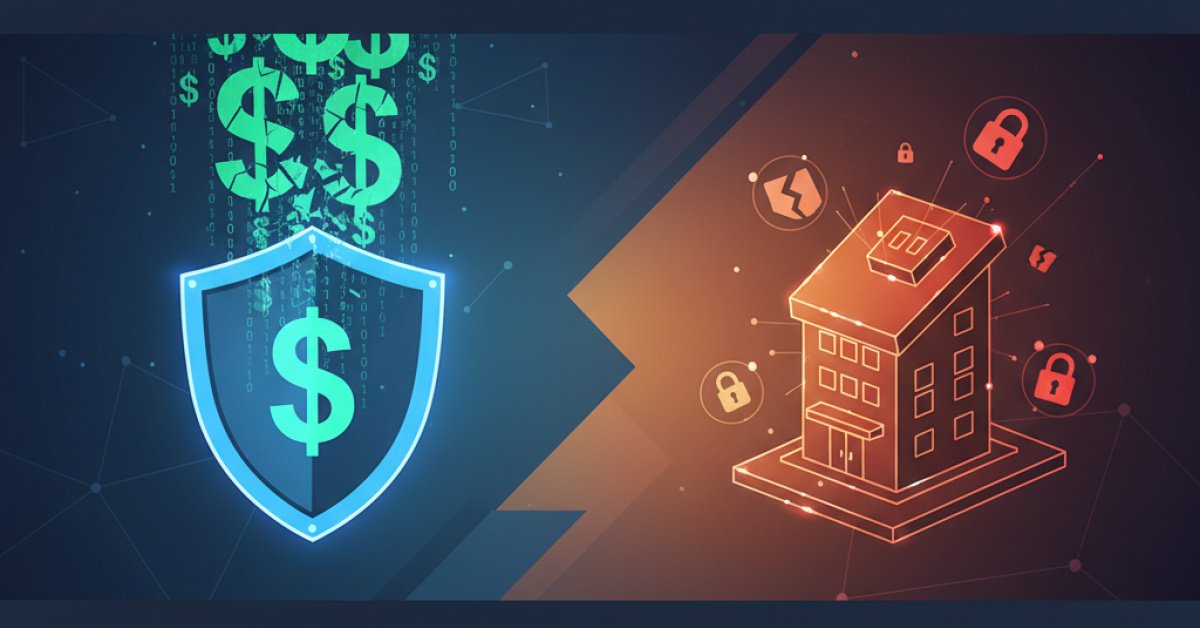
Here’s the statistic that truly matters for small and medium-sized businesses (SMBs): A whopping 95% of cybersecurity incidents cost businesses somewhere between $826 and $653,587.
Read that again. It’s not zero, and for the most part, it’s not millions. It’s a messy, awkward, and incredibly dangerous middle ground.
Think about it. An $800 hit is annoying, for sure. You’d be furious, but you could probably absorb it and move on. A multi-million dollar ransom? That’s a catastrophe, but it’s also exceedingly rare for a smaller company. The real danger zone is that five- and six-figure range. It’s the kind of financial blow that’s too big to just shrug off, but not quite big enough to trigger a massive, all-hands-on-deck corporate response. It’s the kind of expense that quietly drains your cash reserves, stalls your growth, and can ultimately put you out of business.
What Does a “Typical” Attack Really Cost?
So, where does all that money go? When a hacker gets into your system, they’re not just stealing cash from your bank account (though that can happen). The costs are a lot more complicated and spread out, which is why they add up so fast.
Imagine your small marketing agency or local retail shop gets hit with ransomware. Your files are locked, and your operations grind to a halt. Suddenly, you’re facing a waterfall of expenses you never anticipated.
Here’s a quick look at what you’re actually paying for:
- Business Interruption: This is the big one. Every hour your systems are down is an hour you’re not serving clients, making sales, or billing for your work. The lost revenue can be devastating.
- Forensic Investigators: You need to figure out how the hackers got in, what they took, and how to kick them out. This requires hiring expensive IT forensics experts who charge by the hour.
- Legal Counsel: You’ll need a lawyer, fast. You have to understand your legal obligations for notifying customers, regulators, and partners. This is not a DIY situation.
- Data Recovery & Restoration: Getting your systems back online is a huge technical and financial challenge. You might have to pay for data recovery services or even rebuild parts of your network from scratch.
- Regulatory Fines: If you handle sensitive customer data (like healthcare info or credit card numbers), you could be facing steep fines from regulators for the breach.
- Customer Notifications & Credit Monitoring: You’re legally required to inform anyone whose data was compromised. This involves mailing letters, setting up a call center, and often paying for a year or more of credit monitoring for every single affected person. The cost per person adds up incredibly quickly.
- Reputation Damage: This one is harder to put a number on, but it’s very real. How many customers will you lose when they find out their data was compromised on your watch? Rebuilding that trust takes time and money.
When you add all that up, you can see how easily a “minor” incident spirals into a $50,000 or $250,000 problem.
Seeing the Pattern: Why We Overlook the Real Threat
Here’s the pattern that most business owners miss: we’re all conditioned to prepare for the extremes. We either think, "I'm too small to be a target," or we worry about a massive, company-ending cyber Armageddon.
The reality is that most cybercriminals targeting SMBs aren't looking for a giant payday. They’re running a volume business. They use automated tools to find vulnerabilities, and they know that a small business is more likely to pay a $20,000 ransom quickly than a Fortune 500 company is to pay $20 million.
This is precisely why having the right cyber insurance is no longer a "nice-to-have." It’s essential.
A good cyber liability policy isn't just designed for the million-dollar heists. It’s built for that messy middle ground where 95% of attacks happen. It's designed to give you immediate access to that team of experts—the lawyers, the forensic investigators, the PR specialists—the moment an incident occurs. It covers the business interruption costs so you can keep paying your employees while you get back on your feet. It handles the notification costs so you’re not suddenly hit with a six-figure bill for postage and credit monitoring.
At the end of the day, those big, scary numbers in the news are important because they show us the scale of the problem. But don't let them distract you from the risk that’s sitting right on your doorstep. The most likely threat you'll face won't be a Hollywood-style data heist. It’ll be a messy, expensive, and disruptive event that falls squarely in that all-too-common range. And being prepared for that is what will truly protect the business you’ve worked so hard to build.