Have you ever had that sinking feeling when your computer just… won’t turn on? That little moment of panic before you realize the power strip was off.
Now, imagine that feeling scaled up to a multi-billion dollar company. Imagine every system, every server, every piece of critical infrastructure suddenly going dark. Not because of a faulty plug, but because someone, somewhere, decided to flip the switch on your entire operation.
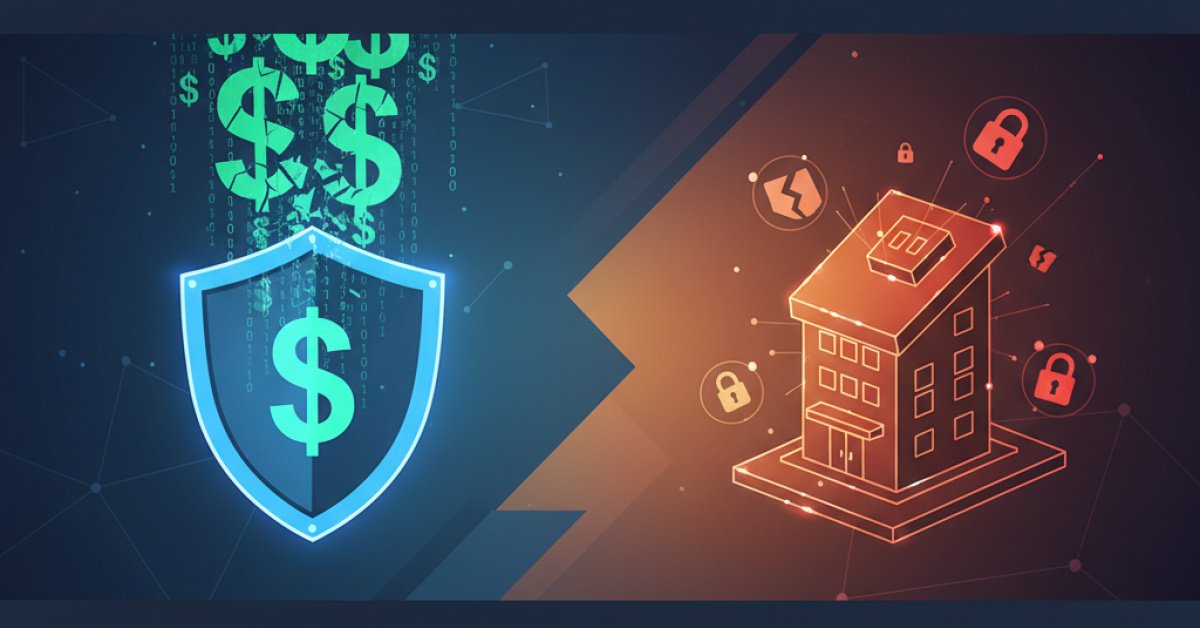
That’s not a hypothetical horror story. It’s exactly what just happened to Stryker Corp., one of the biggest medical technology companies in the world. They were hit with a crippling cyberattack, and as of their last update, they still have no idea when they’ll be fully back online.
This isn't just a tech headline. It's a flashing red warning light for every single business owner, and it cuts right to the heart of why we talk so much about cyber insurance. Let's unpack what happened and, more importantly, what it means for you.
What We Know About the Stryker Attack
Here’s the rundown. Stryker is a massive player in the medical field. They make everything from surgical robots to hospital beds. They’re a critical part of the healthcare supply chain.
A few days ago, they were forced to take a huge chunk of their systems offline after a cyberattack. In a regulatory filing—which is basically a formal way of telling the government and investors "we have a serious problem"—they admitted they're still investigating and don't have a timeline for recovery.
Here’s the kicker: the attack is reportedly linked to a pro-Iran group.
This isn't some kid in a basement trying to score a few thousand dollars in Bitcoin. This is potentially a sophisticated, state-sponsored actor. And that changes the game entirely. When you’re dealing with these kinds of groups, their motives aren't always just financial. Sometimes it’s about disruption. Chaos. And that makes them incredibly dangerous and unpredictable.
"Offline Indefinitely" Are Two Terrifying Words
Let's be honest, the technical details of the hack are for the IT pros. For business owners and insurance folks like us, the most terrifying part of that story is the phrase "doesn't know when its systems will be back online."
That, right there, is the definition of a business interruption nightmare.
Every single minute Stryker is offline, the losses are piling up. Think about it:
- Lost Revenue: They can't process orders, manufacture products, or bill clients effectively. Sales grind to a halt.
- Massive Expenses: They're paying a fortune for forensic experts to figure out what happened, IT teams working around the clock to rebuild systems, and lawyers to navigate the legal mess.
- Supply Chain Chaos: Hospitals that rely on Stryker for equipment are now scrambling. This creates a ripple effect of disruption that harms other businesses.
- Reputational Damage: Trust is everything. A major breach like this can seriously damage a company's reputation with customers and partners for years to come.
This is where the conversation pivots from being about technology to being about survival. And survival, in the business world, often comes down to having the right insurance.
Your Cyber Insurance Policy is Your Financial First Responder
If your business were in Stryker's shoes, what would happen? Would you be paying for all of this out of pocket? For most companies, an attack of this scale would be a death blow.
A solid cyber insurance policy is designed for this exact scenario. It’s not just about covering a data breach anymore; it’s about covering the catastrophic financial fallout of being knocked offline.
Let’s look at what parts of a cyber policy would be kicking into gear for Stryker right now:
Business Interruption Coverage
This is the big one. This coverage is designed to replace the income you lose while your systems are down. It’s what keeps you from going bankrupt while you’re trying to recover. It can also cover extra expenses you incur to get back up and running faster, like renting temporary equipment or paying staff overtime.
Incident Response Costs
The moment you suspect a breach, the clock starts ticking and the bills start rolling in. A good cyber policy connects you with—and pays for—a team of experts.
- Breach Coach: A specialized lawyer who guides you through the entire process, ensuring you don't make a legal mistake in the heat of the moment.
- IT Forensics: The digital detectives who figure out how the attackers got in, what they took, and how to kick them out.
- PR Firm: Experts who help you manage communication with customers, partners, and the media to control the damage to your reputation.
These services are incredibly expensive, and your cyber policy typically pays for them directly, so you’re not fumbling for a credit card in the middle of a crisis.
Data Recovery and System Restoration
Getting the hackers out is only half the battle. Then you have to rebuild. This coverage helps pay for the cost of restoring your systems from backups, rebuilding what was destroyed, and patching the vulnerabilities so it doesn't happen again.
Why This Matters Even if You're Not a Global Giant
It's easy to look at a company like Stryker and think, "Well, they're huge. Of course they're a target."
But that’s a dangerous way to think. Sophisticated attackers often go after smaller companies as a way to get into larger ones—this is called a supply chain attack. And less-sophisticated hackers love small businesses precisely because they often have weaker defenses.
The Stryker attack is a wake-up call for a few key reasons:
- The Threat is Evolving: We're moving past simple ransomware. Attacks from state-sponsored groups are on the rise, and their goal is disruption. They want to break things.
- Downtime is the Real Killer: For years, we focused on data breaches. But the cost of simply being unable to operate can dwarf the cost of a breach.
- Preparedness is Everything: You can't buy insurance while your house is on fire. Insurers are getting much tougher about who they'll cover. They want to see that you have a plan. Do you use multi-factor authentication? Do you have an incident response plan written down?
The Stryker story is a powerful, real-world example of what happens when the worst-case scenario becomes reality. It’s a reminder that in today's world, cyber risk is business risk. It’s not a question of if you'll face a threat, but when and how prepared you'll be.
Take a look at your own operations. Think about what would happen if your screens went dark tomorrow. If that thought sends a shiver down your spine, it might be time to have a serious conversation with your broker. Because having the right plan—and the right policy—is the only thing that can turn a potential catastrophe into a manageable crisis.