Let’s be honest. When you hire a subcontractor, you’ve got a million things on your mind. The schedule, the budget, the quality of their work... the list goes on.
You do your due diligence, of course. You get their Certificate of Insurance (COI), glance at the policy limits, and file it away. Check that box. Done. You assume you're protected.
But what if that piece of paper is hiding a dangerous secret? What if there’s a massive gap between the coverage you think they have and the coverage they actually have? This is the silent risk of underinsurance, and it’s a problem that often stays quiet until the absolute worst moment: right after a major claim.
So, What’s the Big Deal, Anyway?
When you bring a subcontractor onto your project, you’re not just hiring their skills—you’re also inheriting their risk. Their insurance is supposed to be your first line of defense. If their employee gets hurt or their work causes property damage, their policy should be the one to respond, not yours.
Think of it like this: You wouldn't let someone borrow your brand-new car without making sure they have a valid driver's license and their own insurance, right? It’s the same principle. You’re verifying that they have the basic financial protection in place to handle things if they go wrong.
The problem is, just seeing that they have a policy isn't enough.
The Hidden Gap: When "Insured" Doesn't Mean "Covered"
Underinsurance is a sneaky thing. It doesn't mean the subcontractor has no insurance at all. It means they don't have enough of the right kind of insurance for the specific job they’re doing for you.
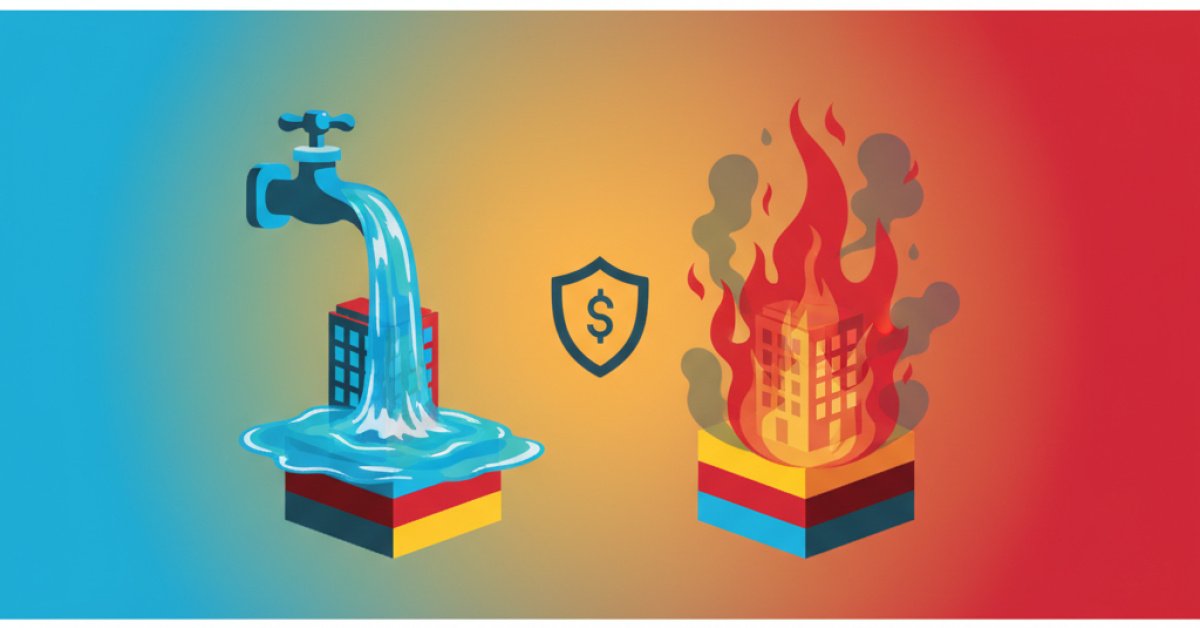
Imagine this scenario: You hire an electrical sub for a large commercial build. They accidentally cause a fire, leading to $2 million in damages. Everyone panics, but you breathe a small sigh of relief because you know they have a General Liability policy.
Then the bad news hits. Their policy limit is only $1 million.
Where does that other $1 million come from? Well, the lawyers will start looking your way. Suddenly, that "silent risk" is screaming loud and clear, and it’s coming directly out of your pocket, your insurance, or your company's future.
This is the gap. It’s the space between their policy limit and the actual cost of a claim. And because no one spots it beforehand, it’s a financial landmine just waiting for someone to step on it.
How Do These Gaps Even Happen?
You might be thinking, "How could I miss something so important?" The truth is, it's surprisingly easy. These gaps are created by some very common, and very human, processes.
Here are the usual suspects:
- Generic Contract Requirements: Your contracts might have a boilerplate clause that just says, "Subcontractor must carry a $1 million General Liability policy." But is $1 million enough for a high-risk roofing job on a multi-million dollar property? Probably not. The requirements are a one-size-fits-all solution for a world of unique risks.
- The "Checkbox" Mentality: Let’s be real. The person collecting COIs is often an admin or project coordinator who is juggling a dozen other tasks. Their job is to see if the certificate is there, not to become an insurance expert. They check the box, and the paper goes into the file. They have no way of knowing what’s lurking in the fine print.
- The Sneaky World of Exclusions: This is the big one. A subcontractor’s policy might look great on the surface, but deep in the policy language, there could be an exclusion for the exact type of work they’re doing for you. We see it all the time—exclusions for residential work, roofing, specific construction methods, or work above a certain height. The COI will almost never mention these.
The old way of managing this was just broken. It relied on busy people trying to manually spot complex issues in legal documents they weren't trained to read. It was a recipe for failure.
Why the Old Way Just Doesn't Cut It Anymore
For years, risk management meant having someone manually review COIs. If they were really on top of it, they might even request the full policy documents.
But who has time to read a 100-page insurance policy for every single vendor? Nobody. It's not just tedious; it's practically impossible to do consistently and accurately across dozens or hundreds of subcontractors.
So, we just crossed our fingers and hoped for the best. We hoped the coverage was adequate. We hoped there were no crazy exclusions. We hoped a big claim would never happen. But hope, as we all know, is not a strategy.
A Smarter Approach: Using Tech to See What's Hidden
This is where things get interesting. For a long time, this was just an accepted cost of doing business—a risk you had to live with. But now, technology is finally giving us a way to close these gaps for good.
I'm talking about AI-powered compliance platforms. And before you roll your eyes at another tech buzzword, let me explain what this actually means in the real world.
Think of these platforms as a super-powered insurance expert who can read, analyze, and understand hundreds of complex policies in minutes. They don't just check for a policy number and an expiration date. They dig deep into the fine print to find the things a human would almost certainly miss.
Here’s how it generally works:
- It Goes Beyond the COI: Instead of just looking at the one-page summary, the system ingests the subcontractor's entire insurance policy.
- AI Does the Heavy Lifting: The AI reads every line, identifying the policy limits, deductibles, and, most importantly, the exclusions.
- It Flags the Problems: The system then compares the subcontractor’s actual coverage against your specific requirements for the project. If there’s a mismatch—like a low limit or a dangerous exclusion—it immediately flags it.
Instead of a mountain of paperwork on your desk, you get a simple dashboard. A green light means the sub is good to go. A red light means there’s a problem that needs to be fixed before they set foot on your job site.
It takes the guesswork and human error out of the equation. It transforms compliance from a painful, manual chore into an automated, reliable safety net. It lets you stop hoping you’re covered and start knowing you are.
Ultimately, this isn't just about software; it's about peace of mind. It’s about protecting your projects, your reputation, and your bottom line from a risk you might not have even known existed. And in a world full of uncertainties, having one less thing to worry about is a pretty powerful feeling.